Performance Art With a Spatula
The chef catches the shrimp tail behind his back. He flips an egg into the air, lets it spin twice, and catches it on the edge of his spatula, where it cracks perfectly onto the iron plate. He builds a tower of onion rings, pours oil into the center, ignites it, and flames shoot upward while he grins at the applauding diners seated around the counter. This is teppanyaki — the Japanese cooking style where a chef prepares food on a large, flat iron griddle (teppan) directly in front of seated guests, combining cooking with performance in a format that's equal parts restaurant and show. It's theatrical, it's fun, it's occasionally corny, and the food — when the chef is skilled and the ingredients are good — is legitimately excellent.
Teppanyaki's reputation is complicated. In the West, it's associated primarily with Benihana-style restaurant chains where the showmanship overshadows the cooking, and where the food is competent but not exceptional. In Japan, teppanyaki occupies a higher position: high-end teppanyaki restaurants like Ukai-tei in Tokyo and Kobe Plaisir serve A5 wagyu beef, live lobster, and seasonal vegetables on custom-made iron plates, with chefs whose knife skills and timing are genuinely world-class. The gap between chain teppanyaki and premium teppanyaki is enormous — roughly the gap between a hotel buffet and a three-Michelin-star restaurant — and understanding that gap is essential to appreciating what teppanyaki can be at its best.
The Origin Story (It's Not Ancient)
Teppanyaki is not a traditional Japanese cooking method. It was invented in 1945 by Shigeji Fujioka at his restaurant Misono in Kobe, specifically to appeal to Western occupation forces who were uncomfortable with unfamiliar Japanese dining formats but enjoyed watching their food being cooked. The iron griddle was inspired by Western grills, the counter seating adapted from sushi bars, and the interactive cooking style was designed to bridge the cultural gap between Japanese and American dining expectations. It was, from the very beginning, a cross-cultural format — Japanese ingredients and technique, Western presentation and theatricality — and this hybrid nature is both its strength and the source of its complicated reputation in Japan.
In Japan's domestic culinary hierarchy, teppanyaki sits below sushi, kaiseki, and tempura in prestige, partly because of its youth and partly because of its association with foreign tourists. But the best teppanyaki restaurants have earned respect through quality rather than tradition: the wagyu at Kobe Plaisir — Kobe beef seared on a 250°C iron plate, sliced with a knife so sharp the cutting is inaudible, seasoned with nothing but salt, pepper, and a whisper of wasabi — is as fine as any beef preparation in the world. The teppan itself is the cooking vessel, the serving plate, and the stage, and a skilled teppanyaki chef manages all three simultaneously while maintaining a running dialogue with the diners.
The Iron Plate Science
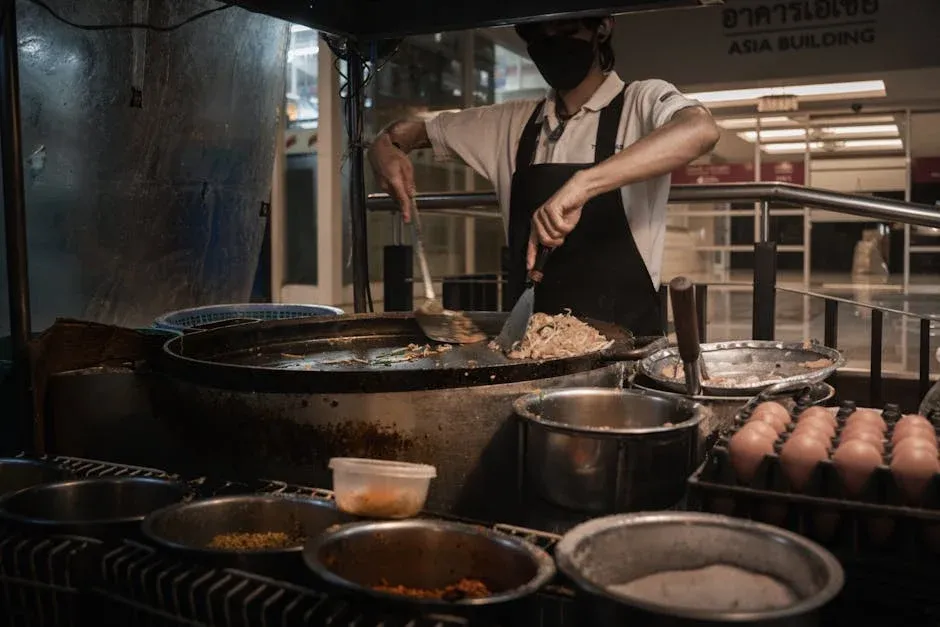
The teppan — a thick slab of iron or steel, typically 15-20mm thick, heated by gas burners underneath to a surface temperature of 200-270°C (392-518°F) — produces cooking results that differ meaningfully from a pan, grill, or oven. The thick iron provides enormous thermal mass, meaning the surface temperature barely drops when cold food is placed on it. A thin pan loses heat when a cold steak hits it; a teppan barely flinches. This constant, unwavering heat produces the even, deep Maillard browning that makes teppanyaki proteins — wagyu, lobster, scallops — taste different from the same proteins cooked in a standard kitchen.
The flat surface also allows the chef to manage multiple temperature zones. The center of the teppan, directly over the burners, is hottest. The edges are cooler. A skilled chef moves ingredients between zones as they cook — searing meat in the center, then moving it to the cooler edge to rest while he prepares vegetables in the hot zone, then moving the vegetables to rest while he returns the meat to the center for a final sear. This spatial-temporal management is the technical skill that separates a trained teppanyaki chef from someone who can cook on a flat surface, and it's invisible to most diners, who are distracted by the shrimp-catching and onion volcanoes.
The Benihana Effect
Rocky Aoki, a Japanese-born wrestler, opened the first Benihana restaurant in New York in 1964, bringing teppanyaki to America with a deliberate emphasis on entertainment over culinary purity. The format was genius: a complete Japanese dining experience that required no knowledge of Japanese cuisine, no chopstick skills, and no adventurous eating. The food was grilled steak, chicken, and shrimp — familiar proteins — cooked with theatrical flair by charismatic chefs. Benihana grew into a global chain with over 100 locations, and it defined what "teppanyaki" meant for generations of Western diners: the onion volcano, the spatula tricks, the shrimp toss, the fried rice heart.
The Benihana effect had two consequences. Positively, it introduced millions of people to Japanese dining culture who might never have entered a Japanese restaurant otherwise. Negatively, it created an expectation that teppanyaki was fundamentally about entertainment rather than cooking, which marginalized the serious teppanyaki restaurants that treat the format as a legitimate culinary discipline. In Japan, the reaction to Benihana-style theatrics at premium teppanyaki restaurants is reserved: the chef at Ukai-tei won't flip a shrimp into his hat. He'll slice a piece of Kobe beef with the precision of a surgeon, cook it to the exact degree of doneness you requested, and present it with a quiet "douzo" (here you are). The drama is in the skill, not the showmanship.
What to Order at Serious Teppanyaki
At a premium teppanyaki restaurant in Japan, the standard format is an omakase (chef's choice) course that progresses from light to rich. A typical progression: an appetizer course (seasonal vegetables, a small salad), shellfish (abalone, scallops, or lobster), fish (local catch, seared and served with seasonal garnish), the main event (wagyu beef, from a specified grade and cut), fried garlic rice (cooked in the beef fat remaining on the teppan — this rice is worth the visit alone), and dessert (often a teppan-made crepe or flambed fruit).
The wagyu course is where teppanyaki justifies its premium pricing. A5 wagyu — the highest marbling grade, with fat distributed so finely through the meat that each slice looks like a topographic map — is cooked on the teppan in thick slices, seared briefly on each side to melt the surface fat and create a crust, then rested and sliced into bite-sized pieces. The fat content is so high that the beef essentially bastes itself, and the iron plate provides the consistent, intense heat needed to sear the surface without rendering the interior fat to the point of greasiness. The result is beef that's simultaneously crispy-edged and meltingly tender, with a richness that requires only salt to season. A full omakase course at a restaurant like Kobe Plaisir costs ¥15,000-30,000 ($103-206) and takes 90 minutes. It is not cheap. It is worth every yen.
The Garlic Rice: The Encore Nobody Skips
Every teppanyaki meal ends with fried rice, and this final course is not an afterthought — it's the act that sends you home happy. After the wagyu is finished, the chef uses the remaining beef fat and juices on the teppan surface to fry rice with garlic, soy sauce, and egg. The rice sizzles on contact with the fat-coated iron, each grain picking up the residual beef flavor that's been building on the cooking surface throughout the entire meal. It's a cumulative dish — every ingredient that preceded it contributed something to the teppan's seasoning — and the result is a fried rice with more flavor depth than any standalone fried rice could achieve. At the end of a teppanyaki meal, when you've eaten lobster and wagyu and seasonal vegetables, the fried rice is the thing you remember, because it's the distillation of everything that came before it, scraped off a hot iron plate and served in a bowl.