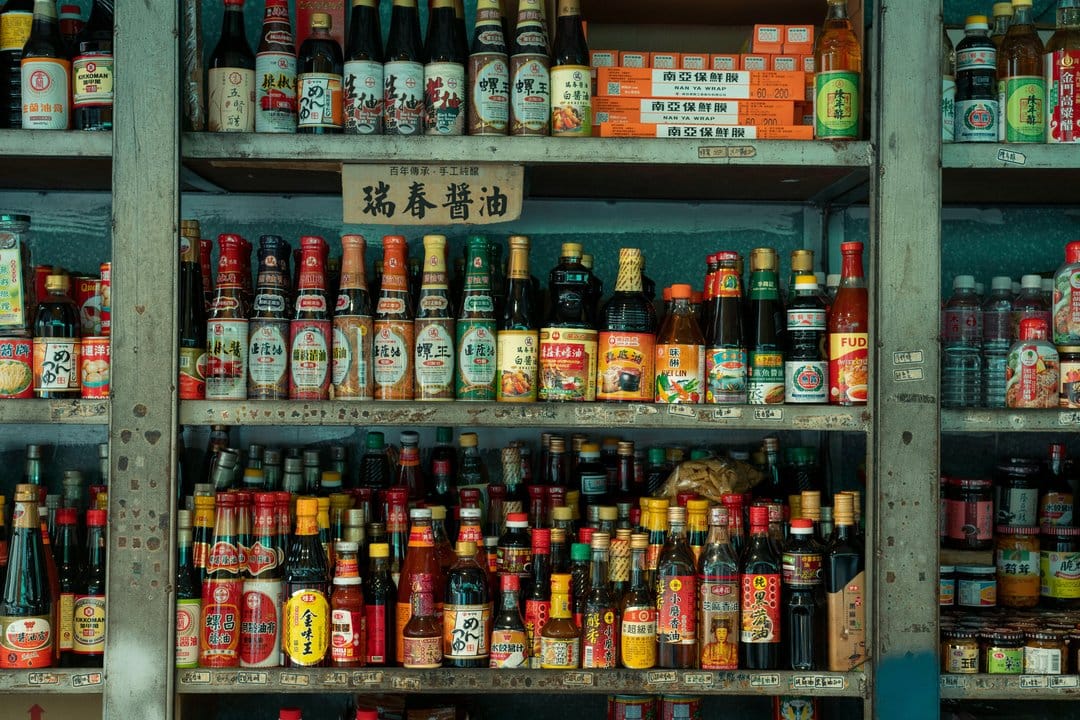
Walk down the sauce aisle of any East Asian supermarket and the word "soy sauce" starts to look hopelessly inadequate. There are dozens of bottles, in shades from amber to near-black, labelled light, dark, double-fermented, mushroom, sweet. Treating them as interchangeable is the most common mistake home cooks make — and the reason a dish can taste muddy or flat even when the recipe was followed. Soy sauce is not one ingredient. It is a family, and each member has a job.
Where it all starts
At its core, soy sauce is the liquid born from fermenting soybeans, usually with roasted wheat, salt and a cultured mould, over months. That slow fermentation breaks proteins down into the savoury, mouth-filling depth we now call umami. From that single process, different traditions and techniques branch out into very different sauces.
The Chinese pair: light and dark
The most important distinction to learn, because so many recipes assume it, is light versus dark soy sauce in Chinese cooking.
Light soy sauce (sometimes labelled "thin") is the everyday workhorse. It is saltier, thinner and lighter in colour, and it is what seasons most stir-fries, dipping sauces and marinades. When a Chinese recipe just says "soy sauce," this is usually what it means.
Dark soy sauce is aged longer, often with a touch of added sugar or molasses. It is thicker, less salty, and far darker, prized less for seasoning than for colour and a rounded, slightly sweet depth. A spoonful is what gives braises and red-cooked dishes their glossy mahogany sheen. Use it where light soy goes and your dish turns oversalted and oddly dark; swap them and the balance breaks. Many cooks keep both and use them together — light for salt, dark for colour.
Japan's varieties
Japanese soy sauce, or shoyu, has its own spectrum. Koikuchi, the standard dark all-purpose shoyu, is what most people picture. Usukuchi is lighter in colour but actually saltier, used in the Kansai region precisely when a cook wants seasoning without darkening a delicate broth. Then there is tamari, traditionally made with little or no wheat, richer and rounder, popular as a dipping sauce for sashimi and a common choice for those avoiding wheat — though anyone strictly avoiding gluten should still check the label, as recipes vary.
Korea's fermented backbone
Korean cooking leans on its own fermented soy products, and they are worth knowing. Guk-ganjang, or soup soy sauce, is light in colour, very salty and deeply savoury, made as a by-product of soybean paste and used to season soups and vegetable dishes without muddying their colour. Alongside it sit the great fermented pastes — doenjang, an earthy soybean paste, and gochujang, the sweet-spicy chilli paste — which are cousins in the same fermented family and do much of the heavy lifting in Korean flavour.
How to actually use them
- For everyday seasoning and stir-fries: reach for light/regular soy or koikuchi shoyu.
- For colour and depth in braises: add a little dark soy — a small amount goes a long way.
- For dipping sashimi or sushi: a good shoyu or tamari, used sparingly.
- For Korean soups and sautéed vegetables: soup soy sauce, where you want salt and savour but not darkness.
- When a broth must stay pale but well seasoned: a lighter-coloured, saltier sauce like usukuchi or guk-ganjang.
A few buying notes
Naturally brewed sauces, fermented over months, taste rounder and more complex than the fast, chemically hydrolysed versions; the label often tells you which you are getting. Once opened, soy sauce keeps best in the fridge, where its aroma stays bright for longer. And taste before you salt — these sauces carry plenty of their own, and the salt level varies enormously from bottle to bottle.
Stock two or three of these rather than one all-purpose bottle and the difference in your cooking is immediate. The braise gets its gloss, the broth stays clear, the stir-fry tastes clean instead of heavy. It is one of the cheapest upgrades a kitchen can make — and the whole point of a tradition that turned patience and a few soybeans into one of the world's great flavours.