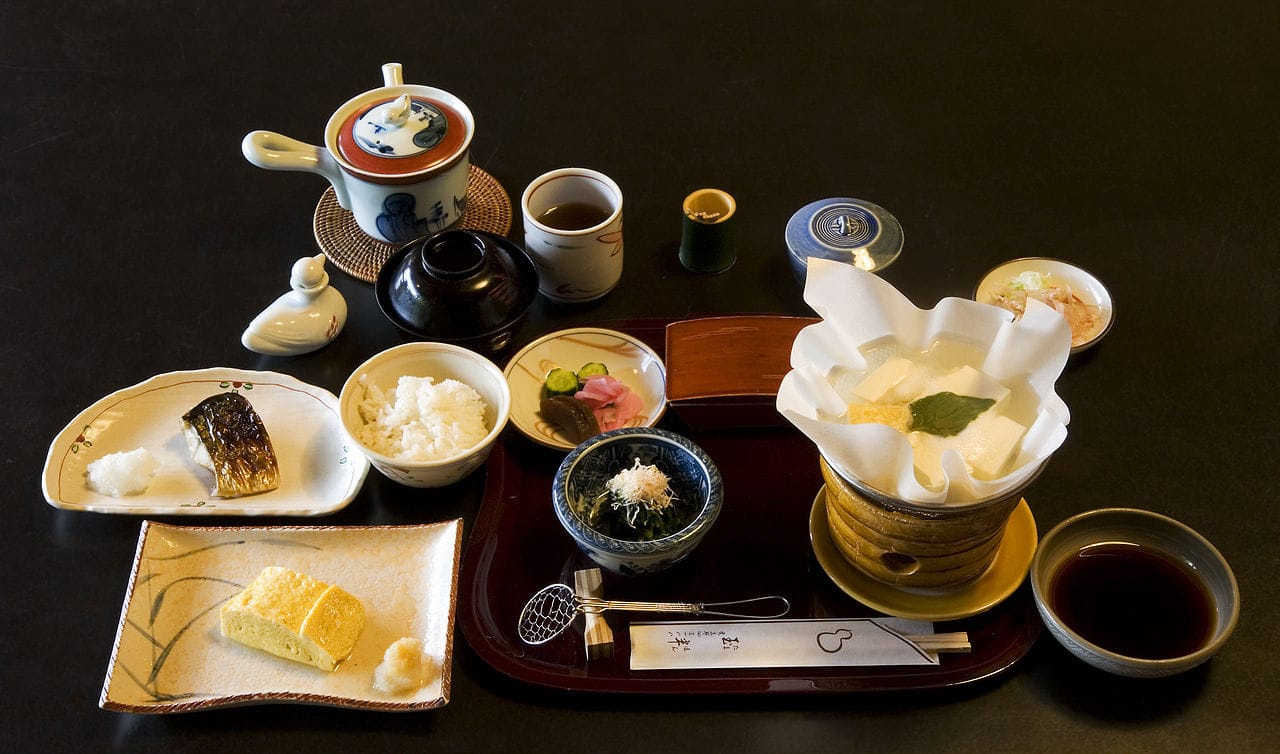
The first time tofu stopped me on a street, I was in Kyoto in November. A small wooden cart, a single elderly man, a copper pot of yudofu trembling over a charcoal flame. He ladled a wobbling square of silken curd into a shallow bowl, splashed dashi over it, topped it with a single sheaf of grated daikon. Five minutes, two thousand yen, and I have never since thought of tofu as plain.
Tofu is one of those foods Western kitchens have flattened. Cubed, marinated, pan-fried into beige indifference. On the streets of Asia, tofu is a vehicle for personality. Each country has its own register, its own preferred texture, its own moment in the day when a tofu vendor's stall makes more sense than any other meal. Five years of eating around the region taught me that tofu is the most expressive ingredient most people overlook.
Japan: the architecture of restraint
Yudofu, agedashi, hiyayakko, dengaku. Japanese tofu reads like a calligrapher's catalogue: each form has rules, each requires precision. The water matters. Kyoto tofu makers still talk about their well water as if it were a vintage. The block is shipped same-day, and the best places display the maker's name on a small wooden tag.
The street version of all this is the agedashi tofu booth at a depachika or a summer matsuri. Crispy outer skin, soft custard inside, dashi pooled around the base, scallions and katsuobushi swimming on top. Eat it standing, fast, before the heat dissipates. The contrast is the point.
China: the loud cousin
Mapo tofu in Chengdu is not a polite dish. The first lift of the spoon brings up a slick of red oil, the second a pebble of fermented black bean, the third a numbing flick of Sichuan peppercorn that makes your bottom lip vibrate. Street vendors in older parts of the city still serve mapo from cast-iron skillets that have not properly cooled in years.
Then there is stinky tofu. Yes, the smell. The first time you walk past a stall in Changsha you may turn around. The second time you pretend it is normal. The third time you order a portion deep-fried with chilli paste and pickled mustard greens, and you understand. The exterior is shattering. The interior is mild, almost milky, with a lactic edge that pairs perfectly with vinegar and garlic. Stinky tofu is street food's statement of confidence.
And dofu hua, the silken pudding eaten warm in the morning with brown-sugar syrup or savoury with chilli oil and pickled vegetables, depending on the city. Northern preference is sweet, southern is savoury, and arguments on this divide are well tracked in food forums.
Korea: heat and hand
Sundubu jjigae is the dish that brought tofu out of the side-dish role and into the centre of a Korean meal. A boiling earthenware pot, a flood of red broth, an entire block of soft tofu broken in by hand at the table, a raw egg cracked on top. You eat it with rice and a row of banchan and you sweat lightly, comfortably, the way Korean food makes you sweat.
On the streets of Seoul, the older grandmothers still sell handmade tofu near the markets. Buy a block, take it home, slice it thick, fry it with sesame oil and dip it in soy with chilli flakes and chopped scallion. This is not restaurant food. This is what Koreans eat when they are tired and want comfort.
Vietnam: tofu in the soft hours
Vietnamese tofu, dau hu nuoc duong, is closest to a dessert. A street vendor in Hanoi or Ho Chi Minh City carries two ceramic urns: one with warm silken tofu, one with ginger syrup. She ladles tofu into a bowl with a flat scoop, pours syrup, sometimes adds tapioca pearls. The texture is barely-set custard. The temperature is exactly between body and air. You eat it sitting on a plastic stool at three in the afternoon, when the heat has bent the city flat.
For something heartier, look for dau hu chien, fried tofu cubes served with rice noodles and shrimp paste. The shrimp paste is divisive. It is also, in my view, what makes the dish.
Indonesia and Malaysia: tahu in many tongues
Indonesian tahu is everywhere, but the street form most worth seeking is tahu gejrot in Cirebon. Hollow fried tofu cubes in a sauce of palm sugar, vinegar, fresh chilli and shallot. Sweet, sour, spicy, savoury, all at once. Eaten with a tiny wooden skewer, leaning over the bowl so the sauce does not drip on your shirt.
Malaysian tauhu sumbat, fried tofu pockets stuffed with shredded vegetables and dressed in peanut sauce, sits at the intersection of Chinese and Malay traditions. You can find it at any kopitiam in Penang. It pairs strangely well with hot teh tarik on a humid afternoon.
What this teaches a home cook
The first lesson is that tofu has temperature. It is not just hot or cold; it lives in a band where the curd is warm enough to soften but not so hot it loses structure. Most home cooks overcook it.
The second lesson is that tofu has terroir. The block sold in your neighbourhood Asian grocer was probably made yesterday, somewhere within a hundred kilometres. Try the silken next to the firm next to the smoked. They are different ingredients.
The third lesson, harder to teach, is that tofu is the canvas, not the painting. The dashi, the chilli oil, the syrup, the ginger, the fermented bean, the broth: those carry the flavour. The tofu carries the texture and the temperature. Get those right and the dish almost makes itself.
The supporting players
You cannot talk about Asian street tofu without talking about its companions. The bonito flakes that dance over hot agedashi. The crushed peanuts on Indonesian tahu gejrot. The chiu-chow chilli oil sliding off a piece of stinky tofu in Hong Kong. The scallion oil ladled over warm Taiwanese tofu pudding. Each pairing is regional, often city-specific, and almost always inseparable from the dish in the minds of the locals who eat it.
Try changing one component and a Chengdu auntie will tell you so. The bean paste in mapo tofu must be Pixian douban. The peppercorn must be from the right hillside. The texture of the silken curd must yield without dissolving. These are not preferences; they are rules learned in a thousand kitchens.
Where to start at home
If you want to bring this home, do three things. First, find a local tofu maker (almost every Asian district has one). Buy fresh silken and fresh firm. Compare them to whatever sits in plastic packs at your supermarket and you will understand why street tofu is treated as a perishable seasonal pleasure rather than a pantry staple.
Second, build a small pantry: dashi powder or kombu, light soy sauce, sesame oil, chiu-chow chilli oil, ginger root, scallions, white pepper. With those six things you can produce convincing versions of half the dishes in this article.
Third, eat tofu warm before you eat it cold. Most home cooks fail at tofu because they treat it like a cold protein. Heat it gently in liquid, season at the end, and serve it before it falls apart. The reward is immediate.
One bowl, one moment
If I could send you to one tofu experience this year, it would be a winter morning in Kyoto, in a tofu shop near the Philosopher's Path, where the proprietor has been making the same yudofu since the 1980s. Two pieces, dashi, a square of yuzu peel. You eat it slowly, looking out at the maples turning, and you understand why this ingredient anchors a quarter of the world's cooking.
And if Kyoto is not on the cards, walk into the next Asian market you pass, buy a block of fresh silken tofu, take it home, and do nothing more elaborate than warming it gently in good dashi with a pinch of grated ginger. The dish is older than most countries. It deserves the patience.