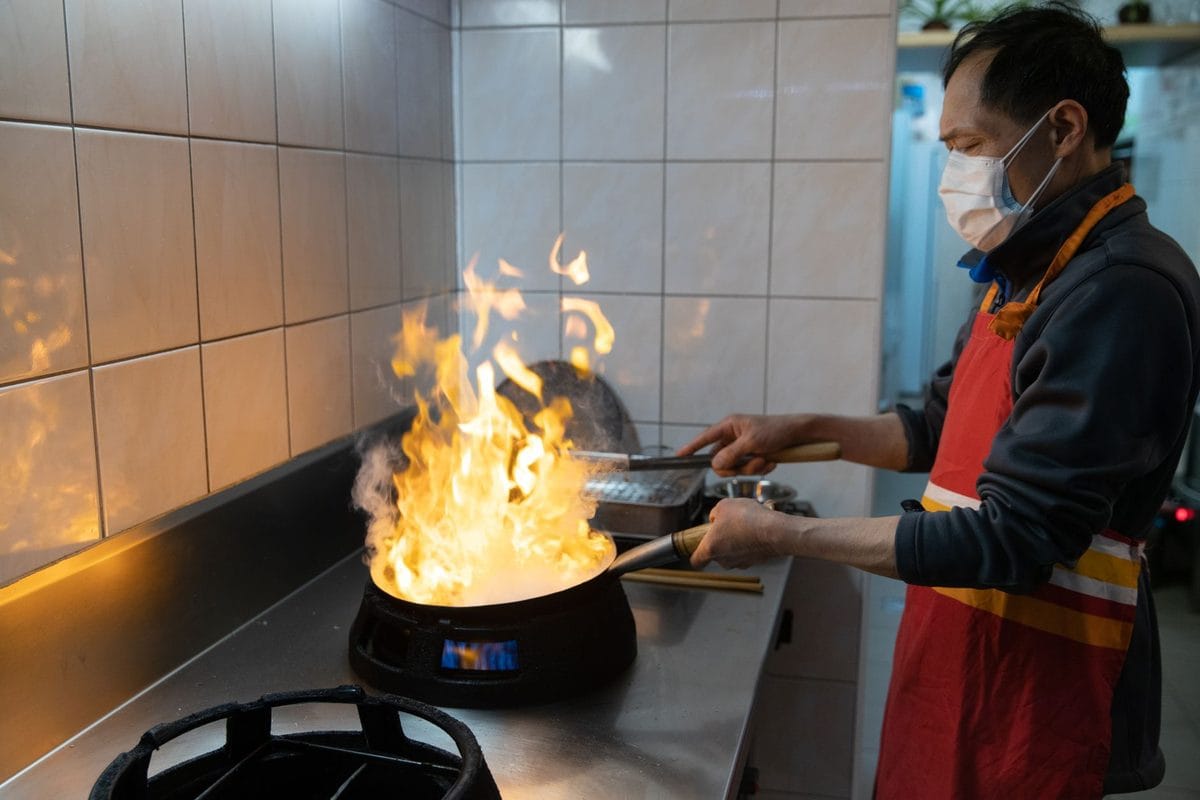
The first time you see it happen, you almost miss it. A cook in a narrow stall off Temple Street tips a ladle of oil into a wok already screaming hot, and for half a second the whole pan catches — a ring of blue-orange flame licking up around the beef and ho fun noodles before he snaps his wrist and the fire folds back into the dish like nothing happened. Ask him what just occurred and he won't reach for a technical term. He'll just say the wok breathed on the food. That phrase — wok hei, literally "breath of the wok" — is the closest thing Cantonese cooking has to a trade secret that everyone already knows about and almost nobody can reliably produce. It shows up on menus from Kowloon to Kuala Lumpur, usually as a boast rather than a description, because the people who can actually deliver it don't need to explain what it means.
What the Breath Actually Tastes Like
Wok hei isn't a sauce, a spice, or an ingredient you could buy in a jar, which is part of why it resists explanation to anyone who hasn't eaten it fresh off the flame. Diners describe it as a charred, smoky top note that sits just behind the taste of the food itself — not burnt, but singed at the very edge of burnt, the way good char siu gets at its blackened corners. Cantonese cooks will tell you a plate of beef chow fun without wok hei is technically the same dish and a completely different experience, and after eating both back to back it's hard to argue with them. The sensation fades fast, too — wok hei all but disappears within minutes of a dish leaving the flame, which is one reason the best versions rarely survive being boxed up, delivered, or held under a heat lamp.
The Chemistry, and Its Skeptics
Food scientists have spent real effort trying to pin down what happens in that half-second flare, and the tidiest explanation involves a burst of Maillard browning combined with the partial combustion of atomized oil droplets, seared onto the food's surface by heat well beyond anything a home stove burner can generate. Some researchers are less romantic about it: a few have argued the flame licking up around the wok is mostly theater, and that the real driver of flavor is simply extreme, evenly distributed heat plus fast, confident tossing — flame or no flame. It's a fair point, and one that deserves airing rather than dismissal. Ask a working cook in Guangzhou which theory they believe, though, and most just shrug. They didn't learn wok hei from a paper. They learned it from getting yelled at.
An Apprenticeship, Not a Recipe
That's the part outsiders tend to underestimate — wok hei was never written down as a set of instructions because it was never really transferable that way. In traditional Cantonese kitchens, a junior cook might spend a year or more just prepping vegetables and scrubbing woks before being allowed near the flame for anything beyond fried rice, and even then the early attempts routinely come out wrong: undercooked in the center, scorched at the edges, or missing the smoke entirely because the pan never got hot enough before the food went in. The wok itself matters almost as much as the arm behind it. A well-seasoned carbon steel wok, thin enough to heat and cool in seconds, responds to a jet burner in a way that heavy cast iron or a flat nonstick pan simply cannot match.
Skip any dish billed as having wok hei if it was cooked on an electric or induction hob — no matter how good the sauce tastes, the smoke character never fully arrives, because those surfaces heat metal evenly rather than concentrating ferocious heat at one point the way an open gas flame does. That's not a minor stylistic quibble. It's the difference between the dish and its imitation, and if you're choosing a stall in Hong Kong or Penang, watch for one working a domed wok over a roaring jet burner rather than a flat pan on a tabletop ring.
One Technique, a Dozen Street Kitchens
Wok hei has no passport.
Walk far enough beyond Guangdong and the flame-kissed wok shows up wearing different names and different seasonings, but the underlying craft is recognizably the same. In Penang and Kuala Lumpur, char kway teow gets its smoky depth from flat rice noodles tossed hard against a blackened wok with dark soy, prawns, and Chinese sausage, the whole plate finished in under two minutes because any longer turns the noodles soft instead of charred at the edges. Bangkok's pad kra pao stalls chase a similar effect, with holy basil and fish sauce hitting the pan just as the oil starts to smoke. Jakarta's kwetiau goreng and Ho Chi Minh City's wok-fried noodle stalls borrow the same logic, even where the seasoning drifts completely away from Cantonese roots.
- Hong Kong's dai pai dong stalls, several of which have earned Michelin Bib Gourmand recognition specifically for their wok hei in beef chow fun and clams in black bean sauce
- Singapore's hawker centers, where a single char kway teow vendor will often run one wok for an entire shift without ever letting it cool below cooking temperature
- Taiwan's night-market stir-fry stalls — less famous for the term itself, but chasing the identical result with high-output propane burners, among other regional variations that never made it onto an English menu
What ties all of it together isn't a shared name for the technique. It's the same blackened wok surface, the same two-minute window, and cooks who recognize the trick on sight the moment they taste someone else's version.
A Skill Running Out of Kitchens to Live In
Here's what nobody wants to say too loudly at the stalls that still do it well: this is a craft losing ground, and not because anyone stopped caring how the food tastes. Hong Kong, Singapore, and increasingly mainland Chinese cities have pushed hard toward electric and induction cooking in newly licensed food establishments, driven by fire codes, ventilation costs, and in some districts outright restrictions on open gas flame inside dense residential-commercial buildings. A stall that could once run a jet burner at full roar now has to fight for a variance or relocate to one of a shrinking number of buildings still wired and permitted for it. Younger cooks trained in these newer, cooler kitchens often never rack up the years of exposure to a proper jet burner that older generations took for granted, and that's the real loss — not the flame itself, but the thousands of repetitions it takes to know instinctively when a wok has hit the right heat.
The stalls that have survived Hong Kong's redevelopment waves know exactly what they're sitting on. Ask a regular why they keep coming back to a particular dai pai dong and price is rarely the answer. It's that the cook behind the wok still knows how to make it breathe, and there are fewer counters left standing each year where anyone still gets the chance to learn how.