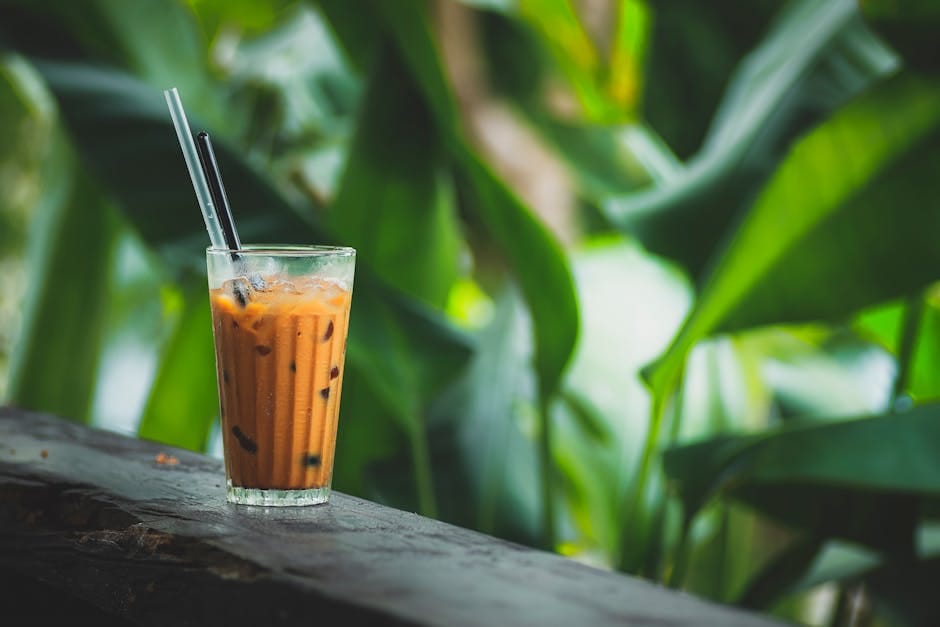
Neon Orange, Unapologetically Sweet
The first thing you notice about Thai iced tea is the color. It's orange. Not the gentle amber of brewed Ceylon tea or the reddish-brown of an Arnold Palmer. It's a saturated, traffic-cone, sunset-over-Phuket orange that looks like it was designed in a graphics program rather than brewed in a kitchen. The color is so vivid that first-time visitors to Thailand often assume it must be artificial, a chemical creation designed to attract tourists. The truth is more interesting: Thai iced tea — cha yen in Thai — gets its color from a combination of strongly brewed Ceylon tea, star anise, orange blossom water, and yes, food coloring (usually FD&C Yellow #6), which has been part of the traditional recipe since at least the 1940s. The dye isn't a modern addition. It's a feature, not a bug, and it's been making beverages glow for longer than most of the people complaining about it have been alive.
Cha yen is Thailand's most ubiquitous street beverage, sold from carts and stalls across the country for 25-40 baht ($0.70-1.15). The preparation is theatrical: strong tea is brewed in a cloth sock filter, poured back and forth between two cups from great height to aerate and cool it (a technique borrowed from Malaysian teh tarik), sweetened with sugar and condensed milk, poured over ice in a tall glass, and topped with a pour of evaporated milk that descends through the orange tea in a swirl of white and amber. The whole thing takes about 90 seconds and produces a drink that is simultaneously refreshing, absurdly sweet, and genuinely addictive. In Bangkok, cha yen vendors operate from breakfast through late evening, and the drink is consumed at all hours — with pad thai at lunch, as a 3 p.m. pick-me-up, or at 11 p.m. outside a nightclub. It's a constant.
What's Actually in the Tea
The base is a strongly brewed black tea, typically a Thai tea mix (the dominant brand is ChaTraMue, sold in tall yellow-and-red cans at every Thai grocery) that contains Ceylon tea leaves, star anise, tamarind seed, and food coloring. The star anise is the ingredient that gives Thai tea its distinctive flavor — that warm, licorice-adjacent, slightly medicinal note that separates it from every other iced tea in the world. Some brands also include crushed tamarind seed, which adds a subtle tartness, and orange blossom water, which contributes a floral high note that plays against the tea's earthiness.
The sweetener is where Thai iced tea either wins you over or loses you. Traditional cha yen uses both granulated sugar and sweetened condensed milk — a double hit of sweetness that can produce a drink with sugar content approaching 50 grams per serving. The condensed milk also contributes the creamy, almost caramel-like richness that makes Thai tea taste fundamentally different from tea-with-milk. It's not just sweet tea with cream. It's a dessert that happens to be liquid and contains caffeine. For Thai palates, which are calibrated to balance sweet, sour, salty, and spicy flavors simultaneously, this level of sweetness is counterbalanced by the rest of the meal — a plate of intensely spicy som tam or a bowl of sour tom yum neutralizes the sugar. Drinking Thai iced tea without spicy food is like eating the sugar without the lemon in a lemon tart. It works, but it's missing the point.
The Condensed Milk Factor
Sweetened condensed milk — the thick, canned, tooth-achingly sweet product that most Americans associate with fudge and holiday pie recipes — is a foundational ingredient across Southeast Asian beverage culture. Its prevalence traces to the colonial period, when canned goods were among the first Western industrial products to penetrate Asian markets. Fresh milk was difficult to transport and store in tropical climates, but canned condensed milk was shelf-stable, cheap, and familiar from British and Dutch colonial kitchens. By the mid-20th century, condensed milk had been adopted into local food cultures so thoroughly that it's no longer perceived as a foreign product — it's as Thai as fish sauce, as Vietnamese as pho.
In Thai iced tea, condensed milk serves three functions: it sweetens, it adds creaminess, and it creates the visual effect of the white-through-orange swirl that makes cha yen instantly recognizable. The evaporated milk that's poured on top — unsweetened, but still rich — adds another layer of dairy richness and creates the visual contrast. Some vendors use half-and-half or heavy cream instead of evaporated milk for the topping, which produces an even richer drink that approaches milkshake territory. At Hia Chew Dee on Yaowarat Road in Bangkok's Chinatown, the cha yen uses a proprietary tea blend that the owner mixes himself, and the condensed-to-evaporated milk ratio is calibrated to produce a drink that's rich without being cloying. It costs 35 baht ($1) and it's the best Thai iced tea I've had in Bangkok, which is a claim I'm prepared to defend aggressively.
The Global Spread
Thai iced tea followed Thai restaurants into the global diaspora, becoming one of the most widely recognized Thai beverages worldwide. In the United States, where Thai restaurants have proliferated since the 1970s (partly due to a deliberate Thai government program called "Global Thai" that promoted Thai cuisine internationally), cha yen is on virtually every Thai restaurant menu, priced at $3-5 and served in tall glasses with a satisfying orange-and-white gradient. The American version is usually less sweet than the Thai original, adjusted for palates that aren't eating som tam alongside it, but the core flavor — the star anise, the condensed milk, the vivid color — is consistent.
The drink has also spawned an ecosystem of Thai-tea-flavored products: Thai tea ice cream (excellent — the condensed milk base translates perfectly to frozen form), Thai tea mochi (the Japanese rice cake filled with Thai tea cream, a fusion that shouldn't work but does), Thai tea boba (a natural marriage that combines two of Asia's most popular beverages), and Thai tea Kit-Kats (released as a limited edition in Thailand and Japan, now available on import snack websites for roughly 10 times their original retail price). The flavor profile — sweet, creamy, aromatic, and orange — is distinctive enough to be identifiable in any format, which is the hallmark of a truly successful flavor. You can't do that with Earl Grey.
Making It at Home
Making proper Thai iced tea at home requires exactly one specialty ingredient: Thai tea mix. ChaTraMue (also spelled Cha Tra Mue) is the standard, available at any Asian grocery store for about $4-6 for a 400g can that will produce dozens of drinks. Brew the tea strong — 2 tablespoons per cup of boiling water, steeped for 5 minutes in a fine mesh strainer. Strain out the leaves (they'll be vivid orange and will stain anything they touch permanently, so use stainless steel). Stir in 2 tablespoons of granulated sugar and 2 tablespoons of sweetened condensed milk while the tea is hot. Let it cool to room temperature, then pour over a tall glass filled with ice. Top with 2 tablespoons of evaporated milk, poured slowly so it cascades through the orange tea.
The result should be blindingly orange, creamy, sweet, and flavored with that unmistakable star anise warmth. Adjust sweetness to taste — Thais would use more sugar than this recipe specifies, while most Western palates find this level sufficient. The tea keeps in the refrigerator for up to three days (without ice, which dilutes it) and actually improves slightly as the flavors meld overnight. If you want to be particularly extra, freeze leftover Thai tea in ice cube trays and use those cubes instead of regular ice — the drink doesn't dilute as the cubes melt, it just gets more intensely Thai-tea-flavored. This is the kind of small detail that separates "I made Thai iced tea" from "I made Thai iced tea and someone asked me for the recipe."