One Country, Six Bowls, Zero Consensus
Ask a Japanese person what the best ramen style is and you'll start an argument that makes pizza debates in New York look civil. Ramen in Japan is violently regional. A Sapporo native will insist that miso broth is the only legitimate base, while someone from Fukuoka will look at you with genuine pity if you've never had proper Hakata tonkotsu. Tokyo sits in the middle, smugly claiming its shoyu tradition is the original and everything else is a variation. Everyone is wrong. Everyone is right. That's the beauty of it.
The modern ramen landscape evolved from Chinese wheat noodle soups that arrived in Japan's port cities during the late 19th and early 20th centuries. Local cooks adapted the concept to regional tastes, available ingredients, and climate. Cold northern Hokkaido produced rich, warming miso broths. Subtropical Kyushu developed lighter-seeming but deeply concentrated pork bone soups designed to be eaten fast. The result is a country where driving 200 kilometers in any direction fundamentally changes what arrives in your bowl. Here are six styles that define the map.
Sapporo Miso Ramen: Hokkaido's Warming Heavyweight
Sapporo miso ramen was born in the 1950s at a shop called Aji no Sanpei, where the owner reportedly added noodles to a customer's miso soup on a whim. The style evolved into something much more deliberate: a thick, rich broth built on pork and chicken bones, finished with a generous dose of red or white miso that gives the soup a slightly grainy, deeply savory character. The standard toppings include stir-fried bean sprouts and ground pork — that stir-fry step is crucial, as the vegetables hit a screaming-hot wok before being laid on top, adding a charred sweetness that cuts through the miso's intensity. Corn, butter, and sliced scallions round out the bowl.
The butter-corn combination sounds gimmicky until you taste it in context. Hokkaido produces some of Japan's best dairy, and a knob of cold butter melting slowly into the steaming miso broth creates a richness that's almost obscene. The corn adds pops of sweetness between bites of the thick, curly noodles that are standard in Sapporo — wavy yellow noodles with enough chew to stand up to the heavy soup. At Sumire in Sapporo's Toyohira ward, the miso broth arrives under a thin layer of lard that keeps it searingly hot even in Hokkaido's brutal winters. It's not subtle food. It's food engineered for survival, and it's probably the most satisfying single bowl of anything you'll eat in Japan when the temperature drops below freezing.
Hakata Tonkotsu: Fukuoka's Milky Obsession
If you've eaten ramen outside of Japan, there's a good chance it was some version of Hakata tonkotsu. Originating in the Hakata district of Fukuoka on the southern island of Kyushu, this style features a broth made by boiling pork bones at a rolling boil for 12 to 20 hours until they disintegrate into a creamy, opaque, milk-white liquid. The process, called paitan cooking, extracts collagen, marrow, and fat to create a soup with an almost custard-like body. The smell of a real tonkotsu kitchen is powerful — funky, porky, slightly sulfuric — and some people find it off-putting. Those people are missing out.
The noodles are thin and straight, a deliberate choice because Hakata ramen is designed to be eaten quickly, often at outdoor yatai (food stalls) along the Naka River. Thin noodles absorb the broth faster but also get soggy faster, which is why Hakata introduced the kaedama system: when you finish your noodles, you order a refill of fresh noodles (around 100-150 yen, roughly $0.70-$1) into your remaining broth. Before ordering, you specify your noodle firmness — barikata (very firm), kata (firm), futsu (normal), or yawa (soft). Most regulars go barikata or harder. At Shin-Shin near Tenjin station, the tonkotsu is so concentrated that a thin film of collagen forms on the surface as it cools, and the chashu pork melts into the soup rather than sitting on top of it.
Tokyo Shoyu: The Understated Classic
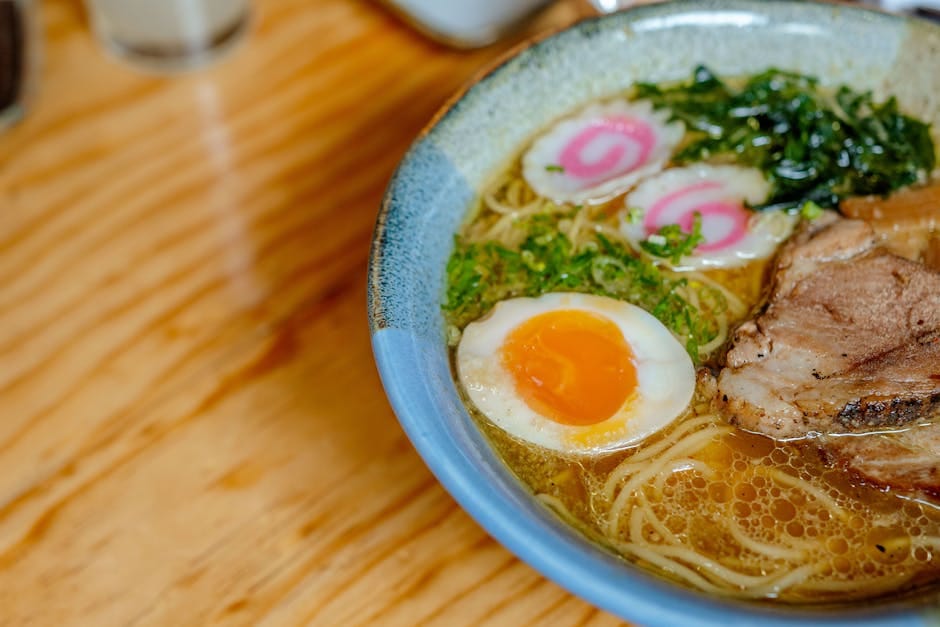
Tokyo-style shoyu (soy sauce) ramen is the closest thing Japan has to a "default" ramen, which is exactly why it gets overlooked. The broth is typically a clear or semi-clear chicken and dashi stock seasoned with soy sauce, producing a brown, aromatic soup that tastes of the sea and the farmyard simultaneously. It's less aggressive than tonkotsu, less earthy than miso, and relies on balance rather than a single dominant flavor. The noodles are medium-thickness, slightly curly, and the standard toppings are menma (fermented bamboo shoots), nori, narutomaki (that iconic white-and-pink fish cake spiral), sliced scallions, and chashu.
This is the ramen of manga and anime, the bowl that sits in the cultural imagination as "ramen" before any regional modifier gets attached. At Fuunji in Shinjuku, the tsukemen (dipping noodle) variation takes the shoyu base and concentrates it into an almost impossibly flavorful dipping sauce — you dunk cold noodles into the hot broth and slurp them aggressively. The line outside Fuunji starts forming before they open and rarely gets shorter than 30 people deep. Tokyo's ramen scene has become so competitive that new shops open and close constantly, but the shoyu foundation endures because it works. Sometimes the quiet option is the right one.
Kitakata Ramen: The Morning Bowl
Kitakata, a small city in Fukushima prefecture with a population under 50,000, has one of the highest per-capita concentrations of ramen shops in Japan — over 120 at last count. The local style uses a pork and niboshi (dried sardine) broth seasoned with soy sauce, producing a lighter, more delicate soup than Tokyo shoyu. The defining feature is the noodles: thick, flat, wavy, and exceptionally chewy, hand-pulled using a technique called temomi that involves manually curling and folding the dough. They have a texture unlike any other ramen noodle — springy, almost bouncy, with a slightly rough surface that grabs the broth.
What makes Kitakata truly unique is the tradition of asa-ra — morning ramen. Shops here open at 7 a.m., and locals eat a bowl of ramen for breakfast as casually as someone in Paris might have a croissant. The morning broth tends to be slightly lighter, the portions slightly smaller, and the experience oddly refreshing despite the soup being hot and porky. At Bannai Shokudo, one of the oldest shops in the city, the broth is made with aged soy sauce that adds a mellow, almost wine-like depth. The chashu here is lean and layered, not the fatty belly cuts you find in tonkotsu shops. Kitakata ramen doesn't punch you in the face. It sits down next to you and quietly becomes the best meal of your day.
Wakayama Ramen: The Hidden Champion
Wakayama, a coastal city south of Osaka, produces a ramen style that even many Japanese people haven't tried. The broth is a hybrid: tonkotsu-shoyu, meaning pork bones cooked to opacity and then seasoned heavily with dark soy sauce. The result is a brown, murky, deeply complex soup that somehow manages to be both rich and sharp at the same time. The soy sauce adds a fermented edge that you don't get in pure tonkotsu, and the pork bone base gives it a body that straight shoyu can't achieve. It's the best of both worlds, and the fact that Wakayama isn't on most tourists' itineraries means the shops are refreshingly local.
The tradition at Wakayama ramen shops includes a peculiar honor system for side dishes. Trays of hayazushi (pressed mackerel sushi) and boiled eggs sit on the counter, and you take what you want. When you're done eating, you tell the staff what you ate and they add it to your bill. Nobody checks. At Ide Shoten, a cramped shop that seats maybe 15 people, the tonkotsu-shoyu broth has a layered richness that unfolds as you eat — first the salt of the soy, then the creamy pork, then a lingering sweetness from the long-simmered bones. The noodles are thin and straight, Hakata-style, which makes sense given the tonkotsu base. A bowl runs about 800 yen ($5.50), and the hayazushi is 170 yen per piece.
Onomichi Ramen: The Fish-Forward Outsider
Onomichi, a small hillside city in Hiroshima prefecture overlooking the Seto Inland Sea, makes a ramen that reflects its geography. The broth uses chicken and pork bones as a base, but the defining ingredient is small, local dried fish — usually sardines or anchovies — simmered into the stock. On top of this already complex soup floats a layer of rendered pork back fat in small, pebbly chunks that slowly melt as you eat, releasing bursts of richness into the broth. The effect is a soup that tastes simultaneously of the sea and the land, with fat globules that catch the light like tiny, delicious jewels.
The noodles are flat and medium-width, and the standard toppings are minimal: scallions, menma, and chashu. The restraint is intentional — the broth is doing all the work, and piling toppings on top would obscure the careful balance between fish, pork, and fat. At Tsutafuji, the oldest ramen shop in Onomichi, the broth recipe hasn't changed in decades, and the back fat chunks are cut by hand each morning. The shop overlooks the harbor, and eating Onomichi ramen while watching fishing boats is one of those moments where food and place merge into something more than the sum of their parts. Get here before noon or prepare to wait.
Beyond the Big Six
These six styles barely scratch the surface. Nagoya has its Taiwan ramen (spicy ground pork, not actually Taiwanese). Tokushima serves a sweet, pork-rib-based soup with a raw egg on top. Asahikawa in northern Hokkaido makes a double-broth shoyu with a lard layer to keep it warm in temperatures that make Sapporo look tropical. And then there's the entire universe of individual ramen shops doing their own thing, ignoring regional traditions entirely, creating new styles that might become the next regional standard in fifty years. The ramen map of Japan isn't static — it's a living, simmering, constantly evolving argument about what belongs in a bowl of noodles.