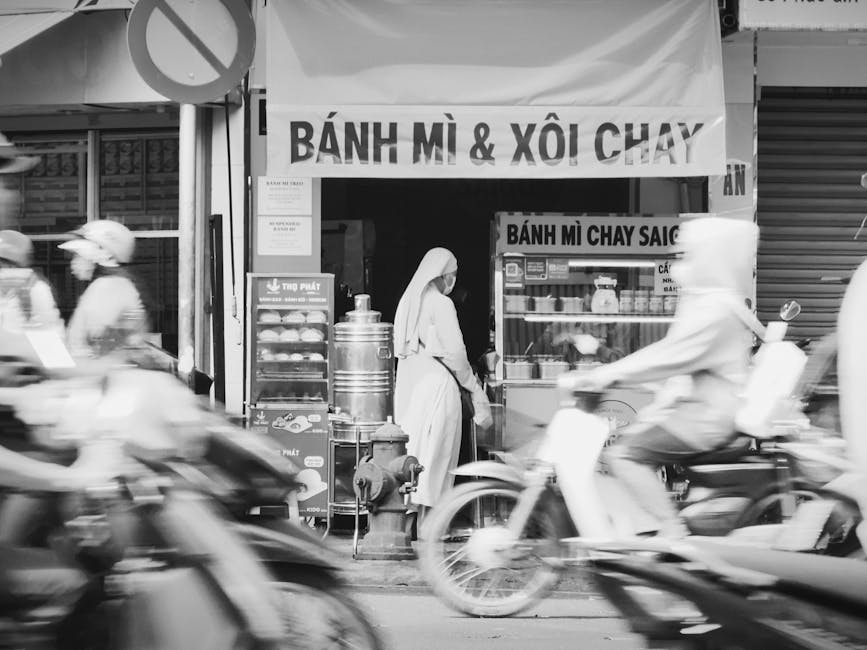
The City That Eats on the Street
Ho Chi Minh City — Saigon, as everyone who lives there still calls it — has approximately 7 million residents and approximately 7 million opinions about where to eat pho. The city's relationship with street food isn't a cultural curiosity or a tourist attraction. It's infrastructure. An estimated 70% of Saigon's population eats at least one meal per day from a street vendor or sidewalk kitchen, and the city's culinary geography is organized not around restaurants but around specific dishes served at specific addresses, many of which have been operating from the same spot for decades. You don't go to a "Vietnamese restaurant" in Saigon. You go to the pho lady on Pasteur Street. The banh mi cart near Ben Thanh. The com tam stall on Nguyen Van Cu that's open from 6 a.m. to 9 a.m. and not a minute longer. The food is tied to place with a specificity that would feel obsessive anywhere else but in Saigon feels like navigation.
The eating happens low to the ground — literally. Saigon's street food culture is conducted from plastic stools that sit 30 centimeters off the pavement, arranged around low tables or no tables at all. You sit with your knees at your chest, your bowl at chin level, and the motorbike traffic flowing past close enough to touch. The posture is uncomfortable for about five minutes, after which your pho arrives and you forget you have a body. The intimacy of the setting — elbow-to-elbow with strangers, the cook visible two meters away — creates a social democracy that restaurants can't replicate. At a sidewalk pho stall, the CEO and the motorbike taxi driver eat the same bowl at the same table. The pho doesn't know the difference, and neither does the cook.
Pho: The Southern Version
The pho debate in Vietnam — North vs. South — generates more heat than the chilies in the condiment tray. Northern pho (Hanoi-style) is austere: a clear, deeply flavored beef broth, flat rice noodles, thinly sliced beef, and fresh herbs. The broth does all the work. Southern pho (Saigon-style) is the maximalist version: the broth is slightly sweeter (more rock sugar), the noodle bowl comes with a jungle of accompaniments — Thai basil, bean sprouts, sawtooth herb, lime wedges, sliced chilies, hoisin sauce, and Sriracha — and the toppings are more varied (beef balls, tripe, tendon alongside the standard sliced raw and cooked beef). Southerners consider Northern pho underseasoned. Northerners consider Southern pho a circus. Both are right on their own terms.
The definitive Saigon pho experience is at Pho Le on Nam Ky Khoi Nghia Street in District 3. The shop has been operating since the 1970s and serves a single product: pho bo (beef pho) with your choice of raw sliced beef (tai), cooked brisket (chin), tendon (gan), and beef balls (bo vien). The broth is clear, aromatic with star anise and cinnamon, and deeply beefy from what the kitchen claims is 12 hours of simmering. A bowl costs 60,000-85,000 VND ($2.40-3.40) depending on size and toppings. The shop opens at 6 a.m. and closes when the broth runs out, usually by 1 p.m. Get there by 7:30 to avoid the worst of the line. Add the herbs, squeeze the lime, dip the beef in hoisin, and slurp with abandon. Saigon pho is not polite food. It's survival food elevated to art.
Banh Mi: The Sandwich That Conquered
Banh mi — the Vietnamese baguette sandwich — is the most successful fusion food in history, and I'll argue that against anyone. A French baguette (introduced during colonial rule), Vietnamese pickled daikon and carrot (do chua), pate (French, but adopted), Vietnamese cold cuts (cha lua pork roll, head cheese), cilantro, chili, Maggi seasoning sauce, and mayo come together in a sandwich that belongs to no single culinary tradition and is better than anything either tradition produces separately. The baguette itself is different from a French baguette: lighter, airier, with a thinner crust, made with a blend of wheat and rice flour that gives it a delicate crunch instead of the chewy resistance of Parisian bread.
Banh Mi Huynh Hoa on Le Thi Rieng Street in District 1 has been called the best banh mi in Saigon so consistently that the claim has become self-fulfilling — the line stretches down the block at all hours. The banh mi here is overstuffed to the point of structural failure: layers of pate, butter, multiple cold cuts, pickled vegetables, and cucumber, pressed into a baguette that barely contains its contents. It costs 47,000 VND ($1.90) and is substantial enough to constitute a full meal. But the beauty of Saigon's banh mi culture is that you don't need the famous stall. Every neighborhood has a banh mi cart, every cart makes a competent sandwich, and the floor of banh mi quality in Saigon is higher than the ceiling in most other cities. Even a mediocre Saigon banh mi is better than 90% of the sandwiches you've eaten in your life.
Com Tam: The Broken Rice That Won
Com tam — broken rice with grilled pork — is Saigon's everyday lunch, the dish that office workers, students, and manual laborers eat when they're hungry and don't want to think about it. The "broken rice" was originally the fractured grains left over from the milling process, sold cheaply because they couldn't be sold as whole-grain rice. Some resourceful Saigon cook discovered that these broken grains, steamed, have a slightly drier, fluffier texture than whole rice — perfect for absorbing the juices from grilled meat. The standard com tam plate includes a pork chop (suon) marinated in lemongrass, garlic, fish sauce, and sugar, grilled over charcoal until the edges char and the fat renders; a piece of cha trung (steamed egg meatloaf, dense and savory); bi (shredded pork skin mixed with toasted rice powder); and a fried egg. The plate is served with pickled vegetables, a small bowl of fish sauce (nuoc cham), and sliced cucumber.
At Com Tam Ba Ghien on Dang Van Ngu Street in Phu Nhuan District, the pork chops are grilled over coconut shell charcoal, which burns hotter and cleaner than wood charcoal and imparts a subtle sweetness to the meat. The chop is thick, juicy, and aggressively charred on the surface — you can smell it from across the street. A full plate costs 45,000-55,000 VND ($1.80-2.20). The shop opens at 5:30 a.m. (com tam is a legitimate breakfast food in Saigon) and operates through late evening. It's the kind of place where you eat standing if all the plastic stools are taken, and you eat fast because there's always someone waiting for your seat.
Bo Kho: The Beef Stew Nobody Talks About
Bo kho — Vietnamese beef stew — gets criminally overlooked in the global conversation about Vietnamese food, overshadowed by pho and banh mi despite being one of the most satisfying dishes in the entire cuisine. Chunks of beef shank and tendon are slow-braised with lemongrass, star anise, cinnamon, annatto seeds (which give the stew its vivid red-orange color), and carrots in a broth that's thicker and more concentrated than pho but lighter than a French stew. The meat falls apart at the touch of a spoon. The broth is simultaneously rich and bright, with the lemongrass and star anise providing aromatic lift. Bo kho is served two ways: with a baguette (banh mi bo kho) for dipping, or over rice noodles (bo kho voi hu tieu).
At Bo Kho Ganh on Ly Chinh Thang Street in District 3, the stew has been simmering since before dawn, and the morning-rush version — when the flavors have melded through hours of gentle cooking but the vegetables are still intact — is the version to get. A bowl costs 50,000 VND ($2). The baguette served alongside is warm, freshly baked, and designed specifically for dunking. The correct technique: tear off a piece of bread, press it into the stew until it's saturated with the red-orange broth, eat. Repeat until the bread is gone, then drink the remaining broth directly from the bowl. Nobody will judge you. Everyone else is doing the same thing.
The District Map
Saigon's food geography follows its district numbering in loose patterns. District 1 (central, tourist-heavy) has the famous addresses — Pho 2000 near Ben Thanh, Banh Mi Huynh Hoa — but also the highest concentration of overpriced, tourist-adjusted versions. District 3 (slightly north, more residential) has the best concentration of quality-to-value street food: Pho Le, excellent bun bo Hue stalls on Nguyen Dinh Chieu, and the com tam stalls along Ba Huyen Thanh Quan. District 5 (Cholon, Saigon's Chinatown) offers a different food universe entirely: Cantonese-Vietnamese fusion, including hu tieu (a pork and shrimp noodle soup with Chinese origins), dim sum, and Chinese-style roast meats. District 4 (across the river, working-class) has the cheapest and most intense street food, with narrow alleys lined with smoking grills and the sweet, meaty smell of charcoal-grilled pork hanging in the air from dawn to midnight.
The best eating in Saigon happens not at any single address but in motion — hopping between stalls, following recommendations from the previous cook, trusting the stool density (more occupied stools = better food), and accepting that the best meal of your life might happen at a place with no name, no menu, and no seating beyond a piece of blue plastic stretched over a metal frame. That's Saigon. The food finds you faster than you find it.