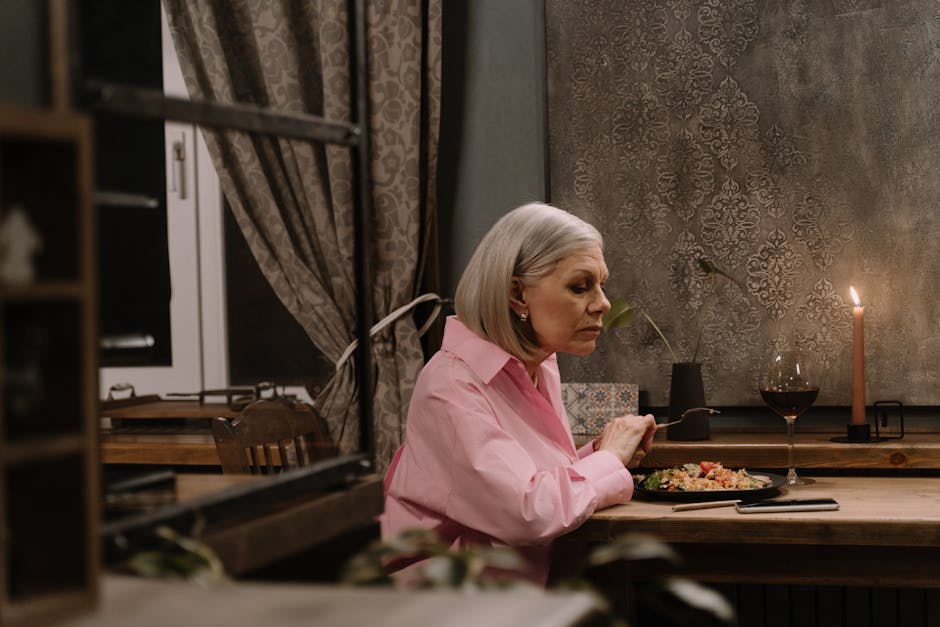
In many Western countries, eating alone at a restaurant carries a faint social stigma — a whiff of loneliness that makes some people choose delivery over a table for one. Asia has no such hangup. Across the continent, solo dining is not just accepted but architecturally supported, culturally normalized, and in some cases actively celebrated. Japan has built an entire restaurant category around it. Korea has coined a word for it (혼밥, honbap — eating alone). Thailand's street food culture makes solo dining the default mode. If you've ever felt self-conscious about eating alone, Asia is about to fix that.
Japan: Solo Dining as Design Philosophy
Japan is the undisputed world champion of solo dining infrastructure. The counter seat — where you face the chef rather than other diners — is standard in ramen shops, sushi bars, yakitori joints, tempura houses, and izakayas. The counter isn't a consolation prize for people who couldn't get a table. It's often the best seat in the house, offering a front-row view of skilled cooks at work and the possibility of conversation with the chef (if both parties are inclined).
Ichiran Ramen took solo dining to its logical extreme with individual booths separated by partitions, eliminating even the possibility of eye contact with other diners. But Ichiran is the dramatic example, not the norm. Most Japanese restaurants accommodate solo diners naturally — the word "ohitori-sama" (お一人様, "party of one") carries no negative connotation. Walk into a mid-range ramen shop in Tokyo alone at 8 PM, and you'll find half the counter occupied by other solo diners eating in comfortable silence.
Convenience stores (konbini) offer another solo dining ecosystem. The eating counters at 7-Eleven, Lawson, and FamilyMart — where you can eat a surprisingly good meal of onigiri, fried chicken, and salad for under 600 yen ($4) — are used primarily by solo diners. No one questions it. No one notices. You eat, you leave, it's efficient and dignified.
The Yoshinoya Model
Gyudon (beef bowl) chains — Yoshinoya, Matsuya, Sukiya — have perfected the solo dining experience through pure operational efficiency. Enter, buy a ticket from the machine, sit at the counter, receive your bowl within 90 seconds. The speed eliminates any awkwardness of sitting alone because you're barely sitting. These chains serve approximately 1 million meals per day in Japan, and the vast majority go to solo diners. The food is reliable, the price is low (a regular gyudon is 400-500 yen/$2.75-$3.50), and the experience is perfectly calibrated for someone who wants to eat well, alone, quickly.
Korea: The Honbap Revolution
Korea's relationship with solo dining is more complicated. Korean food culture traditionally emphasizes communal eating — the shared banchan, the bubbling stew placed at the table's center, the BBQ grill that practically requires multiple people to manage. For decades, eating alone in Korea carried mild social discomfort, and many restaurants simply didn't accommodate tables for one.
That changed rapidly in the 2010s. The honbap (혼밥, eating alone) trend emerged alongside honhap (혼합, doing things alone generally), driven by younger Koreans who rejected the pressure to constantly socialize. Restaurants adapted: solo dining counters appeared in Korean BBQ restaurants (with smaller grills and pre-portioned meat sets), gukbap (rice soup) restaurants became unofficial solo dining headquarters, and convenience store dining expanded dramatically. CU, GS25, and Emart24 now offer seating areas specifically designed for solo meals, complete with phone charging stations and privacy partitions.
The best solo dining in Korea happens at gukbap restaurants — places serving dwaeji gukbap (pork rice soup), sundae gukbap (blood sausage rice soup), and galbitang (short rib soup). These restaurants are architecturally designed for speed and solitude: counter seating, individual portions, and a self-serve banchan station where you grab your own kimchi, pickled radish, and green peppers. A bowl of dwaeji gukbap in Busan's Ssiat Hotteok Dwaeji Gukbap district costs 8,000-10,000 won ($6-7.50), comes with a mountain of rice, and is deeply satisfying to eat alone on a cold evening with nothing but your thoughts and the steam rising from the bowl.
The Korean poet Kim Haengsuk wrote: "Eating alone is eating with yourself. The company is better than you think."
Thailand: Street Food Is Solo Food
In Thailand, solo dining isn't a trend or a movement — it's just how street food works. You walk up to a vendor, you order, you eat at a plastic table or standing up or on a park bench. There's no hosting, no table assignment, no waiting. The transaction is between you and the food, and whether you're alone or with ten friends changes nothing about the experience except the order volume.
Bangkok's street food culture is especially generous to solo diners. A single plate of pad kra pao (basil stir-fry) with rice and a fried egg costs 50-60 baht ($1.40-$1.70). A bowl of boat noodles in Rangsit or Victory Monument costs 15-25 baht. A mango sticky rice from a cart costs 40 baht. You can eat three meals a day from street vendors without ever sitting at a table with another person, and no one will think anything of it because half of Bangkok eats this way.
The Thai shopping mall food court is another solo diner's paradise. The system — buy a card at the counter, load it with cash, order from any vendor, eat at communal tables, return the card for a refund of the balance — is designed for individual transactions. MBK Center, Terminal 21, and Siam Paragon all have food courts where solo diners outnumber groups during weekday lunches.
China: The Hot Pot Problem and Its Solutions
Solo dining in China varies dramatically by cuisine type. Noodle shops, rice plate restaurants (快餐, kuaican), and dumpling houses are perfectly set up for individual diners — you order one portion, it arrives, you eat. But hot pot — China's most popular social dining format — presented a challenge for solo diners until recently.
The solution: mini hot pot. Chains like Chongqing Xiaolong Kan and local restaurants across China now offer individual-sized pots with smaller ingredient portions and lower price points. Haidilao's solo dining service includes a stuffed bear placed opposite you at the table so you don't face an empty seat — a gesture that's either endearing or patronizing depending on your temperament. More practically, many hot pot restaurants now have counter seating with individual induction burners, allowing solo diners to enjoy the hot pot experience without occupying a table designed for four.
The Practical Solo Dining Toolkit
Across Asia, certain restaurant formats reliably welcome solo diners. Ramen and noodle shops (counter seating is standard). Curry houses (individual portions by design). Conveyor belt sushi (self-serve, self-paced). Food courts (communal tables, individual ordering). Street food (inherently individual). Rice plate restaurants (one plate, one person). The pattern: restaurants where the unit of service is the individual dish rather than the shared table.
Timing matters. Lunch is universally the easiest solo dining meal — restaurants expect individual workers on break, and many offer set lunches designed for one. Dinner solo dining is completely normal in Japan, Korea, and at street food venues everywhere. It's slightly less common at upscale restaurants across Asia, but even there, the counter seat is your friend.
Language barriers actually make solo dining easier in some ways. When you can't have extended conversation, the meal becomes about the food and your own experience of it. Pointing at a menu, receiving a dish, eating it with full attention — this is dining stripped to its essence, and it can be genuinely meditative.
Why It Matters
Solo dining in Asia isn't just convenient for travelers without companions. It represents a food philosophy worth adopting: the idea that eating well is its own reward, that a meal doesn't require social performance to be valid, that sometimes the best company at dinner is the food itself. The Japanese salaryman at the ramen counter, the Korean student with her gukbap, the Thai vendor eating her own noodles between customers — they're not lonely. They're eating. And the food, when you're paying attention to it instead of conversation, can be the most absorbing companion you'll find.