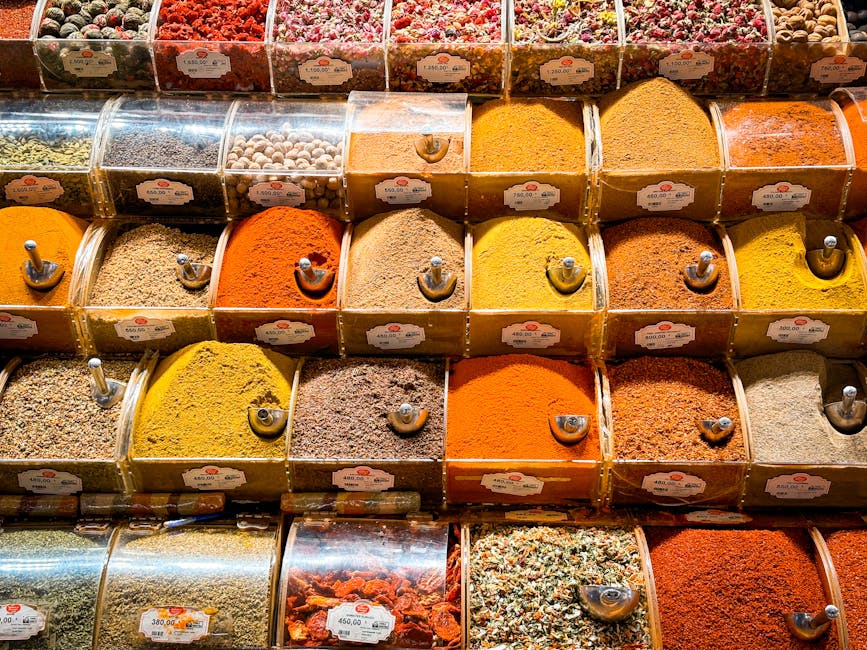
The spice aisle in a Western supermarket is organized, labeled, and lifeless — small glass jars of ground powder that have been sitting under fluorescent lights for months, their volatile oils fading with each passing week. Asian spice markets are the opposite of this in every possible way. They're chaotic, overwhelming, and alive — mountains of whole spices in open bins, the air thick with capsaicin and cumin and dried chili dust that makes you cough before you've cleared the entrance. The colors are absurd: turmeric yellow that looks photoshopped, paprika red that seems to pulse, black peppercorns gleaming like tiny planets. These markets are where flavor begins, and visiting one will permanently change how you think about the small jars in your kitchen.
Khari Baoli, Delhi: Asia's Largest Spice Market
Khari Baoli, tucked behind Old Delhi's Fatehpuri Mosque near the western end of Chandni Chowk, has been trading spices since the 17th century. It's the largest wholesale spice market in Asia and possibly the world, spread across several blocks of narrow lanes where sacks of dried chilies, turmeric, cumin, coriander, cardamom, and dozens of other spices are stacked higher than the shops themselves. The air here is an assault — a concentrated blend of aromatics so intense that many visitors' eyes water within minutes. The vendors, who've been breathing this air for decades, seem immune.
The scale is staggering. A single shop in Khari Baoli might move 500 kilograms of cumin seed in a day. The market's annual turnover is estimated at billions of rupees. Prices are wholesale — a kilogram of whole Malabar black peppercorns costs around 800-1,000 rupees ($9.50-$12) here versus four times that in a Delhi retail shop. The quality ceiling is extraordinary: the best cardamom at Khari Baoli — large, green, intensely fragrant — is as good as cardamom gets on this planet.
Navigating Khari Baoli requires patience and thick skin (both literal — the chili dust is aggressive — and figurative, as vendors can be persistent). The market operates Monday through Saturday, opening around 10 AM and peaking in activity by noon. The side streets contain specialist dealers: one lane for dried fruits and nuts, another for herbs, another for medicinal spices. The tea shops hidden in the market's deeper recesses serve chai that benefits from proximity to the world's freshest spices — a cup here tastes different from chai anywhere else, probably because the cardamom was ground hours ago.
Chinatown, Bangkok: Yaowarat's Hidden Spice Street
Bangkok's Chinatown (Yaowarat) is famous for its street food, but the dry goods shops along Soi Wanit 1 (Sampeng Lane) and the surrounding alleys constitute one of Southeast Asia's most important spice trading centers. Chinese-Thai merchants have operated here since the late 18th century, and the spice selection reflects Bangkok's position at the crossroads of Chinese, Thai, Indian, and Malay culinary traditions.
The shops here sell to restaurants and food manufacturers. The star anise is whole, perfect, eight-pointed, and sold by the kilo (about 150 baht/$4.20). The dried shrimp — technically not a spice, but used as a seasoning throughout Southeast Asian cooking — comes in grades from cooking-quality small shrimp (60 baht/kg) to premium large shrimp with intense umami (400 baht/kg). Five-spice powder is mixed fresh to order by shops that have their own proprietary blends — the ratio of cinnamon, clove, fennel, star anise, and Sichuan peppercorn varies by shop and intended cuisine.
The best time to visit is early morning, Tuesday through Saturday, when the loading dock activity fills the narrow lanes with carts of goods and the shops are fully stocked. Bring cash. Be prepared to buy more than you planned — the prices are so low and the quality so visible that restraint becomes difficult.
Nishiki Market, Kyoto: Japanese Spice Refinement
Nishiki Market is small by Asian spice market standards — a single covered arcade about 400 meters long. But what it lacks in scale, it compensates in precision. The spice shops here reflect Japanese culinary philosophy: fewer varieties, higher specificity, obsessive quality grading. A shop might sell only seven types of dried chili, but each will be precisely identified by origin, heat level, and intended use.
The most distinctively Japanese spice experience at Nishiki is the sansho (Japanese pepper) shops. Sansho — related to Sichuan peppercorn but milder, more citrusy, more floral — is sold in forms that reveal the Japanese talent for extracting maximum variety from a single ingredient: whole berries, ground powder, young leaves (kinome), and flower buds, each used differently in different dishes. The ground sansho at a good Nishiki shop has a fragrance that's electric — citrus and pine and a tingle that starts on your lips and radiates across your tongue.
Shichimi togarashi — the seven-spice blend that sits on every ramen and udon table in Japan — reaches its highest expression at Nishiki's spice shops, where you can order custom blends adjusted to your preference: more sansho for tingle, more yuzu peel for citrus, more hemp seed for crunch.
Gwangjang Market, Seoul: Dried Goods and Chili Power
Korean cooking runs on gochugaru (chili flakes) the way Italian cooking runs on olive oil — it's the foundational ingredient, used in everything from kimchi to stews to marinades. Gwangjang Market's dry goods section sells gochugaru in grades that range from commodity (bright red, moderately hot, sold in massive bags) to premium (darker red, complex heat with sweetness, from specific growing regions like Yeongyang in North Gyeongsang Province). The price difference between low and high grade is substantial — 8,000 won versus 35,000 won per kilogram — and so is the flavor difference.
Beyond gochugaru, Gwangjang's spice vendors sell doenjang (fermented soybean paste) in ceramic crocks, dried anchovies sorted by size (each size intended for a different use in Korean cooking), dried kelp, sesame seeds (both white and black, raw and roasted), and perilla seeds. The sesame oil shops, where seeds are roasted and pressed on-site, produce oil with an intensity of flavor that makes supermarket sesame oil taste like scented water.
Cochin Spice Market, Kerala: Where the Trade Routes Started
Kerala's Cochin (Kochi) has been the epicenter of the global spice trade for over 2,000 years. The spice market in Jew Town, Mattancherry — named for the historic Jewish community that was instrumental in the spice trade — is where you stand on the ground that launched a thousand ships. The Portuguese came here for pepper. The Dutch came for cinnamon. The British came for cardamom. The market buildings still carry the weight of that history.
The spices here are local and extraordinary. Malabar pepper — the original black pepper, still considered the world's best by many chefs — is piled in sacks. Cardamom from the Western Ghats, mere hours from harvest to market. Cinnamon bark so fresh it's pliable. Cloves, nutmeg, mace, vanilla — all grown within Kerala or neighboring states. The market operates as both wholesale exchange and tourist attraction; prices reflect which category you fall into, so buying from the dealers in the interior rooms (versus the front-facing tourist shops) can save 30-50%.
What Spice Markets Teach
Visiting these markets changes your relationship with flavor. You learn that whole spices are living things — they degrade, they have seasons, they vary by origin and harvest year the way wine does. You learn that grinding spices fresh (which every market vendor will demonstrate for you) releases volatile oils that pre-ground spice has already lost. You learn the difference between the star anise that's been sitting in a jar for two years and the star anise that was harvested last month — the fresh one smells like it's breathing, the old one smells like a memory of itself.
You also learn that the spice trade is still a human enterprise. The vendor in Khari Baoli who cups a handful of cardamom pods and holds them to your nose is performing the same gesture his grandfather performed, and his great-grandfather before that. The Cochin merchant who can identify a pepper's origin by biting a single corn learned that skill from decades of practice, not from a spec sheet. The Bangkok shopkeeper who adjusts a five-spice blend by eye, adding a pinch more clove because you mentioned you're making pho, carries knowledge that no recipe can fully capture.
These markets are where the world's flavor originates, and standing in them — eyes watering, nose overwhelmed, fingers stained with turmeric — you understand that the small jar of ground cumin in your kitchen at home is an endpoint, not a beginning. The beginning is here, in lanes that smell like the history of human appetite, where spices are still measured by the handful and quality is still judged by the nose.