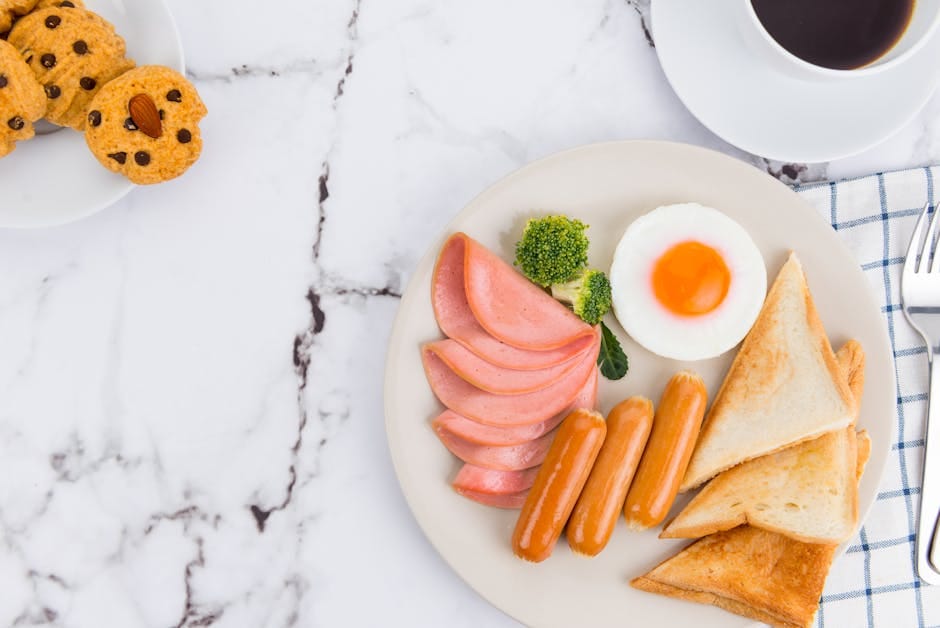
The Western tourist in Asia faces a breakfast crisis on Day One. The hotel buffet offers a "Western section" — some pallid scrambled eggs, white toast, and orange juice from concentrate — alongside the "Asian section," which features things that look like lunch. Soup? For breakfast? Rice? At 7 AM? The confused tourist loads up on toast and retreats to familiar territory, missing what is arguably the most interesting meal of the Asian day.
Asian breakfast traditions make Western breakfast look timid. Where Western convention limits morning food to a narrow band of sweet-and-carb (cereal, pastry, toast, pancakes), Asian breakfasts embrace the full flavor spectrum: savory, spicy, sour, sweet, umami. They're often indistinguishable from lunch or dinner — because the arbitrary Western division between "breakfast food" and "other food" simply doesn't exist across most of Asia.
Japan: Quiet Perfection
The traditional Japanese breakfast (和食の朝ごはん, washoku no asagohan) is a study in balance: a bowl of steamed rice, miso soup (with seasonal ingredients — wakame and tofu in spring, nameko mushrooms in autumn), a piece of grilled fish (often salmon or mackerel), pickled vegetables (tsukemono), natto (fermented soybeans, polarizing even among Japanese), a small salad, and green tea. It's nutritionally complete, aesthetically composed, and requires almost zero sugar to start the day.
The simplest and perhaps most profound Japanese breakfast is tamago kake gohan (TKG) — hot rice with a raw egg cracked over it, seasoned with soy sauce, and stirred until the egg creates a silky coating on every grain. It costs almost nothing. It takes 30 seconds to prepare. It's one of the most satisfying bites in Japanese cuisine. The egg must be fresh — Japanese egg safety standards allow raw consumption — and the soy sauce should be good. Beyond that, the dish is an exercise in trusting simple ingredients.
In Osaka, the morning market at Kuromon Ichiba (called "Osaka's Kitchen") serves breakfast seafood that tourists queue for but locals have been eating casually for decades: grilled scallops, sashimi platters, tamago (sweet omelet) on sticks, and fresh sea urchin. It's a 7 AM extravagance that feels like dinner but functions as breakfast.
China: The Infinite Variety
Chinese breakfast (早餐, zaochan) varies so dramatically by region that listing "Chinese breakfast" as a single category is almost meaningless. Shanghai's breakfast is different from Beijing's is different from Guangzhou's is different from Chengdu's. What they share is substance — Chinese breakfasts are meals, not snacks.
Shanghai: Jianbing and You Tiao
Shanghai's street breakfast centers on jianbing (a crispy crepe filled with egg, scallions, cilantro, sweet bean sauce, chili sauce, and a fried wonton cracker) and you tiao (deep-fried dough sticks) paired with fresh soy milk (doujiang), either sweet or savory. The jianbing maker — working a round griddle the size of a bicycle wheel — cracks an egg, spreads the batter, adds toppings, and folds the whole thing in under two minutes. A jianbing costs 8-12 yuan ($1.10-$1.65) and is the most satisfying hand-held breakfast on earth.
Guangzhou: Dim Sum as Morning Meal
In Guangzhou (and Hong Kong), breakfast means dim sum — or more precisely, yum cha (飲茶, "drinking tea"), the tradition of morning tea service accompanied by small dishes. A proper yum cha breakfast starts at 6 or 7 AM in the old-style teahouses, where elderly Cantonese men have been claiming the same seats for decades. Har gow (shrimp dumplings), siu mai (pork dumplings), cheung fun (rice noodle rolls), char siu bao (BBQ pork buns), and congee arrive on carts pushed by servers who call out their offerings. A solo yum cha breakfast costs 40-80 HKD ($5-$10) and is one of Asia's great morning experiences.
Southeast Asia: Heat, Spice, and Rice
Malaysia: Nasi Lemak
Malaysia's nasi lemak — coconut rice with sambal, fried anchovies, peanuts, a boiled egg, and cucumber — is officially breakfast, practically lunch, and emotionally a national identity statement. The basic version, wrapped in a banana leaf, costs 1-3 ringgit ($0.20-$0.65) from roadside stalls. The elaborate version, with fried chicken or rendang, costs 8-15 ringgit and constitutes a full meal by any culture's standards. The sambal — the chili paste that's the centerpiece of nasi lemak — ranges from mildly sweet to aggressively spicy depending on the vendor. Finding your nasi lemak vendor is a Malaysian rite of passage.
Vietnam: Pho for Breakfast
Pho is breakfast in Vietnam — this is an essential fact that surprises Western visitors who associate soup with lunch or dinner. In Hanoi and Ho Chi Minh City, pho restaurants open at 5 or 6 AM, and the morning rush is the busiest service. The broth has been simmering overnight — beef bones, star anise, cinnamon, charred ginger and onion — and the first bowls of the day get the broth at its most concentrated and complex. A bowl of pho bo (beef pho) at 6:30 AM in Hanoi, eaten on a tiny plastic stool on the sidewalk while motorbikes stream past, is one of Asia's definitive food experiences. It costs 35,000-50,000 dong ($1.40-$2.00).
Thailand: Jok and Khao Tom
Thai breakfast often means jok (rice porridge/congee) — a thick rice soup topped with an egg, ground pork, ginger slices, and fried garlic. It's gentle, warming, and available from street carts starting at 5 AM for 35-45 baht ($1-$1.25). Khao tom (thinner rice soup with shrimp or pork) is the other common option, along with pa tong go (Thai-style fried dough sticks, the cousin of Chinese you tiao) dipped in sweetened condensed milk or pandan custard.
Korea: Gukbap and Beyond
Korean breakfast culture has shifted significantly over the past two decades. Traditional Korean breakfast — basically the same as lunch or dinner, with rice, soup, and banchan — is still served in households and at some restaurants, but younger Koreans increasingly skip breakfast or grab something fast. The 24-hour gukbap restaurants serve as de facto breakfast spots: a bowl of haejangguk (hangover soup, made with ox blood and vegetables) at 6 AM is a Korean institution, serving night-shift workers, taxi drivers, and anyone who had too much soju the night before.
Toast shops — specifically the Korean-style "toast" that's a griddled sandwich with egg, ham, cabbage, and a sweet-savory sauce — have become the dominant quick breakfast format. Isaac Toast, with over 1,000 locations, is the most visible chain. A toast-and-coffee breakfast costs 5,000-7,000 won ($3.75-$5.25) and takes under five minutes.
A Korean friend's morning routine: "On weekdays, Isaac Toast. On weekends, my grandmother's doenjang jjigae with rice and six banchan. The weekend breakfast is worth the whole week of toast."
India: Where Breakfast Is Regional Identity
Indian breakfast is so regionally diverse that it practically constitutes multiple cuisines. South Indian breakfast — idli (steamed rice cakes), dosa (crispy rice-and-lentil crepes), vada (fried lentil donuts), upma (semolina porridge), served with sambar and coconut chutney — is a complete vegetarian nutritional system that has sustained hundreds of millions of people for centuries. A masala dosa at a Chennai tiffin room costs 40-80 rupees ($0.45-$0.95) and is roughly the size of a rolled-up newspaper.
North Indian breakfasts — aloo paratha (potato-stuffed flatbread) with yogurt and pickle in Punjab, poha (flattened rice with peanuts and turmeric) in Maharashtra, chole bhature (chickpea curry with fried bread) in Delhi — are heavier, richer, and designed for physically demanding days.
The Common Thread
What Asian breakfasts share, despite their extraordinary variety, is a refusal to treat morning food as lesser food. The pho broth that simmered all night deserves as much respect as any dinner preparation. The dim sum kitchen that starts at 4 AM to have har gow ready by 6 AM is working as hard as any dinner service. The jianbing maker who's been working the same griddle at the same corner for 20 years has mastered a craft as real as any chef's.
The Western breakfast paradigm — that morning food should be quick, sweet, and separate from "real" food — is one paradigm among many, and spending time in Asia reveals how arbitrary it is. There's no nutritional or gastronomic reason why soup can't be breakfast, why rice can't be morning food, why chili paste can't accompany eggs at 7 AM. Asian breakfasts don't just taste better than toast and cereal (though they do). They represent a more honest relationship with food — one that says the morning deserves the same attention, the same skill, and the same ambition as any other meal.