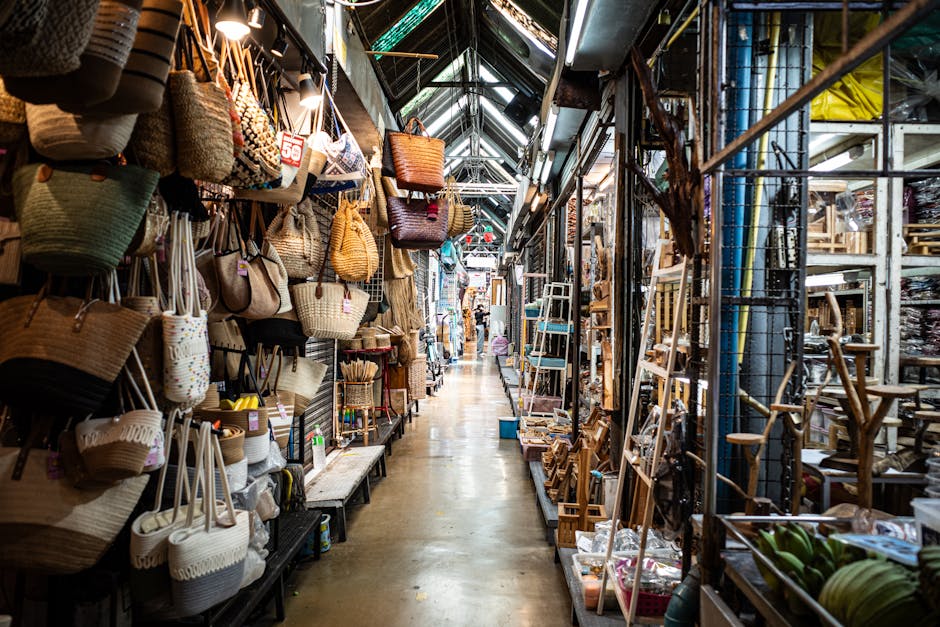
Chatuchak Weekend Market gets 200,000 visitors on a busy Saturday. Most of them come for the shopping — the vintage clothes, the handmade jewelry, the ceramic tableware stacked in gravity-defying towers. They browse, they sweat, they buy a coconut ice cream from whatever vendor is closest, and they leave thinking they've experienced the market. They haven't. Not really. Because Chatuchak's food sections — Sections 2, 3, 23, 24, 26, and the outer ring along Kamphaengphet Road — contain some of the most interesting eating in Bangkok, and most visitors never find them.
Understanding the Layout
Chatuchak covers 35 acres and contains over 15,000 stalls organized into 27 sections. The food stalls are scattered throughout, but the serious eating concentrates in specific zones that the market's own signage does a poor job of highlighting. Section 2, near Gate 2 on Kamphaengphet Road, holds the largest cluster of prepared food vendors. Sections 23 and 24, in the market's southern end, concentrate on snacks and sweets. The outer ring, technically outside the market proper, hosts sit-down restaurants with actual chairs and sometimes — luxury of luxuries — air conditioning.
The trick is arriving early. By 9 AM, the food sections are manageable. By noon, the heat and crowds turn eating into an endurance sport. The experienced Chatuchak food explorer arrives when gates open at 8 AM on Saturday, eats methodically through the morning, and retreats before the afternoon crush.
The Dishes That Justify the Trip
Coconut Ice Cream at ChatuChak (Section 26)
Yes, coconut ice cream is everywhere at Chatuchak. But the stall in Section 26 — the one with the perpetual line of Thai university students, not tourists — serves it in a young coconut shell with toppings that include sweet corn, roasted peanuts, sticky rice, jackfruit, and palm seeds. The ice cream itself is churned fresh, and you can watch the process. It costs 40 baht (about $1.10), and it tastes different from every other coconut ice cream you've had in Thailand because they use coconut cream, not coconut milk, as the base. The fat content is noticeably higher. The texture is denser. It's not a refreshing palate cleanser — it's a dessert with substance.
Isaan Sausage at Sai Krok Isaan Stall (Section 2)
Sai krok Isaan — fermented pork and rice sausages from Thailand's northeast — appear on the grill at a stall near the Section 2 entrance that has no English signage, just a charcoal grill and the unmistakable sour-smoky smell. The sausages are grilled over charcoal until the casings blister and crack. They're served with raw cabbage, sliced ginger, bird's eye chilies, and roasted peanuts. The fermentation gives them a tangy, almost cheesy funk that's addictive. Five sausages cost 40 baht. Eat them standing up, dripping juice onto the concrete, with a cold Singha from the beer vendor two stalls down.
Pad Thai Wrapped in Egg (Section 3)
The pad Thai stall in Section 3 does something you don't see at most pad Thai restaurants: they wrap the finished noodles in a thin egg crepe, creating a neat package that you eat by cutting into with a fork. The pad Thai inside is excellent — good wok hei, proper tamarind sweetness without sugar overload, dried shrimp adding umami depth. But the egg wrapper transforms the textural experience, adding a delicate membrane that gives way to the tangled noodles inside. It's 60 baht and takes about 10 minutes to cook because each order is made individually.
The Drink Situation
Chatuchak's heat is serious. By 11 AM, the temperature inside the market's covered sections can exceed 38°C (100°F), and the crowds generate their own thermal mass. Hydration isn't optional — it's survival strategy. The market's drink vendors understand this, and they've developed an arsenal of cooling beverages that go beyond bottled water.
The fresh-pressed sugarcane juice vendors — look for the industrial-looking machines with stalks of cane feeding through steel rollers — sell the purest version of this drink you'll find anywhere. The cane goes in, the juice comes out, it goes over ice. No additives, no dilution. The flavor is grassy, mineral, and not as sweet as you'd expect. It costs 25 baht for a large cup. The butterfly pea flower drinks — that vivid blue-purple liquid that Instagram has made famous — are available at several stalls, often mixed with lemon juice that turns them pink. Skip the Instagram moment. The flavor is mild and the color is the entire point.
"The best drink at Chatuchak is the Thai iced tea at the stall in Section 24 that brews it fresh from tea leaves, not from powder. The difference is enormous." — a friend who's been going every weekend for six years.
Beyond Snacks: Proper Meals
Boat Noodles (Outer Ring, Kamphaengphet Side)
The boat noodle restaurant on the outer ring serves bowls so small that ordering fewer than three seems insulting. Each bowl costs 15-20 baht and contains a few bites of noodles in a dark, intense broth enriched with pig's blood (which adds body and iron flavor, not the metallic taste you might fear). The noodles come in four styles: sen lek (thin rice), sen yai (wide rice), sen mee (vermicelli), and ba mee (egg). Order one of each. Add the table condiments — dried chili flakes, sugar, fish sauce, vinegar with pickled chilies — to each bowl differently. You'll figure out your ideal combination by bowl number five. Most people eat seven or eight bowls before stopping.
Northern Thai Khao Soi (Section 23)
Khao soi — the coconut curry noodle soup from Chiang Mai — rarely appears in Bangkok's markets, which makes the stall in Section 23 a genuine find. Their version uses a curry paste they grind themselves (you can see the mortar and pestle behind the counter), and the egg noodles arrive both in the soup (soft) and on top (fried crispy). The bowl comes with pickled mustard greens, raw shallots, and a lime wedge. It costs 70 baht — expensive by Chatuchak standards, cheap by any other measure. The curry base has proper depth: you taste lemongrass, galangal, turmeric, and dried chilies as separate notes before they merge into the coconut broth.
The Sweet Tooth Tour
Thai desserts occupy their own universe — one built on coconut, palm sugar, pandan, and textural creativity that Western pastry traditions rarely attempt. Chatuchak's sweet vendors demonstrate the full range. Look for khanom krok (coconut rice pancakes cooked in a dimpled cast-iron pan, crispy on the outside, custardy inside, 30 baht for a bag of eight), mango sticky rice (seasonal March through June, 60 baht for a generous portion with coconut cream poured tableside), and the rotating selection of khanom chan (layered jelly cakes in pastel colors that taste of pandan, coconut, and butterscotch).
The most underrated sweet at Chatuchak is the grilled banana. Vendors press small, sweet nam wa bananas onto flat charcoal grills until they caramelize and collapse into something between a banana and toffee. A bag of four costs 20 baht. They don't photograph well. They taste spectacular — the caramelization concentrates the banana's sugar while the charcoal adds a whisper of smoke that makes you forget you're eating fruit.
Practical Intelligence
Cash is essential. While Bangkok has embraced digital payment — QR codes are everywhere — Chatuchak's food vendors overwhelmingly prefer cash, and many don't accept anything else. Bring small bills (20s and 50s). The ATMs inside the market charge 220 baht ($6) in fees. Get cash before you arrive.
Seating is scarce. The food sections have communal tables, but they fill fast. Many experienced Chatuchak eaters bring a small folding stool or simply eat standing and walking. The outer ring restaurants have dedicated seating but often require purchasing a drink minimum (usually 40-60 baht). Some vendors in Section 2 have created informal seating from plastic crates and boards — functional, uncomfortable, authentic.
The bathrooms cost 5 baht and range from acceptable to regrettable. The ones near Gate 1 are generally the cleanest. Carry tissues. Always carry tissues.
Chatuchak Market runs Saturday and Sunday, 8 AM to 6 PM, with a smaller Wednesday and Thursday plant market. The food sections are busiest Saturday 10 AM to 2 PM. For the best experience — the one where eating is pleasure rather than combat — arrive Saturday at 8 AM, eat until 11, shop until the heat becomes unbearable, and leave knowing you found the market's real treasure: not the vintage band t-shirts or the hand-carved wooden elephants, but the 40-baht sausage that tasted like the best thing you've ever eaten, because you were standing in a market in Bangkok, sweating through your shirt, and nothing has ever tasted as good as food in a place like that.