Six-fifteen in the morning in Taipei's Da'an district, and the breakfast shop on the corner already has a line spilling onto the pavement — office workers in ironed shirts, a grandmother buying a stack of shao bing for the whole family, a teenager in a school uniform shouting an order over the hiss of the griddle without breaking stride. Nobody sits down for long. The counter runs on a rhythm that's been the same for decades: order, pay, wait ninety seconds, eat standing up or take it to go, and the whole exchange rarely takes longer than it takes to read this paragraph.
This is zǎocāndiàn culture, and it's one of the few daily rituals in Taiwan that has resisted almost every trend that's swept through the island's food scene — the third-wave coffee shops, the bubble tea chains gone global, the Michelin-guide attention on night markets. Breakfast shops don't chase any of that. They open around five or six, close by early afternoon, and exist purely to feed people fast, cheap and hot before the workday starts.
The core menu, and why it barely changes
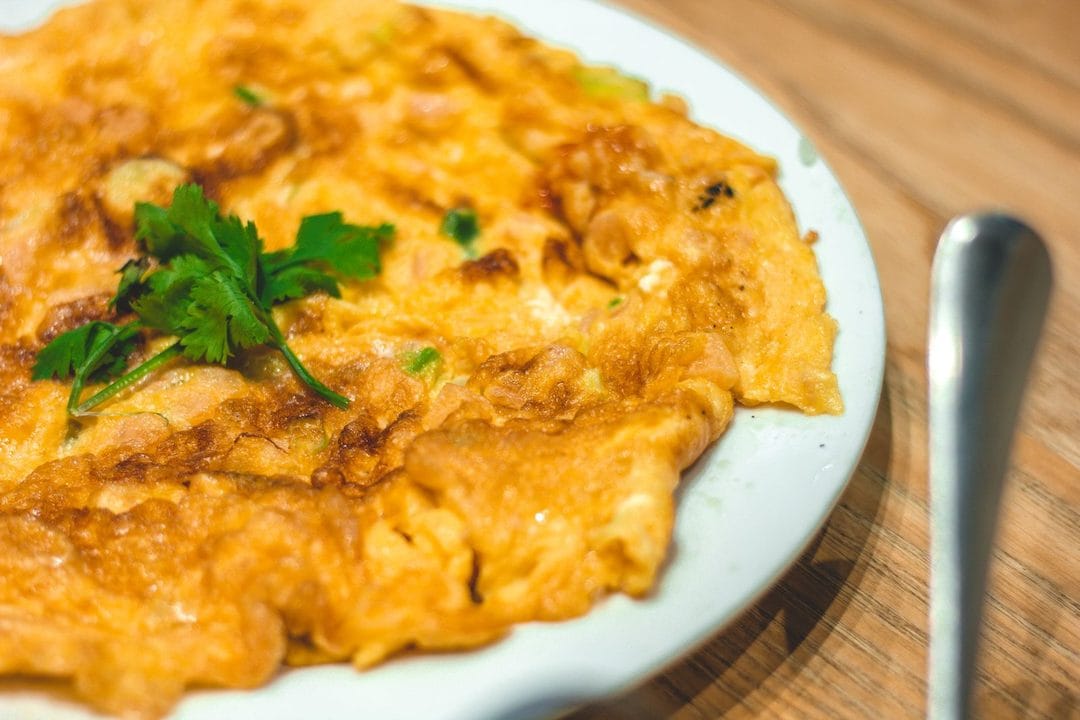
Walk into almost any zǎocāndiàn from Kaohsiung to Keelung and the board looks nearly identical: dàn bǐng (a thin egg crepe wrapped around ham, cheese or scallion), shāo bǐng yóu tiáo (a sesame flatbread stuffed with a fried dough stick), fàn tuán (sticky rice rolled around pickled vegetables, pork floss and often a second fried dough stick inside), and always, always dòu jiāng — soy milk, served hot or cold, sweetened or salted. The salted version, xián dòu jiāng, curdles slightly when vinegar and chili oil hit it, turning into something closer to a savory soup with soft tofu-like curds than the sweet, thin soy milk most people picture. First-timers usually order it sweet. Locals mostly don't.
Prices have crept up over the past few years the way everything has, but a full breakfast — a dàn bǐng, a dòu jiāng, maybe a side of fried dough — still runs somewhere between NT$60 and NT$90, well under three US dollars. That price point isn't an accident. It's the entire business model: high volume, thin margins, a griddle that never fully cools down between six and eleven in the morning.
The dough matters more than most visitors assume. Yóu tiáo — the long fried dough stick that shows up wrapped in shāo bǐng or floating in soy milk — has to be made fresh that morning; a shop that fries it the night before and reheats it gets talked about in the neighborhood, and not in a good way. The good shops fry in batches every twenty or thirty minutes, and you can tell which ones by the queue forming right as a new batch hits the oil.
Chain versus independent, and why both survive
Taiwan's breakfast landscape splits cleanly into two categories that somehow don't compete for the same customer. On one side sit the big chains — Yonghe Soy Milk King, McDonald's breakfast menu, 7-Eleven's grab-and-go counter — offering consistency, air conditioning, and a menu translated into English for the tourists who wander in. On the other side sit the independent shops, usually family-run, usually with a name that's just the owner's surname plus "zǎocāndiàn," where the menu is handwritten on a laminated sheet taped to the wall and the owner remembers regular customers' orders without being told.
Both formats do real business, but the independents win on something the chains can't replicate: speed born from repetition. A shop that's fried the same three hundred dàn bǐng orders every morning for fifteen years develops a kind of choreography between the person taking orders, the person on the griddle, and the person bagging everything — an efficiency that looks almost theatrical if you stand and watch it for five minutes instead of grabbing your bag and rushing off like everyone else.
Beyond dàn bǐng: the regional variations worth seeking out
- Tainan leans sweeter across the board — even the salted soy milk there carries a faint sugar note that Taipei versions don't
- Hakka-influenced shops in Hsinchu and Miaoli often add a version of léi chá or a millet-based porridge alongside the standard menu
- Some Taichung shops fold cabbage and carrot into the dàn bǐng batter itself rather than serving vegetables as a side
- And a few older Taipei shops still make their own soy milk in-house rather than buying it from a wholesale supplier, which shows in a noticeably grassier, less processed flavor — worth asking about directly, since it's rarely advertised
Where the format actually comes from
The zǎocāndiàn as it exists today traces back to the wave of migration from mainland China after 1949, when soldiers and civilians from Shandong, Jiangsu and Shanghai brought their regional breakfast staples with them — the wheat-based dàn bǐng and shāo bǐng owe more to northern Chinese flatbread traditions than to Taiwan's own earlier Hoklo and Hakka food culture, which leaned more toward rice. That northern-Chinese wheat influence is why breakfast in Taiwan looks so different from lunch and dinner, where rice and noodle dishes with clearer Hoklo and Hakka roots dominate. Coffee, by contrast, arrived at these shops only recently, and mostly as an afterthought — a machine-brewed cup added to the menu sometime in the 2000s to compete with the convenience-store coffee counters that were eating into foot traffic. It still tastes like an afterthought at most shops; nobody goes to a zǎocāndiàn for the coffee.
The etiquette nobody explains to newcomers
Order fast, pay in cash or a local payment app (most independents still don't take foreign cards), and step aside the second your bag is handed over — the person behind you has been standing there since before you finished ordering. Eating in is possible at shops with a few plastic stools out front, but it's not really the point of the format the way sitting down is the point at a Western café. This is street food built for people already in motion, not a destination meal.
What's genuinely surprising, once you've eaten at enough of these, is how little the format has needed to change to stay relevant. A menu built around eggs, dough and soy milk, sold from a storefront that's barely bigger than a garage, still pulls a line every single morning in a city full of konbini, cafés and delivery apps promising food at the tap of a screen. Convenience won everywhere else. Here, the thirty-year-old breakfast shop on the corner still beats the app.