The World's Best-Selling Spirit You've Never Heard Of
Jinro soju is the best-selling spirit brand in the world. Not the best-selling Korean spirit. The best-selling spirit, period, globally, by volume. In 2024, Jinro sold over 99 million cases — more than Smirnoff, more than Johnnie Walker, more than Bacardi, more than any whisky, vodka, gin, rum, or tequila brand on earth. And outside of Korea and Korean diaspora communities, most drinkers have never heard of it. This asymmetry tells you something important about soju's place in Korean culture: it's not a premium product marketed globally. It's a ubiquitous, deeply local spirit so thoroughly integrated into Korean daily life that its massive sales volume is simply a function of how much Koreans drink, which is, by any global standard, a lot.
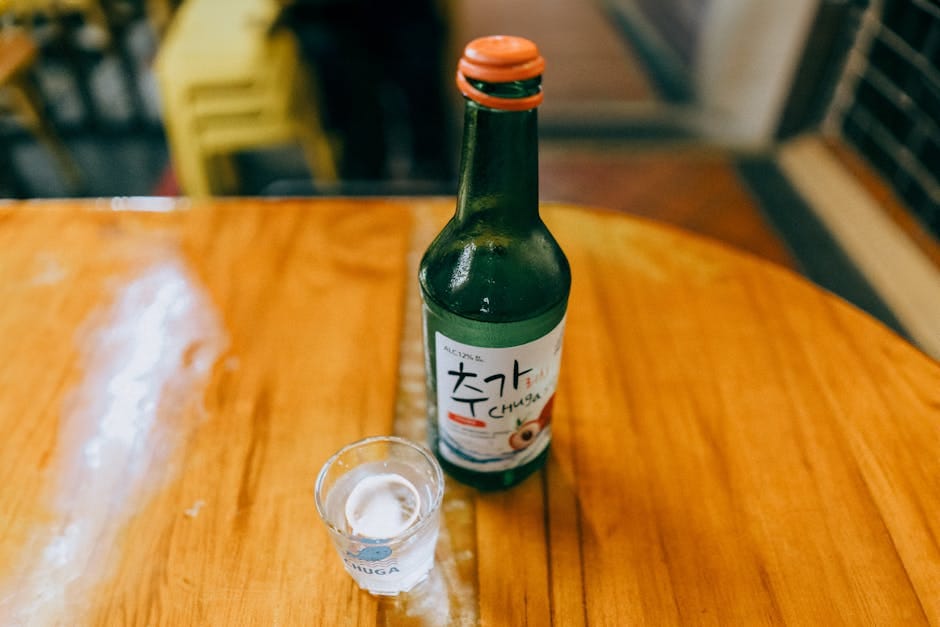
Soju in its modern form is a clear spirit distilled (originally) from rice, wheat, barley, or sweet potato, and diluted to a drinking-friendly 16-25% alcohol. The most common commercial soju — Jinro Chamisul, the green bottle that's on every Korean restaurant table — is 16.5% alcohol, positioning it in a unique space between beer (4-5%) and hard liquor (35-45%). This middle ground is fundamental to soju culture: it's strong enough to produce intoxication over the course of an evening but mild enough to drink in shots without grimacing, enabling the extended, multi-hour social drinking sessions that are a central feature of Korean culture. You don't nurse a soju. You share a bottle, then another, then another, and the gradual accumulation of modest-strength shots produces a warm, sociable intoxication that beer can't match and whisky would achieve too fast.
The Pouring Ritual
Soju is never self-served. This is the first and most important rule. You pour for others; others pour for you. The act of pouring is a social gesture — it shows attention, respect, and care — and the physical mechanics of the pour carry meaning. When pouring for someone older or more senior: hold the bottle with your right hand, left hand supporting your right wrist or forearm. When pouring for a peer: one hand is fine, though two hands is never wrong. When receiving: hold your glass with both hands. When someone significantly older or senior pours for you: turn your body slightly away from them before drinking, shielding the glass with your hand, so you're not drinking directly in their face. This isn't about hiding the drinking — everyone at the table is drinking — it's a gesture of humility that's deeply embedded in Korean social hierarchy.
The first pour of a new bottle has its own ritual. The cap is twisted off, and the loose cap is struck sharply against the elbow to fling it away (a tradition with disputed origins — some say it's to break the seal of the paper label that used to cover the cap). Then the first glass is poured and offered to the most senior person at the table, who drinks it and returns the glass. Yes, returns the glass — in traditional Korean drinking etiquette, receiving someone's glass, having it filled, drinking from it, and returning it is a bonding ritual. The exchanged glass creates a link between the two drinkers. This practice has faded in casual settings but persists in formal ones, and understanding it prevents the confusion that arises when a Korean colleague hands you their used glass and expects you to drink from it.
The Flavored Soju Explosion
Traditional soju — unflavored, 20-25% alcohol — has been increasingly displaced in the Korean market by flavored, lower-alcohol versions that have transformed soju from a serious drinking man's spirit into an approachable, almost casual beverage. Chamisul Fresh (17.2%) was the first wave, reducing the alcohol content from the traditional 20-25% range. Then came fruit-flavored sojus: grapefruit, peach, blueberry, green grape, yogurt, and apple, typically at 12-13% alcohol, essentially alcoholic soft drinks that taste like candy and go down like water. These flavored versions, led by brands like Chum-Churum (Lotte) and Good Day (Muhak), have dramatically expanded soju's consumer base to include younger drinkers and women, who traditionally drank less soju than men.
The purist position is that flavored soju is an abomination — a sugary corruption of a clean, traditional spirit. This position has merit: traditional soju (Hwayo, Andong Soju, or the premium Ilpoom Jinro at 25%) has a clean, slightly sweet, rice-forward flavor that's genuinely pleasant to drink straight and pairs beautifully with Korean food. Flavored soju tastes like a fruit cocktail and pairs with nothing except more flavored soju. But the market has spoken, and flavored soju now accounts for over 40% of soju sales in Korea. The traditional versions remain available and excellent, but you have to seek them out rather than accepting whatever the restaurant puts on the table.
Somaek: The Beer-Soju Bomb
Somaek — so(ju) + maek(ju, beer) — is the practice of mixing soju and beer in ratios that every Korean knows by heart (the standard is 3:7, soju to beer, though ratios vary by preference and courage). The mixing can be done by simply pouring a shot of soju into a glass of beer, or with more theater: balancing a shot glass of soju on a pair of chopsticks laid across the beer glass, then striking the table or the chopsticks to drop the shot in, creating a satisfying splash and fizz. The carbonation from the beer activates the soju, producing a drink that's more intoxicating than either component alone would suggest at its combined alcohol content — a phenomenon that Korean drinking culture acknowledges cheerfully and exploits enthusiastically.
Somaek is the default drink at Korean BBQ, fried chicken restaurants, and most group dining occasions where the goal is social bonding rather than culinary appreciation. The beer of choice is usually Cass or Hite (Korean lagers, light and inoffensive) or Kloud (a slightly more premium option), though the rise of craft beer in Korea has introduced some heretical somaek combinations using IPAs and wheat beers that traditionalists view with suspicion. The pairing logic is practical: somaek's carbonation and slight bitterness cut through the richness of grilled pork and fried chicken, refreshing the palate between bites and encouraging both more eating and more drinking. It's a feedback loop of pleasure that Korean social dining is engineered around, and participating in it — even moderately — is the fastest way to connect with Korean colleagues and friends.
The Morning After: Haejang-guk
Korean drinking culture is inseparable from Korean hangover culture, and the infrastructure for hangover recovery is as developed as the infrastructure for getting drunk. Haejang-guk — literally "soup to chase away a hangover" — is an entire category of soups served at restaurants that open at 5 or 6 a.m. specifically to catch the post-drinking breakfast crowd. Varieties include haejangguk with congealed ox blood, bean sprout soup (kongnamul-guk), spicy pork spine soup (gamjatang), and dried pollack soup (hwangtae-guk). The theory — supported by some science and a lot of anecdotal evidence — is that the sodium, protein, and liquid in these soups rehydrate and replenish electrolytes faster than water alone.
At Cheongjin-dong Haejangguk in Jongno, Seoul — open since 1937, making it one of Seoul's oldest restaurants — the haejangguk is a dark, thick, intensely savory broth filled with napa cabbage, congealed ox blood (which has a texture like soft tofu, not as scary as it sounds), and beansprouts. A bowl costs ₩9,000 ($6.70) and is served with rice, kimchi, and an array of banchan. At 7 a.m. on a weekday, the restaurant is packed with businessmen in suits who were clearly at a different kind of establishment six hours earlier, silently eating their soup with the focused intensity of people performing a medical procedure. It works. Not immediately, and not completely, but by the time the bowl is empty and the banchan is picked over, the morning looks less threatening. Soju gives you the evening. Haejang-guk gives you back the morning.