Fifty Hertz on Your Tongue
The first time you bite into a Sichuan peppercorn, your brain receives a signal it cannot classify. It's not heat — capsaicin from chili peppers triggers pain receptors and your brain knows exactly what that is. It's not sourness, not bitterness, not sweetness. It's a vibration. A tingling, buzzing, electrical sensation that starts on the tip of your tongue and spreads across your lips, your gums, and sometimes your cheeks. Neuroscientists at University College London studied this phenomenon and found that Sichuan peppercorn activates touch receptors at a frequency of approximately 50 hertz — the same frequency as a low electrical hum. Your mouth is literally vibrating. This sensation, called ma in Chinese, is the cornerstone of Sichuan cuisine and one of the most unusual flavor experiences in the culinary world.
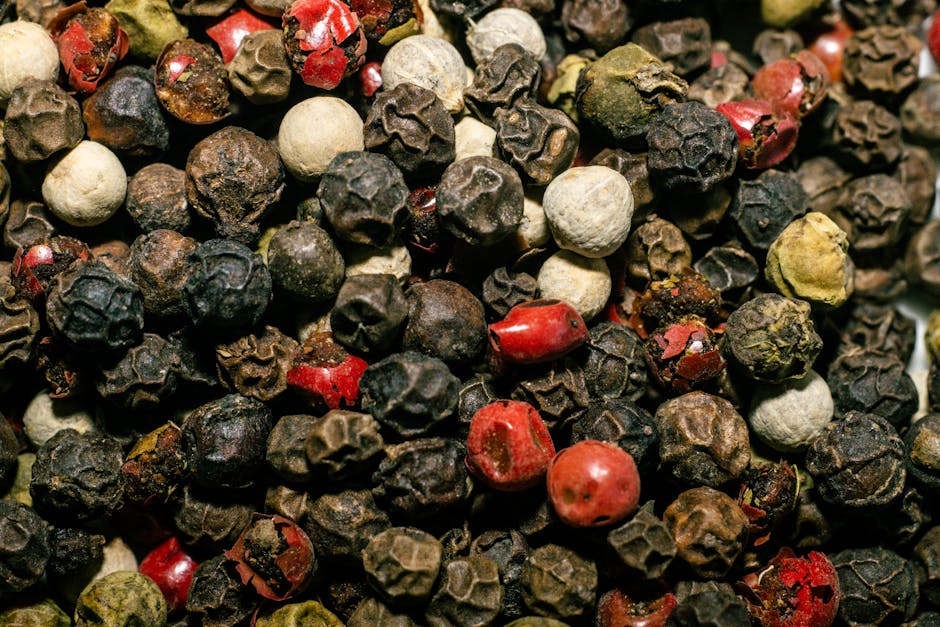
Sichuan peppercorn (huajiao) is not a peppercorn at all. It's the dried husk of the fruit of several species of Zanthoxylum, a genus in the citrus family. The husks are small, reddish-brown, and split open at maturity to reveal a small, shiny black seed that's discarded because it's gritty and flavorless. Only the husk is used, and within that husk, a compound called hydroxy-alpha-sanshool is responsible for the numbing effect. The compound doesn't activate pain receptors or temperature receptors — it directly stimulates the nerve fibers responsible for light touch, tricking your brain into perceiving vibration where there is none. It's not a spice that adds flavor in the traditional sense. It's a spice that changes how your mouth perceives everything else.
Ma La: The Double Punch
Sichuan peppercorn rarely works alone. The defining flavor profile of Sichuan cuisine is ma la — numbing (ma, from the peppercorn) and spicy (la, from dried chilies). These two sensations interact in a way that's more than additive. The numbing from Sichuan peppercorn actually amplifies the perception of chili heat by sensitizing the nerve endings that capsaicin targets. At the same time, it provides a cooling, almost anesthetic effect that prevents the chili burn from becoming unbearable. The result is a self-regulating system: you can eat much spicier food when Sichuan peppercorn is present because the ma keeps the la in check, while the la gives the ma something to work with. It's a spice partnership that feels engineered for maximum intensity without maximum pain.
In Chengdu, the capital of Sichuan province and ground zero for ma la cuisine, this balance is treated with the seriousness of a chemical equation. At a hot pot restaurant like Xiaolongkan, the bubbling red broth contains a carefully calibrated ratio of dried red chilies (for heat and color), Sichuan peppercorns (for numbness), doubanjiang (fermented chili bean paste, for depth), huajiao oil (Sichuan peppercorn oil, for aromatic numbness), beef tallow (for richness), and 20 to 30 other spices, herbs, and aromatics. The proportions matter enormously — too much ma and the food becomes unpleasantly numb, like eating after a dental injection; too much la and the heat overwhelms everything else. Getting the balance right is what separates a memorable hot pot from a merely painful one.
Red Versus Green: Two Different Experiences
Most people outside China have only encountered red Sichuan peppercorn, but there's a green variety — qinghuajiao — that's become increasingly prominent in modern Sichuan cooking and is, to my mind, the more interesting of the two. Green Sichuan peppercorns are harvested earlier, when the husks are still immature, and are typically used fresh or dried at low temperature to preserve their volatile oils. The numbing effect is sharper and more immediate than red — it hits faster, peaks higher, and fades quicker. The aroma is dramatically different: while red Sichuan peppercorn smells woodsy and slightly floral, green peppercorn has an intensely citrusy, almost lime-like fragrance with notes of pine and eucalyptus. It smells like a forest after rain.
Green Sichuan peppercorn is the star of dishes like qingjiao yu (fish with green peppercorn), a preparation that's taken over Chengdu's restaurant scene in the last decade. Unlike the classic shuizhu yu (water-boiled fish) that buries fish fillets under a mountain of dried red chilies and red peppercorns, qingjiao yu uses a lighter broth infused with fresh green peppercorns and green chilies. The effect is electric — the numbness from the green peppercorn is more piercing than the red, and the overall flavor profile is brighter, more aromatic, and less heavy. At Yuzhilan, a two-Michelin-star restaurant in Chengdu, chef Lan Guijun uses green peppercorn in a chilled appetizer of sliced rabbit that vibrates with numbness and citrus. It's one of the most startling things I've ever tasted, and it costs less than a mediocre pasta in Manhattan.
The 23-Year American Ban
From 1968 to 2005, Sichuan peppercorns were banned from import into the United States. The USDA prohibited them because Zanthoxylum trees can carry citrus canker, a bacterial disease that threatens American citrus crops. The ban wasn't well-enforced — Chinese grocery stores continued to sell existing stock and smuggled product — but it meant that an entire generation of Americans who discovered Sichuan food through the 1970s and 1980s Chinese restaurant boom never experienced the ma in ma la. They ate the chili heat without the numbing counterpart, which is like hearing a duet with one singer muted. When the ban was lifted (with the requirement that peppercorns be heat-treated to kill the bacteria), the American food world experienced a collective revelation: so that's what this is supposed to taste like.
The post-ban period saw an explosion of interest in authentic Sichuan cooking in the US, driven partly by the availability of previously banned ingredients and partly by the Sichuan food evangelism of writers like Fuchsia Dunlop, whose cookbook "Land of Plenty" introduced English-speaking cooks to the full vocabulary of Sichuan seasoning. The ma la hot pot trend that swept American cities in the 2010s — chains like Haidilao and Little Sheep opening across New York, Los Angeles, and Chicago — was arguably the delayed consequence of a 37-year spice embargo. A generation finally tasted what they'd been missing, and they wanted more.
Cooking With It at Home
Sichuan peppercorns are easy to use and hard to use well. The easy part: toast whole peppercorns in a dry wok or skillet over medium heat until fragrant (about 2 minutes — you'll know because your kitchen will smell like a Chengdu back alley), then grind them in a spice grinder or mortar. The ground powder loses its potency within a few weeks, so grind in small batches and store in an airtight container. The hard part: dosing. Too little and you won't feel the ma at all. Too much and your entire mouth goes numb for 20 minutes, which sounds fun until you realize you can't taste anything during that time. Start with half a teaspoon of ground Sichuan peppercorn per serving and adjust upward.
The test for quality Sichuan peppercorn: Bite one husk. If your tongue is still tingling after 30 seconds, it's good. If it fades in 10 seconds or tastes dusty, it's old and you need a new source.
The simplest and most versatile Sichuan peppercorn preparation is ma la oil — chili oil with Sichuan peppercorn infused into it. Heat a cup of neutral oil to 160°C (325°F), pour it over a mixture of ground Sichuan peppercorn, gochugaru or ground dried Chinese chilies, sesame seeds, and a pinch of salt. The oil sizzles and froths, blooming the chili's color and extracting the peppercorn's sanshool. After it cools, you have a condiment that goes on literally everything: rice, noodles, eggs, pizza, ice cream (seriously — the numbing effect paired with cold sweetness is extraordinary). One jar lasts about a week in my house, which either says something about my cooking habits or my addiction level.
The Global Spread of the Buzz
Sichuan peppercorn has migrated far beyond Sichuan in the last two decades. Japanese sansho (a closely related Zanthoxylum species) has long been used in shichimi togarashi and as a garnish for grilled eel, but it's milder and more citrusy than Chinese huajiao. Korean chopi, from yet another Zanthoxylum species, is used in seafood stews. Nepali timur and Indian teppal bring variations of the numbing sensation to South Asian cuisines. And in Western fine dining, Sichuan peppercorn has become a fashionable ingredient, used in everything from cocktails (a Sichuan peppercorn gin and tonic, where the numbness amplifies the quinine's bitterness) to chocolate truffles (where it adds a buzzy heat that plays against cocoa butter's richness).
The irony is that Sichuan peppercorn's global rise coincides with some concern about its future in China itself. Climate change is affecting the growing regions in Sichuan and Gansu provinces, and younger Chinese consumers' preference for the instant gratification of pure chili heat over the more subtle ma la balance has some Sichuan chefs worried about a dumbing-down of the tradition. At a recent meal in Chengdu, a chef told me that his ma po tofu — the benchmark Sichuan dish of silken tofu in chili-peppercorn sauce — used to require explanation for young diners who found the numbing sensation "weird." A sensation that was once the defining characteristic of their regional cuisine now needs a sales pitch. Whether this is a temporary trend or a genuine shift remains to be seen, but the little red husk's story clearly isn't finished.