The $30 Kitchen Revolution
In Japan, a common housewarming gift for someone moving into their first apartment is a rice cooker. Not a fancy one — a basic 3-cup Zojirushi or Tiger model that costs ¥4,000-6,000 ($28-41) and does one thing perfectly: it cooks rice. You wash the rice, add water to the line, press the button, and walk away. Twenty minutes later, you have rice that's fluffy, evenly cooked, and stays warm for hours without drying out. No monitoring, no stirring, no judgment calls about when it's done. The machine handles everything, and it handles it with a consistency that stovetop rice can't match, because the internal thermostat detects when the water has been fully absorbed and automatically switches from cooking to warming mode. It's one of those appliances that's so reliable you forget it exists — until you try to cook rice in a pot and remember why you stopped.
But the rice cooker's utility extends far beyond rice, and this is the part that most owners in non-Asian households don't discover. The same sealed, temperature-controlled environment that cooks rice perfectly also makes it an excellent steamer, slow cooker, porridge maker, cake baker, and one-pot meal machine. In Asian households — particularly in Japan, Korea, and China — the rice cooker is used for all of these applications as a matter of course, and the more expensive models (Zojirushi's premium line, which costs $200-400, uses induction heating and pressure cooking) include dedicated settings for porridge, slow cooking, bread, and steaming. But even the cheapest, most basic rice cooker with a single "cook" button can do these things. You just need to know how.
1. Congee / Porridge: The Obvious Extension
Congee (jook, okayu, zhou — every Asian culture has a name for it) is rice cooked in a large excess of water until the grains disintegrate into a thick, creamy porridge. It's the ultimate comfort food across East and Southeast Asia: served for breakfast in China, as a recovery meal for the sick in Japan, and as a late-night snack in Thailand. In a rice cooker, congee is foolproof: use a 1:7 or 1:8 ratio of rice to water (one cup of rice, seven cups of water), add a chicken thigh or a piece of pork for flavor, press cook, and wait. When it's done, the rice will have broken down into a smooth, velvety porridge, and the meat will be tender enough to shred with a fork. Season with white pepper, sesame oil, sliced scallions, and a drizzle of soy sauce. Top with a century egg (pidan) if you have one, or a soft-boiled egg if you don't.
2. Steamed Eggs (Chawanmushi / Gyeranjjim)
Japanese chawanmushi (steamed egg custard) and Korean gyeranjjim (steamed egg) both cook beautifully in a rice cooker. For a simple version: beat 3 eggs with 1.5 cups of dashi (or chicken broth), a teaspoon of soy sauce, and a teaspoon of mirin. Pour into a heat-safe bowl that fits inside your rice cooker's inner pot. Add about 1 cup of water to the rice cooker's pot (outside the bowl) to create steam, place the bowl of egg mixture on a trivet or balled-up aluminum foil to keep it above the water, close the lid, and press cook. The gentle, even heat of the rice cooker produces a silky, jiggly custard that rivals the steamed version from a proper steamer — and you didn't need to monitor the water level or adjust the heat once.
3. One-Pot Rice Meals
The most practical rice cooker hack is the one-pot rice meal: add protein and vegetables on top of raw rice and water, and cook everything simultaneously. The rice steams from below while the protein and vegetables cook from the trapped steam above. Takikomi gohan (Japanese mixed rice) is the classic template: rinse 2 cups of rice, add 2 cups of dashi, 2 tablespoons of soy sauce, 1 tablespoon of mirin, a handful of sliced shiitake mushrooms, julienned carrots, some diced chicken thigh, and a piece of aburaage (fried tofu). Press cook. When it's done, fold everything together and serve. The rice is seasoned from the dashi and soy sauce, the chicken has steamed to tenderness, and the mushrooms have released their umami into the grain. It's a complete dinner from a single appliance with five minutes of prep.
4. Steamed Fish and Vegetables
Most rice cookers come with a steaming tray that sits above the inner pot. This tray is designed for exactly this purpose: while rice cooks in the pot below, you steam fish fillets, vegetables, or dumplings on the tray above. The timing usually works out perfectly — a fish fillet takes roughly the same time to steam as rice takes to cook. Season a piece of white fish with ginger, scallion, soy sauce, and sesame oil, place it on the steaming tray, press cook, and receive a complete meal (rice + steamed fish) 20 minutes later with zero monitoring.
5. Cake: Yes, Actually
Rice cooker cake is a phenomenon in Japan and Korea, where apartment kitchens often lack ovens. The principle: a basic cake batter (flour, sugar, eggs, butter, milk) poured into the greased inner pot of a rice cooker and cooked on the regular rice setting. The result is a dense, moist cake with a golden bottom crust (from the pot's non-stick surface) that's somewhere between a sponge cake and a bread pudding. It's not elegant. It's not what a pastry chef would produce. But it's a homemade cake from an appliance the size of a toaster, and it works. Matcha cake (add 2 tablespoons of matcha powder to the batter), chocolate cake (add cocoa powder), and cheesecake (cream cheese-based batter) all produce excellent results. The rice cooker may need to run two cycles for the cake to cook through — check with a toothpick after the first cycle and restart if needed.
6. Soup and Stew
A rice cooker's sealed environment and constant temperature make it a capable slow cooker. Add diced vegetables, protein, broth, and seasonings, press cook, and the machine brings everything to a simmer, cooks it through, and switches to warm. It won't develop the deep, long-simmered complexity of an actual slow cooker running for 8 hours, but for a quick soup or stew, it's surprisingly effective. Korean kimchi jjigae (kimchi stew): aged kimchi, tofu, pork belly, gochugaru, water — rice cooker. Japanese nikujaga (meat and potato stew): sliced beef, potatoes, onion, carrots, soy sauce, mirin, dashi — rice cooker. Both produce weeknight-quality results with less attention than stovetop versions.
7. Hard-Boiled Eggs
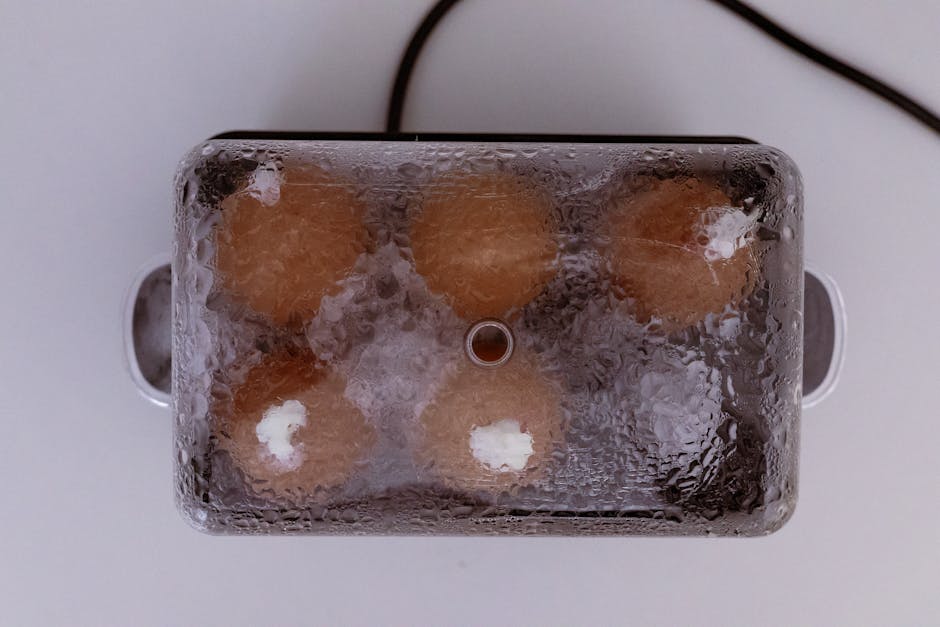
Place eggs on the steaming tray, add water to the pot below, press cook. Perfect hard-boiled eggs every time, with the timer built in. This is the laziest and most reliable egg-boiling method available, and the only question is why it isn't the default. In Korean dormitories and Japanese offices, the rice cooker is frequently used for eggs alongside the lunch rice.
8. Oatmeal and Grains
Steel-cut oats, quinoa, barley, farro, and millet all cook perfectly in a rice cooker using the same approach as rice: grain plus water, close lid, press button. The water ratios differ (steel-cut oats need a 1:3 ratio; quinoa needs 1:1.75), but the principle is identical. This is particularly useful for overnight oatmeal: some rice cookers have a timer function that lets you add oats and water before bed and set it to start cooking at 6 a.m., so you wake up to hot oatmeal. It's the most boring hack on this list and also the one that most directly improves your daily life if you eat grains for breakfast.
The Investment Case
A basic rice cooker costs $25-40 and lasts for years. A mid-range model with multiple settings (Zojirushi Micom, Tiger JBX series) costs $80-150 and lasts essentially forever — it's common to find 15-year-old Zojirushi rice cookers in Japanese households that work as well as the day they were bought. The premium models ($200-400) add induction heating, pressure cooking, and GABA brown rice settings that produce noticeably better rice than basic models, but the marginal improvement doesn't justify the cost for most home cooks. The sweet spot is the $80-120 range: fuzzy logic temperature control, multiple grain settings, a keep-warm function that doesn't dry out the rice, and build quality that survives daily use for a decade.
If you cook rice more than twice a week, a rice cooker isn't a convenience — it's an essential tool that frees a stovetop burner, eliminates the possibility of burned or undercooked rice, and opens up a parallel cooking universe that most Western kitchens don't access. It sits on your counter, quiet and unassuming, doing its one job perfectly and its eight other jobs surprisingly well.