The Continent That Already Solved This Problem
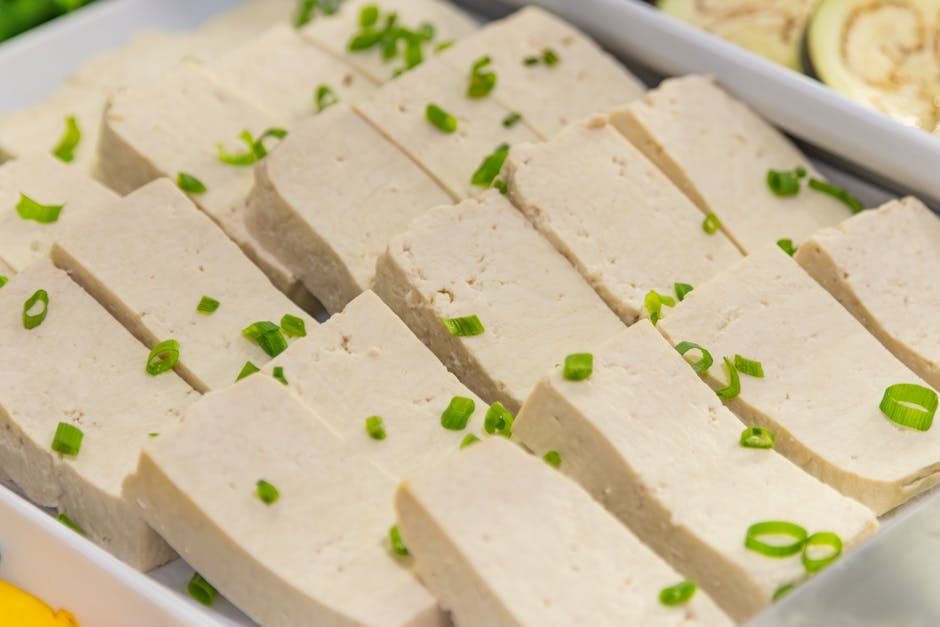
When Beyond Meat and Impossible Foods began their push into Asian markets around 2019, they arrived with a narrative that played brilliantly in the United States: plant-based protein was the future, meat alternatives were a revolution, and consumers needed to be convinced that vegetables could taste like meat. The problem was that they were bringing this message to a continent where Buddhist monks have been eating elaborate plant-based cuisine for over a thousand years, where tofu was invented in China during the Han Dynasty (roughly 200 BCE), where tempeh has been a staple of Indonesian cooking since at least the 12th century, and where an entire category of Chinese restaurant cooking — zhai cai, vegetarian Buddhist cuisine — has been producing mock meats from wheat gluten, soy, and mushrooms that are so convincing they fool committed carnivores. Asia didn't need to be told that plants could be satisfying. Asia needed to be told why it should pay $12 for a burger patty made from pea protein when a block of fresh tofu cost $0.80.
This disconnect between the Western plant-based narrative and Asian culinary reality has produced some of the most interesting food-culture friction of the decade. The global plant-based industry — valued at roughly $18 billion in 2025 and projected to reach $35 billion by 2030 — remains dominated by companies built on the assumption that the primary challenge is making plants taste like meat. In Asia, where plants already taste like whatever the cook wants them to taste like, the challenge is completely different. It's about price, convenience, cultural relevance, and whether the Western model of "processed plant protein that mimics Western meat products" makes any sense in a region where the existing plant-based tradition is both older and more sophisticated.
Buddhist Cuisine: The Original Plant-Based
Long before Impossible Burger existed, Buddhist vegetarian restaurants across China, Taiwan, Japan, Korea, and Southeast Asia were serving multi-course meals made entirely from plants that mimicked meat with startling accuracy. At Gongdelin in Beijing — operating since 1922 and one of the oldest vegetarian restaurants in China — the menu includes "chicken," "fish," "shrimp," and "duck" made from combinations of wheat gluten (mianjin), tofu skin (doupi), konjac, mushrooms, and soybean protein, seasoned with traditional Chinese sauces and cooked using standard wok techniques. The "Beijing duck" — thin sheets of seasoned wheat gluten, fried until crisp, served with hoisin sauce, scallions, and pancakes — is so convincing in texture and presentation that first-time diners often need to be told it's not duck.
The technique behind Buddhist mock meats is fundamentally different from the extrusion and chemical processing used by Western plant-based companies. Chinese mock meat relies on layering — stacking thin sheets of tofu skin or wheat gluten and pressing them together to create fibrous, meat-like textures — and on the inherent flavor-absorbing properties of tofu and gluten, which take on whatever sauce or seasoning they're cooked with. The result is a product that doesn't try to replicate the specific molecular profile of beef or chicken (the approach taken by Impossible and Beyond) but instead replicates the culinary experience — the chew, the sauce absorption, the visual presentation — using materials that have been refined over centuries. It's analog versus digital: the Buddhist version is handmade, imperfect, and deeply contextual; the Silicon Valley version is engineered, standardized, and context-agnostic.
Why Impossible Struggles in Taipei
Taiwan has one of the highest densities of vegetarian restaurants in the world, driven by a large Buddhist population (roughly 14% of Taiwanese identify as vegetarian at least part-time) and a cultural framework that treats vegetarianism as morally positive rather than merely dietary. Vegetarian buffets — zicanzhuang — are everywhere in Taiwanese cities, serving a rotating selection of 30 to 50 dishes for a fixed price (usually NT$100-150, or $3.20-4.80, for an all-you-can-eat lunch). The dishes include mock meats, stir-fried vegetables, tofu preparations, fermented products, and grain dishes, all seasoned with vegetarian sauces (no fish sauce, no oyster sauce).
Into this market, Western plant-based brands arrived with products priced at a premium — an Impossible Burger patty at a Taipei restaurant costs NT$350-450 ($11-14), roughly three times the price of a complete vegetarian buffet meal. The value proposition made no sense. Taiwanese vegetarians already had access to cheap, diverse, delicious plant-based food. What Impossible offered — a highly processed patty that tasted specifically like an American hamburger — appealed to a niche: non-vegetarians who wanted to reduce meat consumption but specifically missed the taste of a burger. That's a real market, but it's a fraction of the size that plant-based companies projected when they saw Taiwan's vegetarian statistics and assumed it represented unmet demand for their products.
The Price Wall
Price is the insurmountable barrier for Western plant-based products in most Asian markets. In Thailand, a plate of pad thai with tofu costs 50-80 baht ($1.50-2.30). An Impossible pad thai at a premium Bangkok restaurant costs 350-450 baht ($10-13). In India, where vegetarianism is practiced by an estimated 30-40% of the population and an entire culinary tradition exists around plant-based protein (dhal, paneer, chana, rajma), a plate of chana masala at a dhaba costs ₹60-80 ($0.70-0.95). A Beyond Meat product at a Mumbai supermarket costs ₹600+ ($7.20+) for a package that makes two servings. The math doesn't work. Asian consumers aren't paying 5-10x more for a Western-branded version of something their cuisine already does well, especially when the Western version is often less tasty in local culinary contexts.
Where the New Plant-Based Actually Works
The plant-based products that are succeeding in Asia are the ones designed for Asian palates rather than imported from Western markets. OmniPork, developed by Hong Kong-based Green Monday, created a plant-based ground pork specifically formulated for Chinese cooking — it can be used in dumplings, bao, mapo tofu, and stir-fries, and its texture and flavor profile are calibrated for soy sauce-based seasoning rather than ketchup and mustard. The product has been adopted by dim sum restaurants, school cafeterias, and fast-food chains like McDonald's Hong Kong, where an OmniPork luncheon meat burger was surprisingly successful. The difference: OmniPork wasn't asking Asian consumers to eat an American burger without meat. It was asking them to eat Chinese food with a different protein source. That's a much easier sell.
In Japan, where plant-based food has been slower to gain traction (Japanese cuisine uses dashi and fish sauce in almost everything, making true vegetarianism logistically difficult), the success stories are in specific niches. Plant-based ramen — using rich mushroom and seaweed broths instead of pork bone — has found a dedicated following at shops like Soranoiro in Tokyo, which offers a vegan tonkotsu-style ramen with a broth made from soy milk and sesame that mimics the creamy opacity of pork bone broth. It doesn't taste like tonkotsu, and it doesn't try to. It tastes like something else entirely — rich, nutty, and deeply savory — and that honesty is what makes it work. The lesson that Asian plant-based success stories teach is the same lesson that Buddhist vegetarian cooking has taught for centuries: don't pretend to be meat. Be the best version of what you are.
The Fermentation Advantage
Asia's deepest advantage in the plant-based space isn't technology or tradition — it's fermentation. Tempeh (Indonesian), miso (Japanese), douchi (Chinese fermented black beans), natto (Japanese fermented soybeans), cheonggukjang (Korean fast-fermented soybean paste), and dozens of other fermented plant products provide umami, texture, and nutritional complexity that unfermented plant proteins struggle to match. Tempeh, in particular, has attracted global attention as a "whole food" plant protein: whole soybeans fermented with Rhizopus oligosporus mold, producing a firm, sliceable cake with a nutty flavor and complete protein profile that doesn't require the ultra-processing of Impossible or Beyond products.
The irony is that Western health-food markets are now discovering and marketing these ancient Asian fermented products as "innovative" plant proteins, selling tempeh at specialty stores for $5-6 per block while Indonesian markets sell it for the equivalent of $0.20-0.50. The same dynamic plays out with tofu, which went from being the butt of Western jokes about bland health food to being a trendy ingredient at premium plant-based restaurants, all while remaining the cheapest and most versatile protein in any Asian market. Asia's plant-based future probably doesn't involve lab-engineered pea protein isolate. It involves the global market finally catching up with what a Javanese grandmother has known about tempeh for her entire life.