The Background Player That Runs the Show
Walk into any Japanese kitchen — home or professional — and you'll find miso. Usually more than one type, tucked into the refrigerator in sealed containers, scooped from daily and replaced regularly. Miso soup (misoshiru) is the most visible application, consumed at virtually every traditional Japanese breakfast and many dinners, but the paste itself appears in dozens of less obvious preparations: glazes for grilled fish, bases for salad dressings, marinades for pork, flavoring for pickles, seasoning for stir-fried eggplant, filling for rice balls. It's the quiet utility player of Japanese cooking, contributing depth, salinity, and a complex fermented richness that salt alone can't provide. And outside Japan, it remains one of the most underused ingredients available, sitting untouched in refrigerators after someone bought it to make one recipe and never reached for it again.
Miso is fermented soybean paste, made by inoculating cooked soybeans with koji (Aspergillus oryzae mold, the same organism used to make soy sauce, sake, and rice vinegar), adding salt, and letting the mixture ferment for periods ranging from a few weeks to several years. During fermentation, the koji's enzymes break down the soybeans' proteins into amino acids (primarily glutamate, the umami compound) and their starches into sugars, producing a paste that's simultaneously salty, sweet, savory, and funky. The specific character of a miso depends on three variables: the type of koji grain (rice, barley, or soybean), the ratio of koji to soybean, and the fermentation time. These variables produce a spectrum of flavors so broad that categorizing miso as a single ingredient is like categorizing cheese as a single food.
The Color Spectrum
The simplest way to navigate miso is by color, which correlates roughly (though not perfectly) with fermentation time and intensity. White miso (shiro miso), made with a high proportion of rice koji and fermented for a short period (sometimes just a few weeks), is pale yellow, sweet, mild, and almost creamy. It's the miso for delicate preparations: light soups, salad dressings, desserts, and any dish where you want the fermented depth without aggressive saltiness. Kyoto is the traditional center of white miso production, and saikyo miso — the premium white miso of Kyoto — is used to marinate fish (most famously saikyo-yaki, miso-glazed black cod) in a preparation that was the signature dish of Nobu restaurants and remains one of the most widely imitated Japanese dishes in Western fine dining.
Red miso (aka miso) sits at the other end: darker, saltier, fermented longer (6 to 18 months typically), with a deeper, more complex flavor that approaches the intensity of soy sauce. Red miso from Sendai in northern Japan uses a higher soybean-to-koji ratio, producing a robust paste that stands up to hearty dishes like pork belly stews, rich noodle broths, and winter soups with root vegetables. Between white and red sits a vast middle ground of "mixed" or "blended" miso (awase miso) that most Japanese home cooks use as their all-purpose variety. If you buy one miso, make it an awase from a Japanese brand — Marukome or Hikari are widely available and consistently good — and use it for everything.
The Regional Exceptions
Japan's miso geography includes several distinctive regional types that break the simple color spectrum. Hatcho miso, from Okazaki in Aichi prefecture, is made entirely from soybeans with no grain koji, fermented for two to three years in massive cedar vats weighted with river stones. The result is almost black, extremely dense, and intensely savory with a slight bitterness. It's the miso used in miso katsu (the Nagoya specialty of tonkatsu with thick miso sauce) and miso nikomi udon (udon noodles simmered in dark miso broth). Mugi miso from Kyushu uses barley koji instead of rice, producing a lighter color but a distinctive grainy, slightly nutty flavor. And in Hokkaido, a blend of red and white miso is standard, reflecting the island's practical culinary philosophy: why choose one when you can use both?
Beyond the Soup Bowl
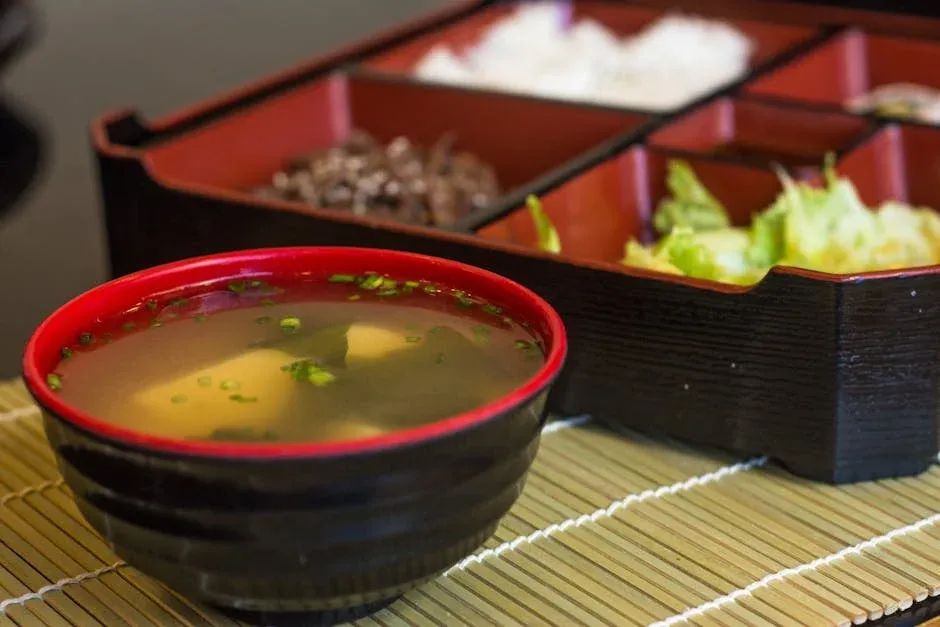
The greatest failure of miso adoption outside Japan is the assumption that miso equals miso soup. Miso soup is wonderful — a bowl of dashi (fish and kelp stock) with dissolved miso and a few cubes of tofu is one of the most comforting, simplest, and most nutritionally complete quick meals in existence. But using miso only for soup is like using butter only for toast. The paste's versatility comes from its balance of salt, sugar, umami, and acidity, which means it can function as a seasoning, a marinade, a glaze, a sauce base, or a finishing element in virtually any cuisine.
For marinades: mix white miso with mirin and a touch of sake, and coat salmon fillets for 24 to 48 hours before grilling. The sugars in the miso and mirin caramelize under high heat, creating a lacquered, sweet-savory crust while the enzymes in the miso tenderize the fish. For dressings: whisk red miso with rice vinegar, sesame oil, a grated ginger, and a spoonful of honey for a salad dressing that works on everything from green salads to grain bowls to grilled vegetables. For glazing: mix any miso with mirin and brush it onto eggplant halves before roasting — the Japanese dish nasu dengaku, which produces eggplant so creamy and deeply flavored it can convert eggplant skeptics.
The Non-Japanese Applications
Smart Western chefs have been smuggling miso into non-Japanese contexts for years. A tablespoon of white miso in a pot of corn chowder adds a savory depth that finishes the soup without anyone identifying the source. Red miso in a beef stew functions like a better version of Worcestershire sauce — it adds salt, umami, and a fermented complexity that would otherwise require hours more simmering. Miso in caramel sauce (miso caramel is now a standard pastry technique) provides a salty, slightly funky counterpoint to the sweetness that's more interesting than plain salted caramel. And miso butter — softened butter mixed with white miso, formed into a log, and chilled — melts over a grilled steak or a baked potato with an effect that's subtle, layered, and guaranteed to make someone ask "what's in this?"
The rule is simple: anywhere you'd add salt and want more complexity, add miso instead. Not in addition to salt — instead of it. Miso is salty enough to season food on its own, and the fermented compounds it carries along with the salt make every dish more interesting. Start with a teaspoon in your next batch of scrambled eggs. Don't tell anyone what you did. Wait for the questions. They'll come.
Buying, Storing, and Not Wasting It
Buy miso at a Japanese or Korean grocery store, not from the "international" aisle of a Western supermarket. The selection will be larger, the brands will be Japanese, and the price will be lower — a 500g container of good quality miso runs $3-5 at an Asian grocery versus $8-12 for a smaller package at a specialty store. The brand matters less than the type: read the ingredient list (soybeans, rice or barley, salt, koji — that's it; avoid anything with MSG, alcohol, or preservatives) and the country of origin (Japan, ideally).
Miso is essentially immortal in your refrigerator. The salt content and fermentation make it inhospitable to harmful bacteria, and while the flavor evolves slowly over time (it continues fermenting, very gradually, even at refrigerator temperatures), it doesn't spoil in any meaningful sense. A container of miso in your fridge for a year is still perfectly fine — it might be slightly darker and slightly more intense, but it's not gone bad. This makes it the ultimate low-risk pantry investment: buy it, use it when inspiration strikes, and stop feeling guilty about the half-used container in the back of the fridge. It's fine. It was always fine. Use it tonight.