Simplicity as a Trap
Mango sticky rice — khao niao mamuang — contains exactly three components: glutinous rice steamed and dressed with sweetened coconut cream, ripe mango sliced into crescents, and a drizzle of salted coconut cream on top. There is no fourth ingredient. There is no hidden technique. And there is absolutely no way to fake it, because the simplicity that makes the dish look effortless is the same simplicity that exposes every flaw. Bad rice texture, underripe mango, thin coconut cream — any single failure and the dessert goes from transcendent to forgettable. This is Thailand's culinary paradox in miniature: the dishes that look simplest demand the most from their ingredients.
You'll find mango sticky rice at every night market, food court, and street stall across Thailand during mango season (April through June, with some availability year-round from irrigated orchards). A plate costs 60-120 baht ($1.70-3.50) depending on location and mango quality, and the best versions are made by vendors who do nothing else — the specialization ensures that the rice is freshly steamed, the coconut cream is made that morning, and the mangoes are selected with the obsessive attention to ripeness that Thai fruit vendors are famous for. At Mae Varee on Thong Lo Road in Bangkok, the mango sticky rice has achieved near-religious status among locals and tourists alike, with queues forming from 3 p.m. onward and sellouts common by early evening.
Rule One: The Mango Must Be Nam Dok Mai
Thailand grows dozens of mango varieties, but the mango for sticky rice is nam dok mai — a variety with golden-yellow skin, a elongated teardrop shape, and flesh that's almost obscenely sweet, with a floral, honey-like fragrance and virtually no fiber. When ripe, nam dok mai yields to gentle thumb pressure and has a perfume that fills the room. It's the variety that ruined every other mango for me: after eating a perfectly ripe nam dok mai, the Tommy Atkins and Kent varieties that dominate Western supermarkets taste like they're cosplaying as mangoes.
The ripeness is critical. An underripe nam dok mai is firm, slightly tart, and lacks the aromatic complexity that makes the dessert work — the sweetness of the mango must balance and complement the sweetness of the coconut rice, creating a harmony rather than a sugar bomb. An overripe mango is mushy and fermented-tasting. The perfect mango is yielding but not soft, fragrant but not boozy, and the flesh inside is a uniform deep gold with no brown spots. Thai fruit vendors assess ripeness by smell, pressure, and color with a precision that comes from handling thousands of mangoes per season. Trust their selection over your own.
Rule Two: The Rice Must Be Soaked, Steamed, and Dressed
The sticky rice for this dessert is not boiled. It's not cooked in a rice cooker. It's soaked overnight in water (minimum 4 hours, overnight preferred), drained, and steamed over boiling water in a bamboo basket or cheesecloth-lined steamer until the grains are translucent, tender, and clinging to each other in a cohesive but not gummy mass. The steaming takes 20-25 minutes and requires checking: understeamed sticky rice has a hard, chalky core that ruins the texture. Oversteamed rice collapses into paste.
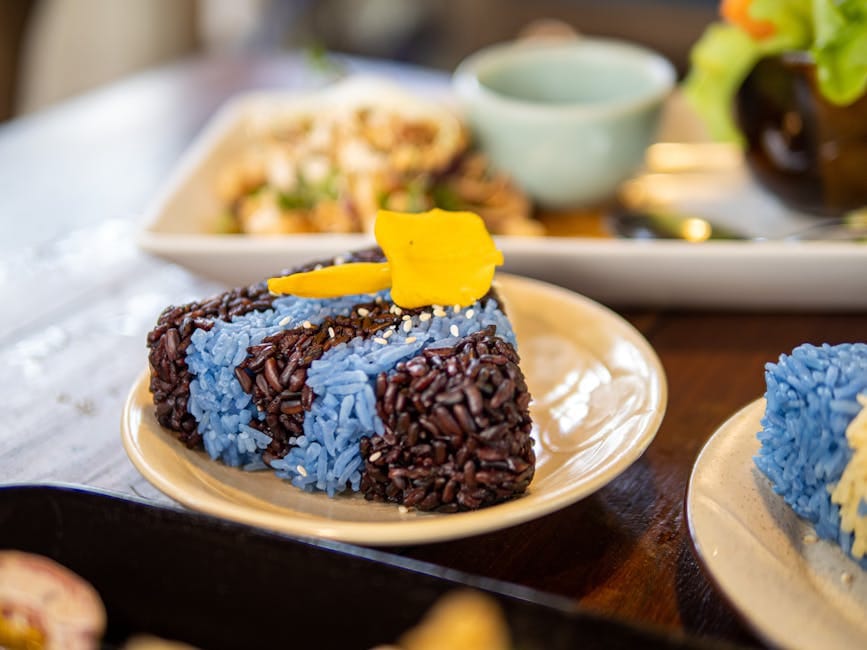
Immediately after steaming — while the rice is still hot — it's dressed with a mixture of coconut cream, sugar, and a pinch of salt. The hot rice absorbs the sweetened coconut cream like a sponge, and this absorption is the technique that separates good mango sticky rice from mediocre versions. If the rice cools before the coconut cream is added, it won't absorb properly and the result is dry rice sitting in a puddle of cream rather than rice that's been infused with it. The ratio matters: too much cream and the rice is soggy; too little and it's dry. The vendors who get this right produce rice with a pearlescent sheen, a gentle sweetness, and a coconut richness that's integrated into every grain rather than sitting on top.
Rule Three: The Coconut Cream Is Two Things, Not One
The coconut element in mango sticky rice is actually two preparations, not one, and confusing them is a common mistake in Western recipes. The first is the sweetened coconut cream mixed into the rice — sweet, rich, infused during the absorption step. The second is the salted coconut cream drizzled on top at serving — thicker, saltier, and less sweet, often with a few sesame seeds or mung beans sprinkled over it. This second cream provides a savory counterpoint to the overwhelming sweetness of the mango and the dressed rice, and without it, the dessert is one-dimensional. The salt makes the whole thing work. Remove it and you have sweetness on sweetness on sweetness, which is pleasant for two bites and exhausting for ten.
Good vendors make both creams from scratch using fresh pressed coconut milk, reducing it over low heat until it thickens. The topping cream is cooked slightly longer and receives a generous pinch of salt that would seem excessive if you tasted it alone but is perfectly calibrated when combined with the sweet rice and mango. At Mae Varee, both creams are made fresh multiple times per day (they don't hold well — the fat separates and the texture changes after a few hours), and the topping cream has a richness and salinity that tells you someone is paying attention to the component that most shortcuts skip.
The Season and the Off-Season
Peak mango season in Thailand runs from April through June, and this is when the best mango sticky rice happens — not because the recipe changes, but because the mangoes are at their sweetest and most abundant. During off-season, many vendors continue serving mango sticky rice using irrigated or imported mangoes, and while the dessert is still enjoyable, the mangoes lack the intensity and perfume of peak-season fruit. Some vendors switch to other fruits during the off-season — durian sticky rice (identical technique, very different flavor) and longan sticky rice are seasonal alternatives — but none have the same cultural weight as the mango version.
The timing rule: Eat mango sticky rice within 30 minutes of assembly. The rice firms up as it cools, the mango oxidizes, and the coconut cream separates. It's a dish engineered for immediate consumption, and every minute of delay costs quality.
Outside Thailand, mango sticky rice has become a standard offering at Thai restaurants worldwide, with varying fidelity to the original. The best diaspora versions use imported Thai sticky rice and substitute Philippine or Indian mangoes (which are sweeter and more aromatic than the Mexican varieties commonly available in the US). The worst versions use regular rice, canned coconut milk, and unripe mangoes, producing something that shares a name with the Thai original but nothing else. If you can't get ripe nam dok mai or a comparable sweet Asian mango, wait until you can. The dessert depends entirely on three perfect ingredients, and substituting any of them doesn't produce a compromise — it produces a different, worse thing.