The Beautiful Disaster
Look at a glass of halo-halo and your first thought, if you're encountering it for the first time, is likely something along the lines of "that can't possibly all go together." The tall glass — usually a parfait glass or a large tumbler — contains, from bottom to top: sweetened beans (kidney, garbanzo, or white), sweetened jackfruit strips, coconut gel (nata de coco), sweet potato, macapuno (mutant coconut with soft, translucent flesh), kaong (sugar palm fruit), pinipig (toasted rice flakes), gulaman (agar jelly), leche flan (caramel custard), ube halaya (purple yam jam), crushed ice, evaporated milk, and a scoop of ube ice cream perched on top like a purple crown. The name halo-halo means "mix-mix" in Filipino, and the instruction is in the name: you take a long spoon, destroy the careful layering, and stir everything together into a cold, sweet, textured chaos that somehow — against all logic and visual coherence — tastes like one unified dessert.
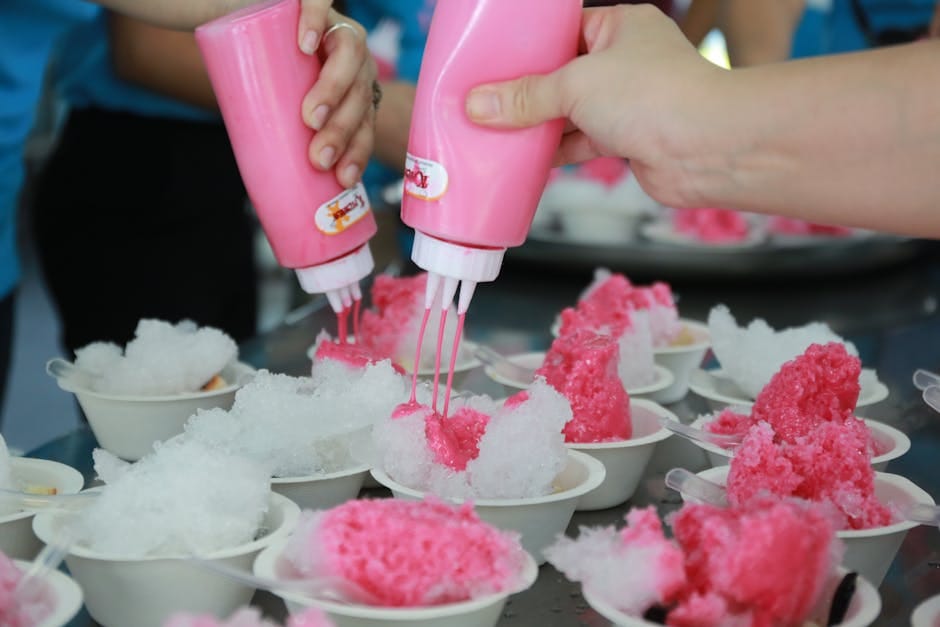
Halo-halo's origins trace to the Japanese kakigori (shaved ice) tradition, brought to the Philippines by Japanese immigrants in the early 20th century. The Japanese version was simple: shaved ice with syrup. Filipino cooks, operating with the same maximalist instinct that characterizes much of Filipino cuisine, progressively added ingredients until the shaved ice became the least important element in a tower of preserved fruits, sweetened beans, dairy, and ice cream. The result is a dessert that reflects the Filipino culinary philosophy of abundance — more is more, and the goal is not minimalist elegance but overwhelming generosity. A glass of halo-halo is a gift. It's the dessert equivalent of a host who insists on sending you home with leftovers.
The Components, Explained
Understanding halo-halo requires understanding its components individually before appreciating how they interact. The sweetened beans (usually red kidney beans, sometimes garbanzo or white beans) provide a starchy, earthy base note that grounds the dessert's sweetness. If beans in a dessert sounds wrong, consider that red bean paste is the most common dessert filling in East Asia — Japanese, Chinese, Korean, and Taiwanese sweets all use it. The Filipino application is less refined (whole beans in sugar syrup rather than a smooth paste) but follows the same principle: beans are sweet when treated sweetly.
Nata de coco — translucent cubes of coconut gel, produced by bacterial fermentation of coconut water — provides a unique texture that nothing else in the dessert replicates. It's firm, bouncy, and faintly sweet, with a chew that contrasts with the softness of the ice cream and the crunch of the pinipig. Kaong (sugar palm fruit) is similarly gelatinous but slightly chewier, and its pale, almost flavorless sweetness functions as a neutral canvas for the milk and ice. Macapuno — a naturally occurring coconut mutation where the meat is soft and translucent instead of firm and white — adds a delicate coconut flavor and a texture somewhere between jelly and custard. These preserved fruits and gels form the structural base of halo-halo, providing the textural variety that keeps each spoonful interesting.
The Purple Heart: Ube
Ube — purple yam (Dioscorea alata) — is halo-halo's soul and the Philippines' most distinctive dessert ingredient. Ube halaya (purple yam jam) is a thick, vibrantly purple paste made by boiling and mashing purple yam with condensed milk, butter, and sugar. Its flavor is subtly sweet and earthy, with vanilla and pistachio notes that surprise people expecting something as loud as its color. In halo-halo, ube halaya is layered near the top, just under the ice cream (which is also ube-flavored), creating a purple gradient that makes the dessert as visually striking as it is texturally complex. The global ube trend of the 2020s — ube doughnuts, ube lattes, ube cheesecake — was a Filipino export, and Filipinos take justifiable pride in watching the rest of the world discover an ingredient they've been using for generations.
The Leche Flan Factor
Leche flan — the Filipino version of crème caramel, made with egg yolks (no whites), condensed milk, and evaporated milk, steamed and served with a caramel top — is halo-halo's luxury layer. A slice of flan added to the glass turns halo-halo from a generous dessert into an extravagant one. The flan's dense, custardy richness and caramel sweetness cut through the ice's coldness and add a sophistication that the beans and preserved fruits don't provide on their own. Not all halo-halo includes leche flan — it's an upgrade, usually adding ₱20-30 ($0.35-0.55) to the price — but it's an upgrade worth making every time.
At Razon's of Guagua, a chain that originated in Pampanga province (the Philippines' culinary heartland), the halo-halo is deliberately stripped down compared to the maximalist versions found elsewhere. Razon's version uses only three main ingredients — macapuno, leche flan, and ube ice cream — over finely shaved ice with evaporated milk. The minimalism is the point: by reducing the components, Razon's allows each one to register clearly, and the quality of each component is higher because the kitchen can focus on three things instead of twelve. The ice is shaved so fine it's almost snow, the leche flan is dense and eggy, and the ube ice cream is intensely flavored. It costs ₱160 ($2.85) and it's the best halo-halo in the Philippines, a claim that Pampanga residents consider self-evident and Manila residents consider fighting words.
The Regional Variations
Like most Filipino dishes, halo-halo varies by region. In Visayas (the central islands), you'll find versions that include mais (sweet corn) and langka (jackfruit) more prominently. In Mindanao, durian ice cream sometimes replaces ube, which is either brilliant or criminal depending on your feelings about durian. In Manila, the trend toward premium halo-halo has produced versions at upscale restaurants that use high-end ice cream, imported toppings, and presentation worthy of a cocktail bar. Milky Way Café on Arnaiz Avenue in Makati serves a famously indulgent version with extra leche flan and homemade ice cream that costs ₱350 ($6.25) — expensive by Filipino standards but still a bargain for a dessert of this complexity.
The diaspora versions — served at Filipino restaurants in Los Angeles, Dubai, Singapore, and Hong Kong — tend to be faithful to the traditional format, though some substitute commercially available ingredients for the harder-to-source preserved fruits. Jollibee, the Filipino fast-food empire, serves a standardized halo-halo at its international locations that's a reasonable introduction to the concept, though purists consider it a pale reflection of the real thing. The real thing requires a cook who makes their own ube halaya, their own leche flan, and their own sweetened beans — a level of effort that transforms a dessert into a project and a project into a tradition.
How to Eat It
The halo-halo instruction is right there in the name: mix. Take your long spoon, reach to the bottom of the glass, and stir upward in a circular motion until the ice, milk, beans, fruits, jam, flan, and ice cream combine into a cold, sweet, multi-textured porridge. The mixing is not optional. An unmixed halo-halo delivers a completely different experience with each layer — interesting but not unified. A properly mixed halo-halo delivers everything simultaneously: sweet, cold, creamy, chewy, crunchy, earthy, and fruity in the same spoonful. The ube ice cream melts into the shaved ice and tints everything purple. The leche flan dissolves into sweet, eggy streaks. The beans settle at the bottom and require the final, deepest spoon excavation to retrieve.
Eat it fast. Shaved ice waits for no one, and a halo-halo that sits uneaten for more than 10 minutes becomes a sweet milk soup with sinking components — still edible but fundamentally different from the cold, texturally varied experience of a freshly mixed glass. The race between your spoon and the melting ice is part of the pleasure, and the last bite — scraped from the bottom of the glass, a concentrated slurry of sweet milk, softened beans, and dissolved ube — is the dessert's final argument that chaos, properly stirred, is a form of harmony.