The Restaurant Without a Room
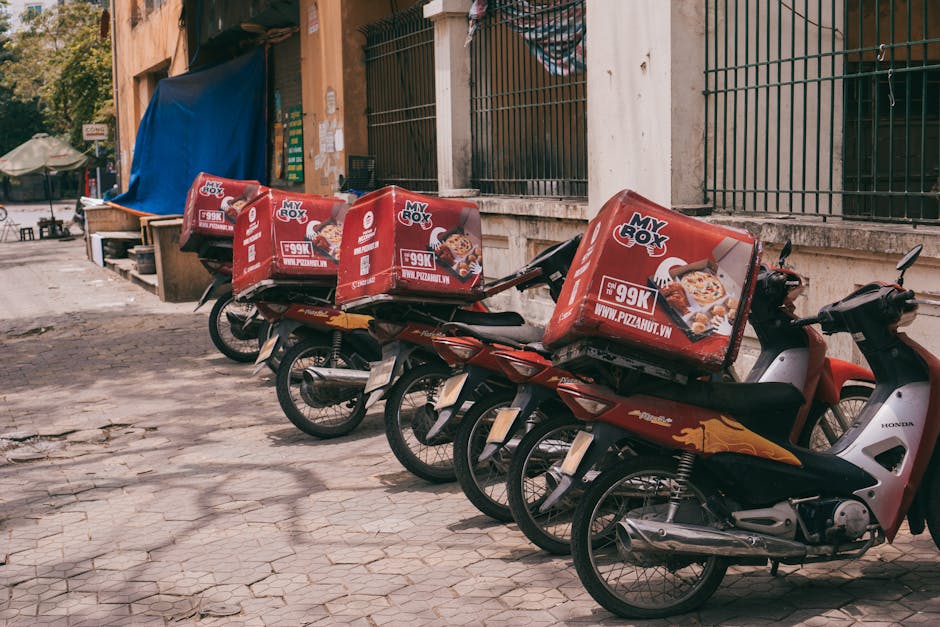
In a light-industrial building on the outskirts of Jakarta's Kuningan district, behind a featureless metal door, twelve different "restaurants" are cooking simultaneously. A Thai restaurant, a Japanese donburi shop, a Korean fried chicken brand, an Indonesian nasi goreng specialist, a burger joint, and seven others — all operating from the same 200-square-meter kitchen, sharing fridges, prep space, and a loading dock where Grab and GoJek delivery riders line up on motorbikes, checking their phones for the next pickup. None of these restaurants exist as physical dining establishments. They have no storefronts, no seating, no menus on the wall. They exist only as listings on food delivery apps, with attractive logos, curated photos, and 4.3-star ratings that give no indication that the sushi place and the fried chicken place are cooked by the same person in the same kitchen at the same time.
Welcome to the ghost kitchen, the food industry's fastest-growing format and arguably the most significant change in how Asian cities eat since the hawker center. Ghost kitchens — also called cloud kitchens, dark kitchens, or virtual kitchens — are commercial cooking facilities designed exclusively for food delivery. No dine-in, no takeout counter, no customer-facing presence of any kind. The business model is simple and brutal in its efficiency: by eliminating dining rooms, front-of-house staff, expensive main-street locations, and the capital investment of a traditional restaurant buildout, ghost kitchens can launch a "restaurant" for $5,000-20,000 instead of $100,000-500,000, test and pivot concepts in weeks instead of months, and operate multiple brands from a single facility.
Why Asia Is Ground Zero
Ghost kitchens exist worldwide, but Asia is where the model has achieved its greatest scale, and the reasons are structural. First, food delivery adoption in Asia is dramatically higher than in Western markets. In Southeast Asia, Indonesia, Thailand, and Vietnam have food delivery penetration rates exceeding 60% of urban consumers, driven by cheap motorbike delivery labor, high smartphone penetration, and a pre-existing street food culture that normalized buying food from someone else rather than cooking at home. Second, Asian urban density — the packed apartment blocks of Jakarta, Bangkok, Manila, and Ho Chi Minh City — creates delivery economics that work: short distances between kitchen and customer mean fast delivery times and low per-order delivery costs.
Third, and most importantly, the super-app ecosystem in Asia (Grab, GoJek, Meituan, Foodpanda, Line Man) has created a digital marketplace where a ghost kitchen brand competes on equal footing with a traditional restaurant. On a delivery app, a ghost kitchen's listing looks identical to a brick-and-mortar restaurant's listing. Same photos, same ratings, same search positioning. The consumer doesn't know and, research suggests, largely doesn't care whether their food comes from a dedicated kitchen or a shared commissary. The food arrives in 30 minutes either way, and if it's good, they order again. This frictionless anonymity is the ghost kitchen's greatest advantage — and, critics argue, its most troubling feature.
The Scale in Numbers
Grab, Southeast Asia's dominant super-app, operates its own ghost kitchen network (GrabKitchen) in Indonesia, Thailand, Vietnam, and the Philippines, with over 60 facilities as of 2025. Each facility houses 10-15 virtual brands, producing thousands of meals per day. In China, Meituan's cloud kitchen program supports over 10,000 ghost kitchen facilities nationwide, and the country's ghost kitchen market was valued at $12 billion in 2024. India's ghost kitchen scene, led by companies like Rebel Foods (which operates over 45 virtual brands from 400+ kitchens across 10 countries), has attracted billions in venture capital. The scale is enormous and growing at 15-20% annually across the region.
The economics are compelling for operators. A traditional restaurant in central Bangkok pays ฿80,000-200,000 ($2,300-5,800) per month in rent. A ghost kitchen space in a Bangkok facility costs ฿20,000-40,000 ($580-1,160) per month. Staffing drops by 40-60% (no servers, no hosts, no bartenders). Food costs remain similar, but the reduced overhead means break-even happens faster and margins are higher once achieved. For entrepreneurs with good recipes but limited capital — a description that fits millions of aspiring restaurateurs across Asia — the ghost kitchen model removes the single biggest barrier to entry: the cost of a physical space in a desirable location.
What's Actually in the Kitchen
The reality of a ghost kitchen operation is less glamorous than its digital presence suggests. A typical facility is a converted warehouse or ground-floor commercial space divided into stations, each equipped with basic cooking infrastructure: gas burners, a ventilation hood, refrigeration, prep surfaces, and a packaging area. The stations are small — often 10-15 square meters, enough for one or two cooks to work — and the proximity between stations means cross-contamination of smells, sounds, and occasionally ingredients. The sushi station is five meters from the fried chicken station, and the kitchen smells like both simultaneously.
The brands operating from these stations are often created by the ghost kitchen company itself rather than by independent restaurateurs. Rebel Foods, for example, designs its own brands based on data analysis — identifying cuisine gaps in specific delivery zones, creating brands to fill those gaps, and testing them rapidly. If a brand doesn't perform after two weeks, it's shut down and replaced. This data-driven approach produces brands that are optimized for delivery metrics (order volume, repeat rate, average ticket size) rather than culinary vision. The food tends to be competent, consistent, and designed for transport (nothing too liquid, nothing that wilts, nothing that requires immediate consumption), which means it's optimized for a different set of constraints than restaurant food. It's food as logistics problem, solved.
The Quality Ceiling
The honest assessment of ghost kitchen food quality is mixed. At their best, ghost kitchens produce delivery food that's as good as mid-range restaurant delivery — consistent, properly seasoned, well-packaged, and arriving at the correct temperature. At their worst, they produce food that's been sitting in a plastic container for 40 minutes, cooked by someone operating five brands simultaneously, and bearing only a passing resemblance to the appetizing photos on the app. The quality ceiling of ghost kitchen food is inherently lower than restaurant food for a simple reason: the food must survive 20-40 minutes of transport in a thermal bag on the back of a motorbike. This eliminates anything crispy (it steams), anything delicate (it collapses), and anything that relies on temperature contrast (it equalizes). What travels well: rice dishes, curries, noodle soups (in leak-proof containers), braised meats, and fried items designed to retain crunch (thick batters, tight packaging).
What's Lost
The ghost kitchen debate isn't really about food quality — adequate delivery food already existed before ghost kitchens, via traditional restaurants with delivery services. The debate is about what a food culture loses when the physical space of eating disappears. A hawker center is a social space. An izakaya is a social space. A Vietnamese sidewalk pho stall is a social space. These places create encounters between strangers, provide employment that includes human interaction, and root food culture in specific places with specific characters. A ghost kitchen creates none of this. It produces food in a building nobody visits, delivers it to individuals eating alone, and its "place" in the food culture is an app listing that could be relocated to a different kitchen in a different district without any customer noticing.
This isn't nostalgia. It's a structural observation. The cities where ghost kitchens are growing fastest — Jakarta, Bangkok, Manila — are also the cities with the richest street food and hawker cultures, and those cultures are already under pressure from urban development, regulatory changes, and generational shifts. Ghost kitchens don't directly threaten hawker stalls (they serve different occasions and price points), but they accelerate a broader trend toward privatized, individualized eating that was already underway. The question isn't whether ghost kitchens produce acceptable food. They do. The question is what kind of food culture a city has when a significant and growing percentage of its meals are cooked in anonymous facilities, delivered by gig workers, and eaten alone in front of screens. That question doesn't have an answer yet. The experiment is still running.