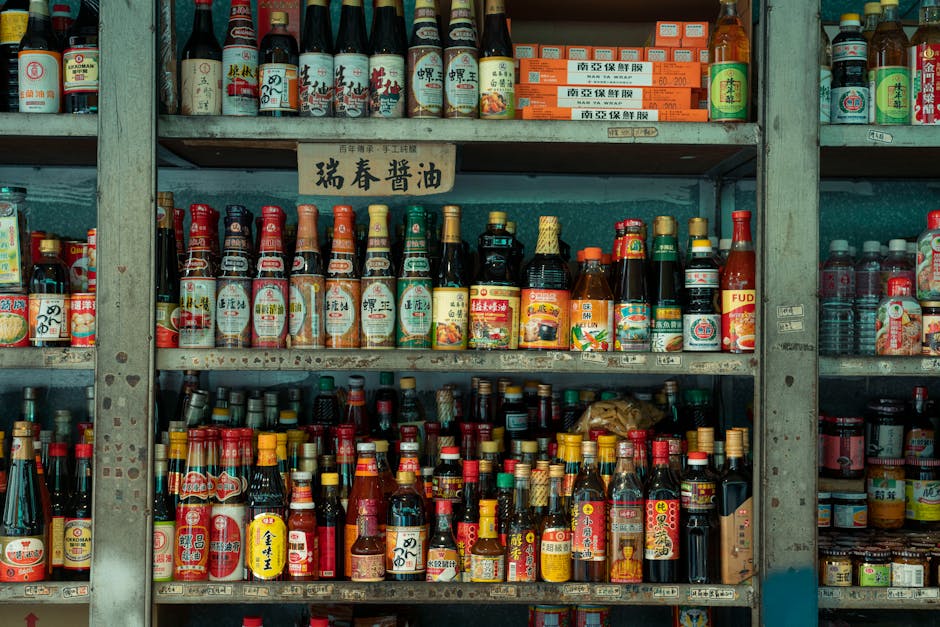
One Shopping Trip, Five Cuisines
The barrier to cooking Asian food at home isn't skill — it's the pantry. Western kitchens are stocked for Western cooking: olive oil, butter, garlic, onions, salt, pepper. The moment you try to make pad thai or mapo tofu or bibimbap with that toolkit, you hit a wall. The dish turns out edible but wrong, missing a depth or brightness or savory punch that you can taste in the restaurant version but can't replicate. The missing element isn't technique. It's ingredients. Specifically, it's the 15 or so shelf-stable staples that form the foundation of East and Southeast Asian cooking and that, once they're in your kitchen, make the difference between "I followed an Asian recipe" and "I cooked Asian food."
The good news: these ingredients are cheap, widely available at any Asian grocery store, and last for months (many are fermented or preserved, making them essentially immortal in your pantry). One shopping trip costing $40-60 will stock your kitchen with everything you need to cook Thai, Chinese, Japanese, Korean, and Vietnamese dishes for months. Here are the 15 that matter most, in the order I'd buy them.
1. Soy Sauce (Two Kinds)
You need two soy sauces: light and dark. Light soy sauce (sheng chou in Chinese, usukuchi in Japanese) is your all-purpose seasoning — salty, savory, used in stir-fries, marinades, dipping sauces, and soups. It's the soy sauce you reach for 90% of the time. Dark soy sauce (lao chou) is thicker, less salty, slightly sweet, and used primarily for color — a tablespoon turns fried rice from pale to appetizing brown, and it gives braised meats their glossy, mahogany finish. Buy Kikkoman for Japanese cooking and Pearl River Bridge for Chinese cooking. Both are naturally brewed. Skip anything that lists "hydrolyzed soy protein" — that's chemically produced imitation.
2. Fish Sauce
The single most important Southeast Asian ingredient. Buy Megachef or Squid brand for Thai cooking, Red Boat for Vietnamese. Use it in any dish where you want savory depth: stir-fries, soups, marinades, salad dressings. Start with one teaspoon per serving and adjust up. It smells intense but cooks out to pure umami. Refrigerate after opening.
3. Sesame Oil (Toasted)
Toasted sesame oil is a finishing oil, not a cooking oil — its smoke point is too low for stir-frying. Add it at the end of cooking or drizzle it over finished dishes for a nutty, roasted aroma that's distinctly East Asian. A few drops in ramen, fried rice, or a Korean banchan transforms the dish. Kadoya brand (Japanese) is the gold standard. A 327ml bottle costs $4-5 and lasts months because you use it by the teaspoon.
4. Rice Vinegar
Milder and slightly sweeter than Western vinegars, rice vinegar is essential for sushi rice seasoning, Japanese dressings, Chinese sweet-and-sour sauces, and Korean pickled vegetables. Buy unseasoned rice vinegar (not "sushi vinegar," which has sugar and salt pre-added) so you can control the seasoning yourself. Marukan brand is reliable and ubiquitous.
5. Oyster Sauce
A thick, brown, sweet-salty sauce made from oyster extracts that's the backbone of Cantonese stir-fries. A tablespoon in a vegetable stir-fry adds a savory gloss that no combination of soy sauce and sugar can replicate. Lee Kum Kee Premium Oyster Sauce is the standard. Vegetarian oyster sauce (made from mushrooms) is available and works well as a substitute.
6. Gochugaru (Korean Red Pepper Flakes)
These are not regular chili flakes. Gochugaru — coarsely ground Korean dried red peppers — has a sweet, slightly smoky flavor with moderate heat, and it's essential for kimchi, tteokbokki, Korean stews, and the base of gochujang. It's sold in large bags ($5-8 for 500g) and should be stored in the freezer to preserve its color and flavor. There is no substitute. Regular chili flakes will make your Korean food taste Mexican.
7. Miso Paste
Buy an awase (blended) miso for all-purpose use. It handles everything from soup to marinades to salad dressings. If you want two types: white (shiro) for delicate dishes and dressings, red (aka) for robust soups and glazes. Marukome or Hikari are solid brands. Miso lives in the refrigerator indefinitely.
8. Coconut Milk
Full-fat coconut milk in cans is the base of Thai curries, Malaysian rendang, and dozens of Southeast Asian soups and desserts. Buy the cans, not the cartons (carton coconut milk is diluted). Aroy-D and Chaokoh are the standard Thai brands. Shake the can before opening — the fat separates from the water and needs to be recombined.
9. Mirin
A sweet Japanese rice wine used in cooking (not drinking). Mirin adds a gentle sweetness and glossy finish to teriyaki sauces, simmered dishes, and rice seasoning. Buy hon-mirin (real mirin, 14% alcohol) rather than mirin-like seasoning (aji-mirin, which is cheaper but contains corn syrup). Takara is a widely available hon-mirin brand.
10. Shaoxing Wine
Chinese rice wine used in stir-fries, marinades, and braised dishes. A splash in a hot wok deglazes the surface and adds a complex, slightly sweet, yeasty depth that no other ingredient provides. Sold in Asian grocery stores (sometimes in the vinegar aisle, sometimes behind the counter because it contains alcohol). Pagoda brand is standard. Dry sherry is an acceptable substitute.
11. Sambal Oelek
A raw chili paste (chilies, salt, vinegar) that adds clean, bright heat to any dish. Use it as a cooking ingredient in stir-fries, a condiment on noodle soups, or a base for more complex chili sauces. Huy Fong (the rooster brand) makes the most widely available version. It keeps in the refrigerator for over a year.
12. Tamarind Paste
The sour element in pad thai, many Thai curries, and Southeast Asian dipping sauces. Buy tamarind concentrate (a thick, dark paste) rather than whole tamarind pods, unless you want the extra step of soaking and straining. A small jar lasts a long time because a tablespoon goes a long way.
13. Dried Shiitake Mushrooms
Dried shiitakes have a deeper, more concentrated umami flavor than fresh. Soak them in warm water for 30 minutes (save the soaking liquid — it's a free umami-rich stock), then slice and use in stir-fries, soups, and braised dishes. They store indefinitely in a sealed container at room temperature and cost $4-6 for a bag that lasts months.
14. Cornstarch
The velvet in "velveting" — the Chinese technique of coating protein in cornstarch, egg white, and a splash of wine before stir-frying, producing supernaturally tender meat. Also the thickener for Chinese sauces (mixed with water as a slurry and added at the end of cooking). You probably already have this, but if you don't, it's the cheapest item on this list and one of the most useful.
15. Jasmine Rice
A long-grain rice with a floral aroma and slightly sticky texture that's the default rice of Thailand, Vietnam, Laos, and Cambodia. Thai Hom Mali grade jasmine rice (look for the green circle certification mark on the bag) is the standard. Rinse it three times before cooking to remove surface starch, use a 1:1.2 rice-to-water ratio, and cook in a rice cooker if you have one. A $30 rice cooker will produce perfect rice every time and is the single best investment an aspiring Asian home cook can make.
With these 15 ingredients in your kitchen, the gap between what you can cook and what you eat at restaurants narrows dramatically. The technique matters, the recipe matters, but the pantry comes first. Stock it, and the rest follows.