You're Not Ordering Food — You're Conducting a Symphony
The first time I had dim sum in Hong Kong, at a sprawling, fluorescent-lit hall in Sheung Wan where every table was occupied by families shouting cheerfully over bamboo steamers, I made every possible mistake. I ordered too much of one thing, too little of another, poured tea wrong, ignored the cart lady who was trying to give me something magnificent, and ate the har gow (shrimp dumplings) in two bites instead of one. Nobody said anything. Nobody had to. The pitying glances from the next table communicated everything with surgical precision. Dim sum — or yum cha, literally "drinking tea," which is the activity that dim sum accompanies — has a system. It's not written down anywhere, it's not taught formally, and it differs slightly between Hong Kong, Guangzhou, Singapore, and the diaspora communities of San Francisco and Sydney. But it exists, and knowing it transforms the experience from chaotic to symphonic.
The fundamentals are simple enough. Dim sum is a Cantonese tradition of small shared dishes served alongside Chinese tea, typically eaten from late morning through early afternoon (though some Hong Kong restaurants now serve it all day). The dishes range from steamed dumplings and buns to fried noodle rolls, braised chicken feet, congee, and custard tarts. A typical meal involves 8 to 15 different dishes shared among 2 to 6 people, and the art is in the selection — balancing steamed against fried, light against rich, shrimp against pork against vegetable, so that the meal progresses rather than stalls.
The Tea Comes First
Before any food arrives, you'll be asked to choose your tea. This is not a formality — the tea is half the point of yum cha. The main options are bo lei (pu-erh, dark and earthy), sau mei (chrysanthemum-sweetened white tea), and tit goon yum (iron goddess oolong). Bo lei is the default and the most traditional, its slightly bitter, woodsy flavor acting as a palate cleanser between bites of rich, oily dim sum. If you're not sure, ask for bo lei and nobody will judge you. The waiter will bring a teapot and cups, and the first pour is discarded — used to rinse the cups and warm them. This isn't performative. It's practical. The hot water removes dust from the tea leaves and raises the cup temperature so the tea stays hot longer.
Here's the rule that matters: when someone pours tea for you, tap the table twice with your index and middle fingers. This gesture — a truncated bow — is said to originate from a Qing dynasty emperor who traveled in disguise and poured tea for his servants, who couldn't kowtow openly without revealing his identity, so they tapped the table instead. Whether the story is true doesn't matter. The gesture is universal in Cantonese tea culture and failing to do it is the equivalent of not saying thank you when someone holds a door. At restaurants like Lin Heung Tea House in Central, Hong Kong — one of the few surviving old-school dim sum halls where carts are still pushed through the room — the tea-tapping is constant, a percussive backdrop to the meal.
The Ordering System
Dim sum restaurants use one of two systems: cart service or paper-and-pencil ordering. Cart service, the traditional method, involves women pushing metal carts through the dining room, each cart loaded with different dishes kept warm over steam or in heated compartments. When a cart passes your table, you point at what you want and the server stamps your bill card. The advantage of carts is the ability to see the food before committing. The disadvantage is that popular items sell out quickly — the har gow cart that passes at 11 a.m. might be empty by 11:15, and the next one isn't coming for 30 minutes. The strategy is to sit near the kitchen door, where carts emerge fully loaded.
Paper ordering, now the norm at most modern dim sum restaurants, involves a printed checklist where you mark your selections with a pencil. Items are categorized by price tier — small, medium, large, special, and super — with prices typically ranging from HK$28 ($3.60) for small items to HK$68 ($8.70) for premium ones. The advantage is that everything is available simultaneously and arrives fresh from the kitchen. The disadvantage is decision paralysis — a full dim sum menu can list 80 to 120 items, and without the visual cue of seeing food on a cart, first-timers tend to either over-order or stick to the three things they recognize.
The Essential Order
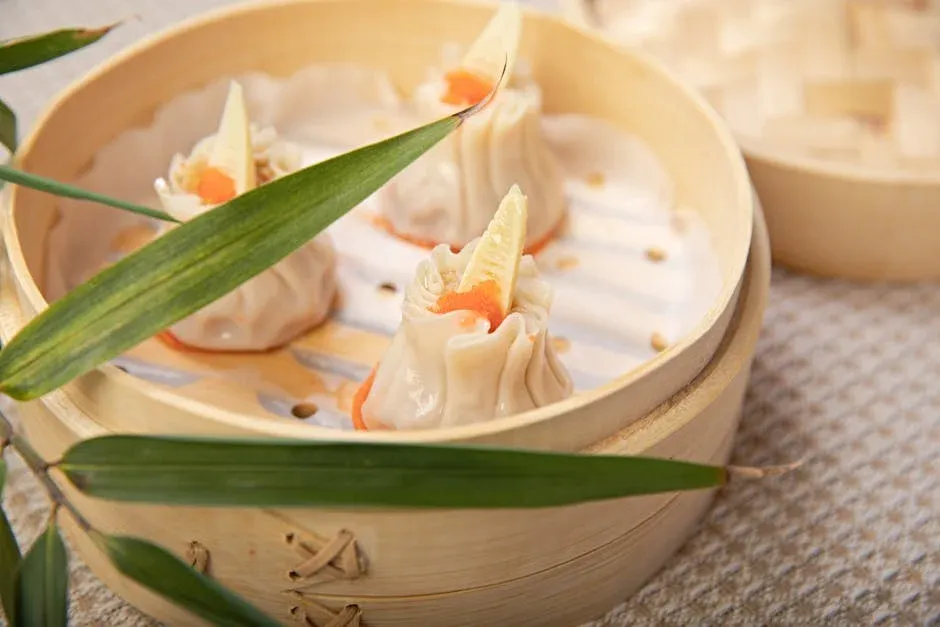
Every dim sum meal should include these five categories. First: steamed dumplings. Har gow (shrimp dumplings with translucent wrappers) and siu mai (pork and shrimp dumplings with open tops) are the two benchmarks by which a dim sum restaurant is judged. If the har gow wrapper is too thick, tears when you pick it up, or the shrimp filling is mushy rather than bouncy, the kitchen is not serious. At Tim Ho Wan in Sham Shui Po — the cheapest Michelin-starred restaurant in the world — the har gow are exemplary: wrappers so thin you can see the pink shrimp through them, filling that snaps when you bite down, a faint sweetness from the prawn that needs no dipping sauce.
Second: something in a bun. Char siu bao (BBQ pork buns) come steamed (fluffy, cloud-white dough) or baked (golden, slightly sweet, crackled top). Order both and compare. The baked version from Tim Ho Wan has a cookie-like crust that shatters into the sweet-savory pork filling and is genuinely one of the best single bites in Hong Kong. Third: a rice noodle roll, usually cheung fun — wide sheets of steamed rice noodle wrapped around shrimp, char siu, or beef, drenched in sweetened soy sauce. The texture should be silky and slippery, not gummy. Fourth: something fried. Wu gok (taro croquettes) have a lacy, crispy exterior made from deep-fried taro paste that surrounds a savory pork filling. They look like golden hedgehogs. Fifth: chicken feet. Yes, chicken feet. Phoenix claws (fung zao) are braised in black bean sauce until the skin is gelatinous and the tiny bones pull clean with a gentle suck. They are collagen bombs, deeply savory, and the texture — slippery, yielding, with nothing to really chew — is either addictive or horrifying depending on your disposition. Order them anyway.
The Timing Trap
The biggest mistake first-timers make is ordering everything at once. Dim sum arrives fast — kitchens are designed for rapid turnover — and if you mark 15 items on the paper simultaneously, your table will be covered in steamers within 10 minutes, with nowhere to put your elbows and food cooling faster than you can eat it. Instead, order in waves of four to five dishes, wait for them to arrive and be half-consumed, then order the next wave. This keeps the food hot, gives you time to assess what you're enjoying, and prevents the panicky feeling of watching $80 worth of food slowly congealing on a crowded table.
The Bill and the Fight
At the end of a dim sum meal, someone will ask for the check. In Cantonese culture, the subsequent fight over who pays the bill is a ritual as formalized as any tea ceremony. Everyone at the table will reach for the bill simultaneously. Wallets will appear. Credit cards will be waved. Someone will physically try to push money at the server while another person blocks them. This can last several minutes and occasionally involves actual shouting. It is entirely sincere and deeply performative at the same time. If you're a guest, you should make a genuine effort to pay while accepting that you will almost certainly lose. If you're the host, you should have already arranged to pay by slipping your credit card to the server before the meal ended.
The bill itself is calculated from the stamps on your card. Check it before paying — mistakes happen, especially with cart service where stamps can be misplaced. A typical dim sum meal for two people in Hong Kong runs HK$200-350 ($26-45), which is remarkably good value for the quantity and quality of food. In the diaspora — San Francisco, Vancouver, Sydney — expect double that. The value proposition remains strong either way: you're eating 10 to 15 different handcrafted dishes, each made by a specialist kitchen section, accompanied by bottomless tea, in a social setting that ranges from intimate to raucous depending on who you bring.
The Thing About Chicken Feet
I need to come back to the chicken feet because they represent something important about dim sum culture. In Western food traditions, the "best" parts of an animal are the muscles — breasts, loins, chops. In Cantonese cooking, the most prized parts are often the ones Western butchers discard: the feet, the intestines, the tongue, the tripe. Dim sum menus are full of these parts — braised duck tongues, steamed tripe, pork liver siu mai — and they're not there as novelty items or dares. They're there because generations of Cantonese cooks figured out that these parts, prepared correctly, offer textures and flavors that muscle meat can't provide. The gelatinous bounce of a properly braised chicken foot, the silky snap of tripe, the mineral richness of liver — these are features, not compromises. Approaching dim sum with the assumption that you know which parts of an animal taste good is approaching it with a handicap you don't need.