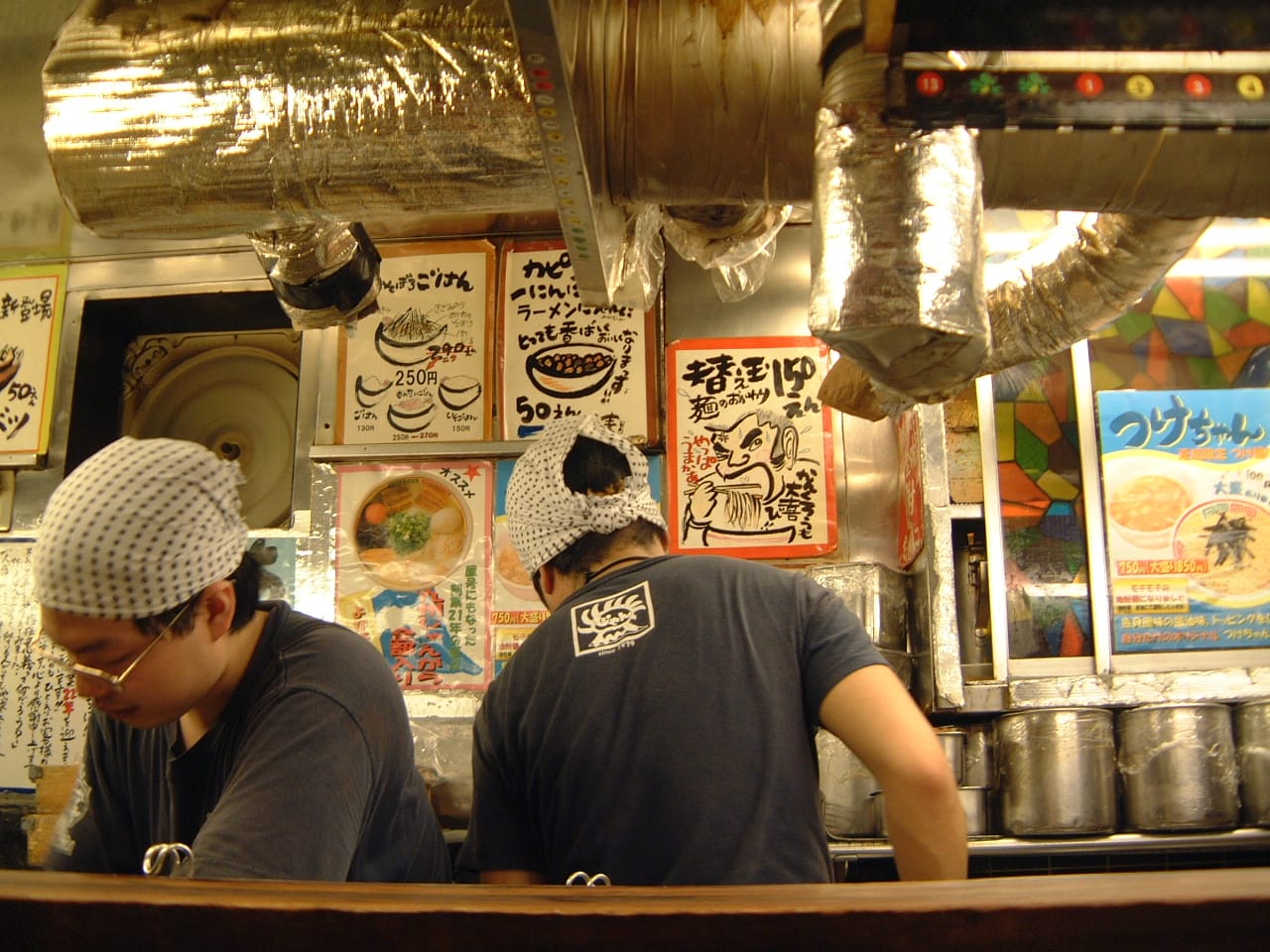
Sit at the counter of a ramen shop in Tokyo's Setagaya district and look around. Twelve seats, all facing the kitchen. The counter is exactly the height your forearms need to rest while eating. The chopstick rest is integrated into the counter edge. The hot-water dispenser is within reach without standing up. Nothing about the room is accidental. The Japanese ramen-ya, like the Vietnamese pho shop, the Korean kalguksu joint, and the Sichuan dan dan stall, has evolved a tight architectural logic that almost no Western restaurant matches. The architecture exists to serve the bowl, not the diner's social ambitions.
The First Principle: Heat Loss Is the Enemy
Asian noodle soups live or die on temperature. A Japanese tonkotsu broth at 92 degrees Celsius is a different food from the same broth at 78 degrees. The architecture of the shop is built around minimising the heat-loss path between pot and bowl, and between bowl and mouth.
This is why ramen counters are short, why pho shops keep their cauldrons visible from every seat, why a Sichuan noodle stall pours hot oil over the bowl at the table itself. The walk from kitchen to diner is measured in seconds. The bowl is shallow enough to drink from but deep enough to hold heat. The chopsticks reach the bottom without being clumsy. None of this is decorative.
The Counter Is the Heart
Walk into a traditional Tokyo ramen shop and you will find the counter directly facing the kitchen, with the chef working in plain sight. This is not theatre, though it doubles as theatre. It is a quality-control mechanism for the customer and a feedback mechanism for the chef. The customer sees the noodle being lifted from the boil, sees the timing, can tell within seconds whether the bowl is correctly assembled. The chef can read the diner's eating pace and adjust the next round.
The same logic plays out in Hanoi pho shops, where the pot of broth occupies the front of the room and the assembly happens within arm's reach of the queueing customer. The transparency is the quality system. Western restaurants have spent two decades putting open kitchens behind glass for the same effect, but the Asian noodle shop did it for functional reasons long before it became a design trend.
Architectural Elements You Can Spot in Any Good Noodle Shop
- Counter height matched to forearm rest with bowl in place
- Bowl rim above the lip of the counter for slurp-friendly geometry
- Chopstick rest integrated into the counter or table edge
- Hot water and condiments within seated reach
- Direct sightline from every seat to the pot or assembly point
- Floor pitched gently toward a central drain for spillage
The Solo Diner Is the Designed-For Customer
Western restaurants treat the solo diner as an exception. Asian noodle shops treat the solo diner as the default. The counter seating arrangement, the small-portion sizing, the rapid turnover, the lack of social pressure to linger, all of it makes sense only if the median customer is alone. Ichiran in Japan made the architectural logic explicit with its single-seat booths, but the underlying assumption has always been there.
This matters because it means the architecture supports an eating rhythm that prioritises the food. The diner is not performing for a date, not entertaining a client, not anchoring a group. The diner is eating. The room knows that, and the room is built for it.
Regional Variations on the Same Logic
The Vietnamese pho shop in Hanoi sits closer to a market stall than to a restaurant, with low plastic stools, narrow tables, and a service flow that has more in common with a fast-food chain than a sit-down room. The Korean kalguksu shop, by contrast, often runs longer tables with shared service and faster turnover. The Sichuan dan dan stall keeps the bowl small and the meal short, with the heat-and-numbness profile demanding a quick, focused eating window before the spice dulls the palate.
The Malaysian and Singaporean hawker centre absorbed the noodle-shop logic and scaled it. Each stall is essentially a self-contained noodle shop with its own counter, kitchen and queue, organised around a shared seating commons. The architecture is fractal: a hundred small noodle shops arranged in a single hall.
What Western Restaurants Could Learn
The Asian noodle shop teaches a discipline most Western restaurants have forgotten. The room should serve the food, not the other way around. The architecture should reduce the steps between kitchen and palate. The seating should match the eating posture the dish requires. The solo diner should not feel like a category error.
What to Watch For Next Time
The next time you sit at a noodle counter anywhere in Asia, notice the geometry before you eat. Notice how the bowl sits, how your hands reach, how the heat from the pot warms the space without flooding it. Notice that the chef does not have to ask whether you want another piece of garlic or a top-up of broth, because the room makes those choices visible. The bowl in front of you is the most obvious part of the design. The room around it is the part most people miss.