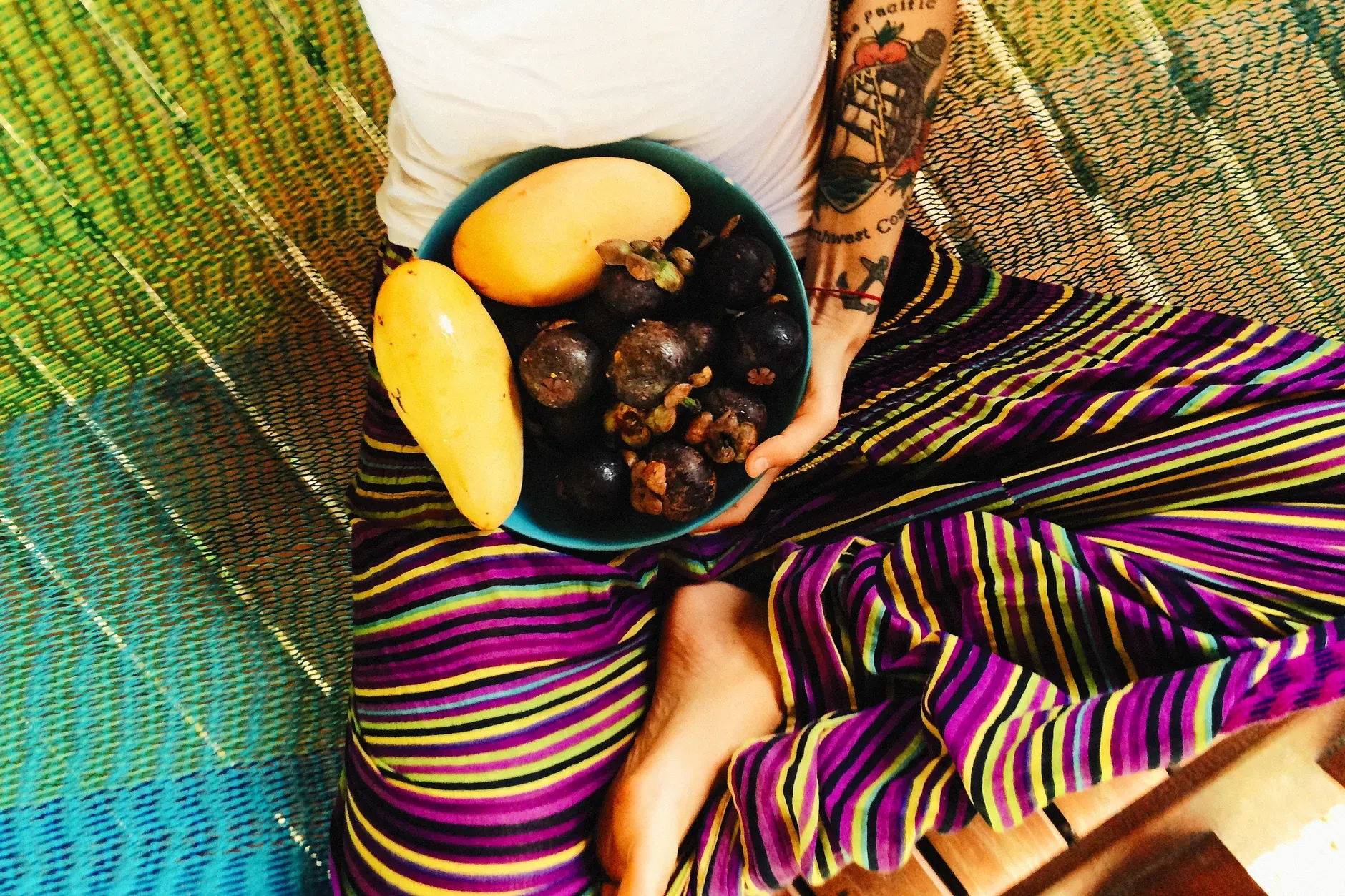
Late May in Southeast Asia is mangosteen season, and across markets in Bangkok, Jakarta, Kuala Lumpur, and Singapore the deep-purple shells are stacked in conical piles at every fruit stall. This is the window — three or four weeks of peak quality — when the price drops to about 80-130 baht per kilo at the Bangkok wet markets and the fruit is at its sweetest, most fragrant, and least likely to be the disappointment that the imported supermarket version often delivers in northern markets.
Here is what late May 2026 looks like across the region for food enthusiasts, plus where to actually find the best of what's seasonal — not the tourist-track version.
Thailand: the mangosteen window and the durian quality curve
The mangosteen harvest is reliable through about mid-June in the Chanthaburi and Trat provinces, with the southern Thai harvest (Surat Thani, Nakhon Si Thammarat) extending the season into late June. The price difference between a wet-market kilo and a supermarket "premium" mangosteen — 80 baht versus 320 baht for nearly identical fruit — is the kind of arbitrage that any food-curious Bangkok resident with thirty minutes to spend at Or Tor Kor or Klong Toey market has obvious access to.
For the durian connoisseurs: this is the early-season window. Monthong from Chumphon and Surat Thani is hitting markets now at 240-380 baht per kilo. Kanyao and Kradum are about three weeks out from peak. The Musang King variety, while genetically Malaysian, is in short supply in Bangkok this year — most of the early harvest in Malaysia went straight to mainland China premium channels, leaving the regional market noticeably tighter than last year.
Indonesia: peak rambutan and the underrated salak
Rambutan from West Java is plentiful in Jakarta markets — 25,000-35,000 rupiah per kilo at Pasar Mayestik or Pasar Senen — for the next three weeks. The unsung star of late May is salak (snake fruit), which is at its sweetest right now from the Sleman district of Yogyakarta. The salak pondoh variety, with the dry crunchy texture more like a firm apple than a tropical fruit, is the version worth seeking out. Available in Jakarta supermarkets but tastier from market stalls at 15,000-22,000 rupiah per kilo.
For Jakarta-based food writing, the most interesting current development is the rapid spread of warung-style hyper-local cafés in Kemang, Cipete, and Bintaro Sektor 9 that serve regional Indonesian breakfast dishes — Padang lontong sayur, Manado bubur tinutuan, Banjarese soto banjar — at a quality that the city's hotel restaurants struggle to match. The price point: 35,000-65,000 rupiah for breakfast. For visiting food writers and tourists, this is where to spend morning time.
Singapore: hawker culture and the slow shake-out
The hawker stall closures continue in Singapore — six more stalls at the Maxwell Food Centre announced retirement this month — but the next-generation hawker movement is also visible. The four Michelin Bib Gourmand stalls awarded in May 2026 include two run by chefs under 35: a Hokkien mee specialist at Tiong Bahru Market and a yong tau foo stall at Hougang. These are not "fusion" or "modern Singaporean" — they are traditional dishes by a generation that has chosen this path deliberately.
For visitors with a one-week food window in Singapore at the end of May 2026: the priority list should be chicken rice at Tian Tian (Maxwell), char kway teow at Outram Park Fried Kway Teow Mee, laksa at 328 Katong Laksa, oyster omelette at Berseh Food Centre's Hai Yue Specialty Stall, and the early-morning bak chor mee at Hill Street Tai Hwa Pork Noodle (one Michelin star, queue starts at 6am).
Vietnam: the seasonal cha ca and the early-summer hu tieu Nam Vang
Hanoi's cha ca (turmeric-marinated grilled fish with dill and fermented shrimp paste) is fundamentally a year-round dish, but the freshwater fish quality peaks in late May before the heavy summer rains muddy the rivers. The reference point remains Cha Ca La Vong at 14 Cha Ca street in the Old Quarter, though the prices are firmly tourist-tier at 250,000 VND per portion. The locally-favored alternative — Cha Ca Thang Long at 21 Duong Thanh — is 180,000 VND for what is, by general consensus, equivalent quality.
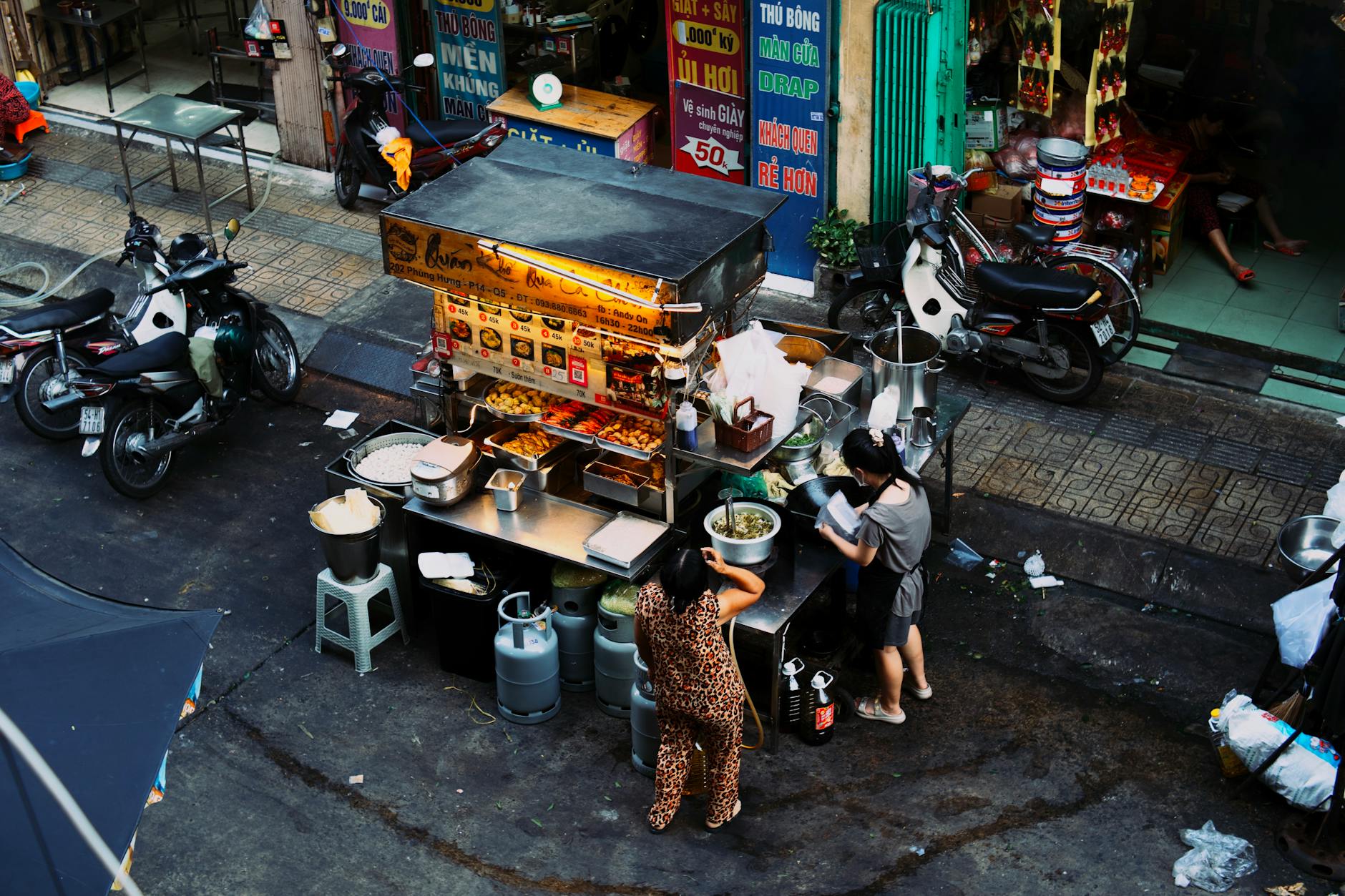
In Ho Chi Minh City, the hu tieu Nam Vang season is right at the moment when ingredient quality matters most — the prawns are large but not yet at peak summer size, the pork bone broth concentration is high, and the egg noodles from the Chinese-Vietnamese makers in District 5 are at their freshest. The recommendation: Hu Tieu Nam Vang at the unnamed alley stall on Nguyen Trai (everyone in District 5 knows it as "the corner near the rice shop") for under 60,000 VND, or the more polished Quan Hu Tieu Nam Vang Quynh in District 1 at 95,000 VND.
Korea: cold noodle season starts now
The May-September naengmyeon (cold buckwheat noodle) season is officially open in Seoul. The traditional Pyongyang-style naengmyeon at Wooraeok in Jung-gu (one Michelin star, 13,000 won) is the classical reference; the Hamheung-style at Hamheung Naengmyeon in Mapo (mixed cold noodles with raw fish, 12,500 won) is the spicier alternative. The trend in 2026: a wave of younger restaurants are reviving the regional varieties — Jinju cold soup naengmyeon, Andong-style with chicken broth — that had nearly disappeared from Seoul.
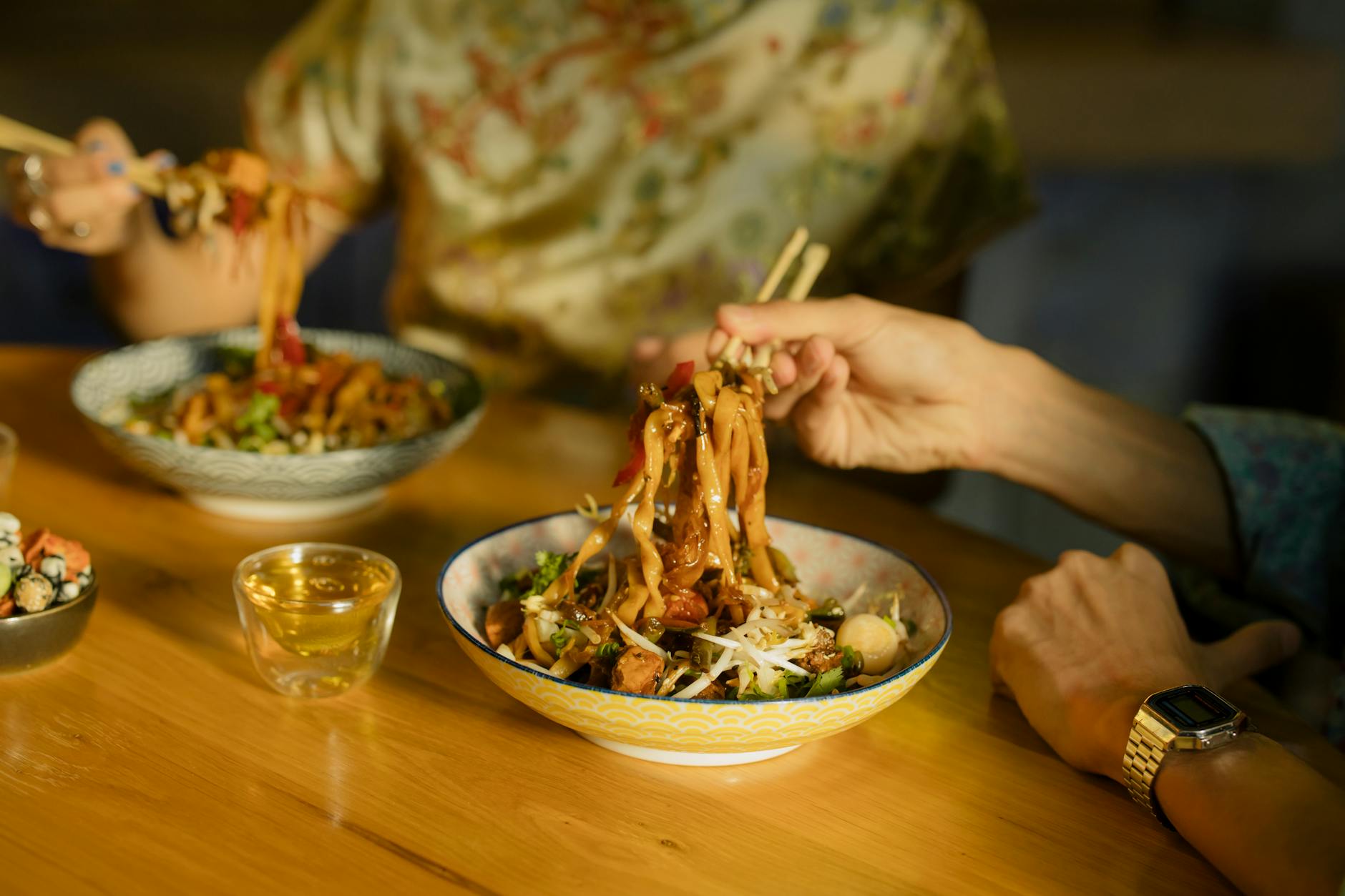
For visitors interested in the contemporary scene: the Mun Pyung Hwon school of naengmyeon dining (where the broth is consumed in three temperatures from cool to icy) has spread to about a dozen restaurants in Hannam-dong, Yeonnam-dong, and Sungsoo-dong, with prices in the 16,000-22,000 won range.
Hong Kong: the bing cherries and the yum cha season
Late-May Hong Kong is peak American bing cherry import season — though local food blogs increasingly recommend the Chinese mountain cherries from Yunnan and Shandong as the more interesting alternative at half the price. The Yunnan dali sweet cherry is currently 88-128 HKD per kilo at the Wan Chai Market versus 220-380 HKD per kilo for the imported American.
Late spring is also when the Cantonese yum cha houses introduce the seasonal dim sum: pork-and-shrimp wonton with bamboo shoots, har gau with seasonal greens, and the always-divisive durian custard buns. For weekend yum cha at the traditional reference points: Lin Heung Tea House on Wellington Street is still operating, Maxim's Palace at City Hall remains the best for the trolley service, and One Dim Sum in Prince Edward holds its Michelin Bib Gourmand at a quarter of the hotel prices.
What I am cooking at home this week
The honest answer for late May in a Bangkok kitchen: less, not more. The afternoon temperature reaches 37°C consistently, and the appetite leans hard toward cold, sour, light dishes. Som tam at home (green papaya, lime, palm sugar, dried shrimp, peanuts, chili) is a 12-minute dinner. Cold tofu with sesame oil, dark soy, scallions, and ginger from the Japanese specialty supermarket in Phrom Phong is a 5-minute alternative. The big slow-cooked Thai curries return in October.
The bigger food story for Asia in the next month: the start of mango season in northern Thailand, the rambutan-to-longan transition, and the durian quality gradient that climbs through mid-July. For anyone planning a regional food trip in 2026, this six-week window from late May to mid-July is the best of the year.