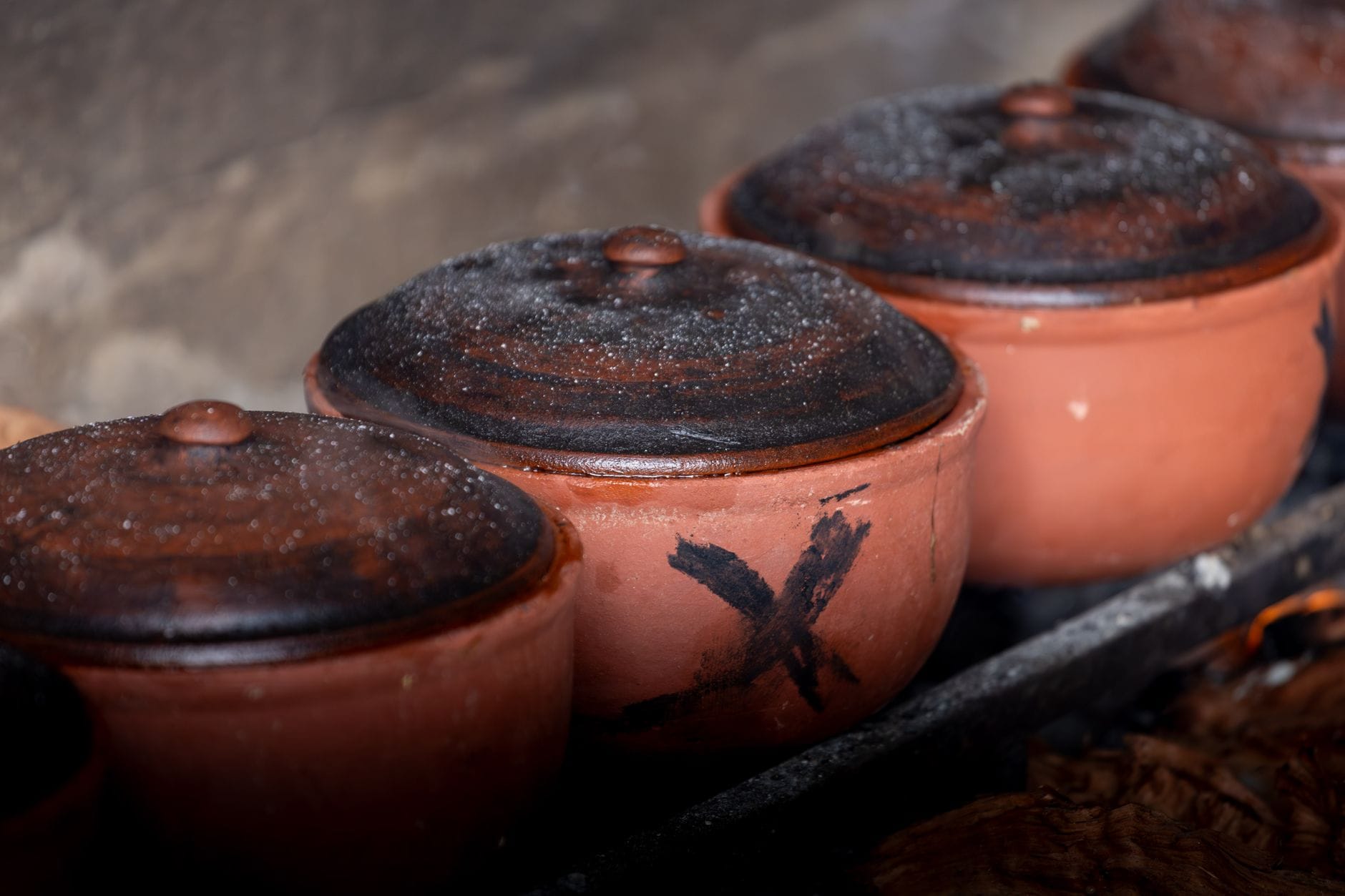
There is a sound that tells you dinner is almost ready, and in much of Asia it is not the ping of a timer. It is the faint crackle of rice catching against hot clay, the smell arriving a half-second before the sound, somewhere between toasted bread and caramel. You cannot get that from stainless steel. You cannot get it from a non-stick pan, either, no matter how expensive. It belongs to earthenware, to a pot that has been fired, glazed on the inside, left rough on the outside, and used so many times that it carries the ghost of every meal before this one.
For something so humble, the clay pot has refused to disappear. Across a continent that has embraced induction hobs, rice cookers with sixteen settings, and air fryers in every apartment, the unglazed pot keeps its place on the stove. It is slower. It chips. It can crack if you treat it carelessly. And yet from a Cantonese kitchen at the back of a Hong Kong wet market to a Korean restaurant where the stew arrives still boiling, the same basic object keeps producing flavours that the modern kitchen, for all its precision, cannot quite copy.
Why clay does something metal can't
The short version is heat. Metal conducts fast and unevenly, throwing energy at whatever touches the base and leaving the sides cooler. Clay does the opposite. It heats slowly, holds that heat in the thick walls, and radiates it back into the food from every direction at once. The result is a gentler, more even cook, and a pot that keeps working for several minutes after you cut the flame. A Korean ddukbaegi arriving at your table still bubbling is not a trick — the stone-and-clay vessel is simply giving back the heat it stored, which is exactly why the soft tofu stew keeps cooking the raw egg you crack into it on the way over.
There is also the matter of porosity. Unglazed clay breathes, very slightly, which means a little moisture escapes during a long braise and the flavours concentrate rather than stew into mush. Season a new pot properly — most cooks rub the inside with rice water or oil and bake it low before first use — and that porous surface starts to hold a memory of what you cook in it. Purists insist you should never scrub a clay pot with detergent for this reason. They are right, though it makes the washing-up a small act of faith.
Four pots, four philosophies
The clay pot is not one tradition but a dozen, each shaped by what its region needed to cook. The shapes diverged for reasons of fuel, climate, and the food itself, and the differences are sharper than most people expect.
Cantonese claypot rice
In Guangdong and Hong Kong, the pot is a delivery system for one specific miracle: guo ba, the crust of golden rice that forms against the bottom. The cook layers raw rice and a little water, lays cured sausage or marinated chicken on top, clamps the lid, and runs the pot over a fierce flame while tilting it so different patches of the base scorch in turn. A swirl of soy sauce goes in at the end. Done right, the bottom layer is crisp and slightly bitter, the top is fragrant and soft, and the whole thing costs about HK$50–70 at a street stall. The skill is entirely in the burning — too timid and there's no crust, too greedy and the pot is ruined.
Korean ddukbaegi
The Korean pot is squat, dark, and built to travel from stove to table without losing its boil. It is the home of sundubu jjigae, the fiery soft-tofu stew, and of doenjang jjigae, the everyday soybean-paste stew that anchors a Korean dinner the way a stockpot anchors a French one. What matters here is theatre as much as function: the stew is meant to arrive violently hot, so hot that talking over it is a mistake, and the ddukbaegi is the only vessel that holds that temperature long enough to matter.
Japanese donabe
Japan's donabe is the elegant cousin — a wide, shallow pot, often beautiful enough to sit at the centre of the table by design. Winter in Japan means nabe, the communal hot pot where everyone cooks thin slices of meat and vegetables in shared broth, and the donabe is also the quiet champion of kamado-san-style rice, where the slow even heat produces grains that stand apart, glossy and distinct. A good Iga-yaki donabe from the Mie region can run ¥15,000 or more, and owners treat them as heirlooms rather than cookware.
Indian handi
Wider at the belly and narrower at the neck, the Indian handi was built for the long, low simmer that defines a proper dum biryani or a slow-cooked handi dal. The shape traps steam and circulates it, which is why the classic technique seals the lid with a rope of dough — dum pukht, cooking in trapped vapour, a method that came down through the kitchens of Awadh and never really left. Open one at the table and the first thing that hits you is the steam, carrying saffron and whole spice all at once.
The catch nobody mentions
Clay pots are wonderful, and they are also a small ongoing argument with physics. They crack. A cold pot dropped onto a hot burner, or a hot pot rinsed under a cold tap, will craze and then split — thermal shock, and there's no fixing it once it goes. They are not all dishwasher-safe, and the unglazed ones genuinely should not meet soap. If you cook on induction, most traditional clay won't work at all without a separate heat-diffuser plate, since clay isn't magnetic. None of this is a reason to avoid them. It is a reason to understand that you are buying into a relationship, not just a pot.
So is it worth the fuss for a home cook who already owns a perfectly good Dutch oven? For braises and stews, honestly, a cast-iron pot gets you ninety per cent of the way there. But for two things — Cantonese rice crust and any stew that needs to keep cooking at the table — there is no substitute, and that ten per cent is the whole point. Buy the clay pot for those, not for everything.
Buying your first one
Start cheap. A simple Cantonese sand pot (sa bou) from an Asian grocery costs the price of a coffee and a sandwich, and if you crack it learning to control the flame, you've lost almost nothing. Look for a pot with thick, even walls and a well-fitting lid; hold it up to the light and reject anything with a visible hairline. Season it before the first cook, build the heat gradually every single time, and never set a screaming-hot pot down on a cold worktop.
The pots that get passed down are the ones that earned it. A friend in Osaka still cooks rice in her grandmother's donabe, the glaze worn pale where the lid sits, and she swears the rice tastes better in it than in anything she could buy new. She is probably right, and not only because of the clay.