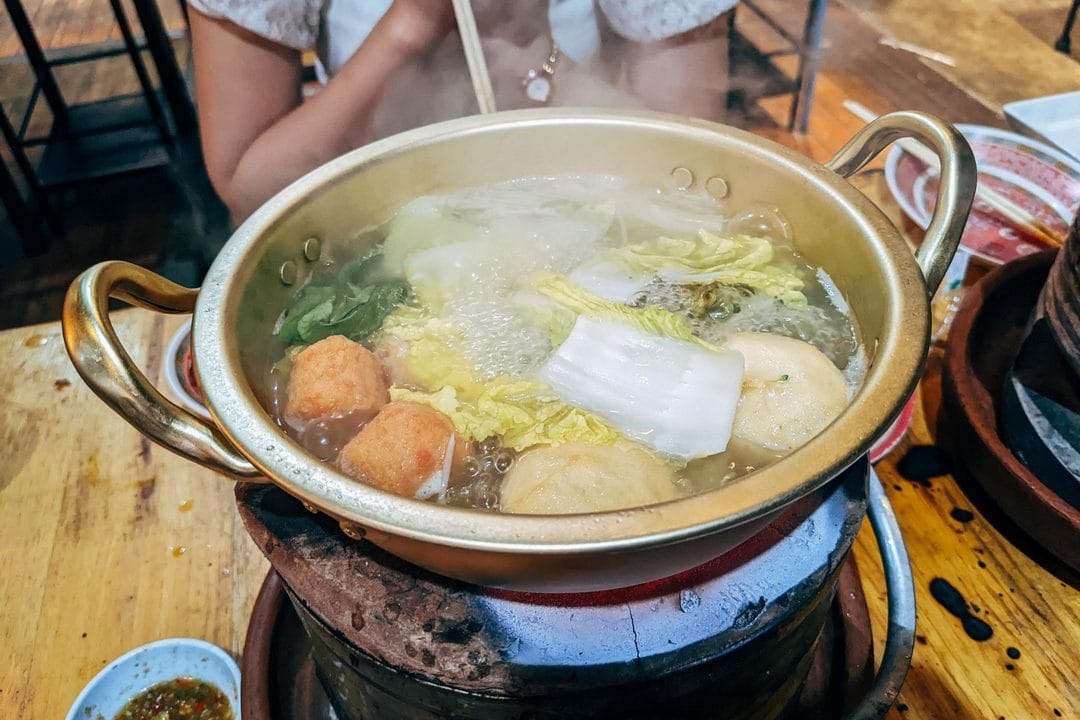
There is a particular sound that means dinner is about to take a while: the low rolling boil of a pot set into the middle of a table, surrounded by plates of things waiting to be cooked. No one is in charge of the meal. Everyone is. You drop your own slice of beef into the broth, fish it out when you decide it is ready, and argue cheerfully about whether someone else stole the last dumpling. Hot pot is the rare dish that refuses to be served to you.
What fascinates me about hot pot is that it is barely a recipe at all. It is a method, a pot of hot liquid and a pile of raw ingredients, and that openness is exactly why it splintered into so many distinct traditions across Asia. Give a hundred cooks a pot of broth and they will not converge on one dish. They will invent a hundred. Follow the steam from Chongqing to Seoul to Bangkok and you find the same basic idea wearing completely different clothes.
Sichuan and Chongqing: the one that bites back
If hot pot has a spiritual capital, it is Chongqing. The broth here is a deep red slick of chili oil, beef tallow and Sichuan peppercorns, and it does something no other hot pot does: it makes your mouth buzz. That tingling, almost electric numbness comes from the peppercorns, and the local word for the sensation, "má," sits right at the centre of the experience. This is not heat you tolerate. It is heat you go looking for.
The classic move is the yuanyang pot, a metal bowl split down the middle with the fiery broth on one side and a mild, milky one on the other. It looks like a compromise. It is really a dare, because once you have had a few rounds in the spicy half, the mild side starts to feel like cheating.
Into that broth goes an order of things that surprises first-timers: thin sheets of tripe, slices of duck blood, lotus root, and luncheon meat alongside the expected beef and greens. The tripe is the test. Held in the boiling broth for exactly seven or eight seconds, no more, it turns crisp-tender and carries the chili oil beautifully. Leave it in too long and it goes to rubber. Regulars time it like a sport.
Beijing and the north: lamb, copper and clarity
Travel north and the whole mood changes. Beijing's instant-boiled mutton, shuan yang rou, is almost the opposite of Chongqing in temperament. The broth is a clear, plain simmer, often little more than water with a few jujubes, ginger and scallion, served in a tall copper pot with a chimney of glowing charcoal up the middle.
The restraint is the point. With a broth this quiet, everything depends on the lamb, sliced paper-thin and swished through the water for seconds until it just turns colour. You then dip it in a sesame paste sauce that is the real flavour engine of the meal. Where Chongqing loads the broth, Beijing loads the dipping bowl, and the difference tells you almost everything about northern versus southwestern Chinese taste.
Japan: two pots, two philosophies
Japan took the communal pot and made it characteristically precise. There are two main camps, and people have feelings about which is better.
Shabu-shabu is named for the swishing motion, the gentle wave you make holding a slice of beef in a barely simmering, almost flavourless kombu broth. The meat cooks in seconds. The broth is meant to be neutral so the quality of the beef and the dipping sauces, a citrusy ponzu and a nutty sesame, carry the meal. It is elegant, quick and a little austere.
Sukiyaki is its richer cousin and, in my view, the more memorable of the two. Here the beef is not swished in water but cooked in a sweet-savoury mixture of soy sauce, sugar and mirin, then dipped in raw beaten egg before eating. The egg sounds strange until you try it; it cools the hot beef and wraps it in silk. Sukiyaki is sweeter, heavier and unmistakably a cold-weather meal, the kind of thing that makes a Tokyo January bearable.
Korea: the stew that became a hot pot
Korea's contribution blurs the line between hot pot and stew, and that is what makes it interesting. Budae jjigae, "army stew," was born in the lean years after the Korean War, when cooks combined American military surplus, Spam, hot dogs, baked beans, with kimchi, gochujang and whatever else was on hand. It should not work. It absolutely does.
Bubbling away at the table on a portable burner, budae jjigae is loud, red and gloriously messy, often finished with a tangle of instant ramen noodles dropped in at the end. There is also the more traditional jeongol, a refined royal-court style hot pot of neatly arranged vegetables, meat and seafood in a clear broth, but it is the scrappy army stew that captures how Koreans actually eat around a shared pot: communal, improvised and unbothered by purity.
Thailand: the forgotten cousin and the sweet sauce
Thai suki rarely makes the international hot-pot conversation, which is a shame, because it has one of the best dipping sauces in the entire family. Despite the name, which nods loosely to sukiyaki, Thai suki is its own thing: a clear or spicy broth for cooking thin meats, glass noodles, tofu and morning glory, served with a sauce built on fermented bean curd, chili, garlic, lime and a hit of sugar.
That sauce is the secret. Tangy, sweet, funky and hot all at once, it pulls the whole meal together and explains why suki chains are weekend institutions in Bangkok. If you only know hot pot through its Chinese and Japanese versions, the Thai one rearranges your expectations.
The sauce bar tells you where you are
Here is a small thing worth paying attention to: the dipping sauce setup is often a better map of regional taste than the broth itself. In Beijing, the sesame paste bowl does most of the work, mellow, nutty and built to soften the plainness of the broth. In Chongqing, the sauce is almost an afterthought, usually just sesame oil with garlic and a little cilantro, because the broth already carries every flavour you could want and the oil exists mainly to cool things down.
Then you reach the table-side sauce stations of a good Taiwanese or Malaysian hot pot place, where a dozen jars of chopped garlic, fermented chili, sha cha sauce, soy, vinegar and raw egg let you build a personal blend that no two people at the table will agree on. The broth is the same for everyone; the sauce is where individual taste asserts itself. Watching a regular mix theirs, fast, unthinking, perfectly proportioned, is like watching someone sign their name.
One pot, many tables
What ties all of this together is not an ingredient or a broth. It is the choreography. Hot pot slows a meal down on purpose, hands the cooking to the people eating it, and makes a long evening out of a pile of raw food and a heat source. The Chongqing version will make you sweat, the Beijing one will make you patient, the Tokyo one will make you fussy about beef, and the Seoul one will make you laugh. They are not really the same dish. They just share a flame.
Next time you are in front of one, resist the urge to dump everything in at once. Cook in small rounds, taste as you go, and let the broth get better and better as the evening wears on, because by the last round, when it has absorbed everything you have cooked in it, it is the best it will ever be.