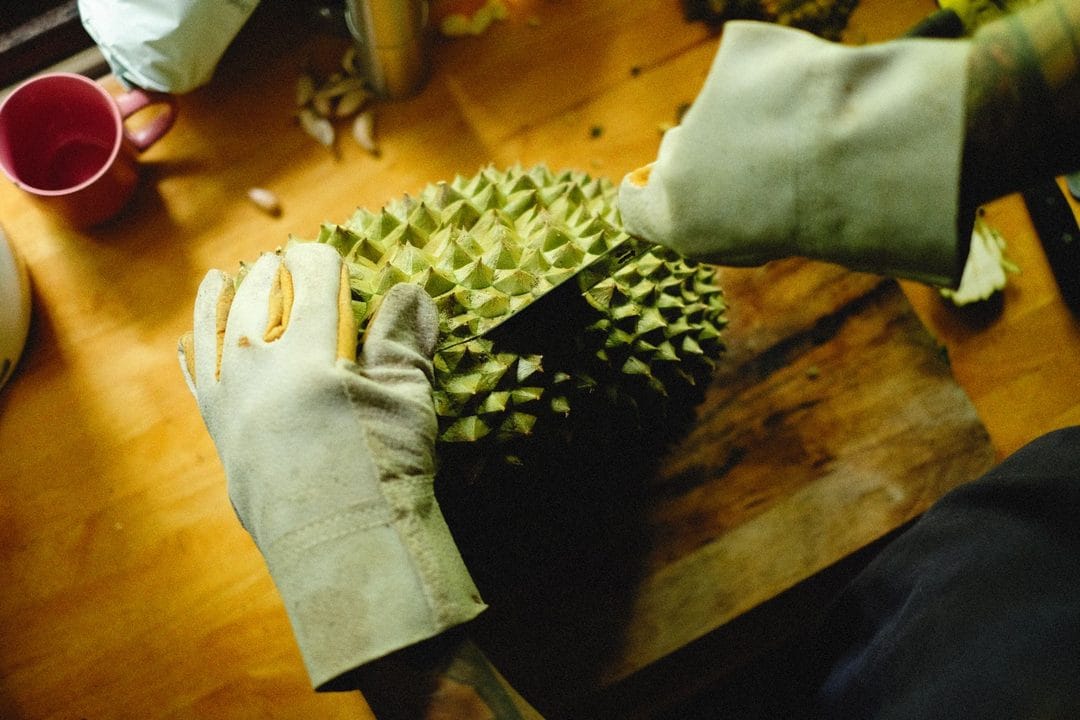
Walk past any wet market in Kuala Lumpur or the durian stalls lining Geylang in Singapore this month and you'll smell it before you see it — that thick, custardy, faintly sulfurous smell that either sends you running or makes you dig for cash on the spot. August is peak season for durian across Peninsular Malaysia, and this year the fruit everyone actually wants, Musang King, is running noticeably more expensive than it did twelve months ago.
Why Musang King commands the prices it does
Musang King, known locally as Mao Shan Wang, has dominated the premium durian conversation for close to a decade now, and for good reason — its custardy, almost bitter-sweet flesh and small seed-to-flesh ratio make it genuinely different from the sweeter, wetter Red Prawn or the milder D24. At wholesale markets in Raub, Pahang, where a large share of Malaysia's premium durian is grown, Musang King has been trading between RM 45 and RM 60 per kilogram this season, up from roughly RM 35 to RM 45 last August. Retail prices in Kuala Lumpur run higher still, often RM 70 to RM 90 per kilogram at specialist durian shops, and considerably more in Singapore, where imported Musang King regularly sells for SGD 25 to SGD 35 per kilogram.
Farmers in Raub and Bentong point to a mix of causes rather than any single explanation, and it's worth taking that seriously instead of reaching for the easy story. A shorter-than-usual flowering window earlier in the year reduced overall yield in several orchards, export demand from China has kept climbing even as domestic Malaysian buyers compete for the same fruit, and rising labor and fertilizer costs have pushed up the price farmers need just to break even. None of these alone explains the jump — together, they do.
The China export effect is bigger than most buyers realize
China's appetite for frozen whole Musang King has reshaped the entire supply chain over the past several years, and it's the single biggest reason prices at your local stall have climbed. Malaysian durian exports to China, mostly frozen rather than fresh, have grown enough that some Raub farmers now sell a majority of their premium-grade fruit directly to export buyers before it ever reaches a domestic wet market. That leaves local buyers competing for a smaller share of the same harvest, and prices respond accordingly.
Is it still worth paying for Musang King, or should you switch varieties?
Here's the honest answer: for most casual eaters, no — Musang King's price premium has stopped matching the actual gap in eating experience. D24, running roughly RM 20 to RM 30 per kilogram this season, delivers a creamy, slightly bitter flesh that satisfies most of what people are chasing in a durian without the wholesale price shock. Black Thorn (Ochee), a newer premium cultivar with a rich, almost wine-like sweetness, sits in a similar price bracket to Musang King but is harder to find outside specialist shops in Kuala Lumpur and Penang.
- Musang King — the benchmark, worth it if you want the reference point every other variety gets compared to
- D24 — the better everyday value pick this season, and honestly the one most regular durian eaters should default to
- Black Thorn — worth seeking out if you can find it, though supply is inconsistent enough that some sellers run out within hours of opening
- Red Prawn (Ang Heh) — sweeter and wetter, a good entry point for people who find Musang King too intense, and generally the cheapest of the four
Buying at the source versus buying in the city
If you're anywhere near Raub or Bentong during peak season, buying directly from an orchard stall rather than a city retailer makes a real difference — not just in price, which typically runs twenty to thirty percent lower, but in freshness. Durian that's been transported and stored for a day or two loses some of its texture, going slightly grainy instead of custardy. Orchard-direct sellers in Raub often let you taste before buying, something almost no city stall will offer given how quickly a cut durian needs to be eaten.
That said, don't assume every roadside stall claiming "Musang King" is telling the truth. Substitution is a real problem during peak season, when demand outstrips the supply of genuinely graded Musang King and some sellers pass off D24 or unnamed hybrids under the premium name. A legitimate Musang King has a distinctive star-shaped base scar and a slightly flattened shape — if a seller can't explain the grade or origin of their fruit, walk away.
What the season looks like from here
Durian season in Peninsular Malaysia typically runs in two waves, an early one around June and July and a second, usually larger harvest through August and into September, which is where the region sits right now. Farmers in Pahang expect the second wave to bring prices down slightly from their current peak as more fruit hits the market simultaneously, though nobody is predicting a return to last year's levels given how much export demand has grown in the meantime.
For visitors timing a trip around durian season, the second wave is genuinely the better window — more variety available, slightly easier prices, and a wider spread of specialist stalls open across Kuala Lumpur, Penang, and Johor Bahru. Just don't expect the fruit that made Musang King famous a decade ago to still be a bargain. Those days are behind it.
The etiquette nobody warns tourists about
If you're staying in a hotel anywhere in Malaysia or Singapore during peak season, check the fine print before you carry a whole durian back to your room. Most major hotel chains, including Marriott and Shangri-La properties across the region, explicitly ban durian from guest rooms and lobbies, and the smell lingers in fabric and air conditioning systems long enough that housekeeping teams treat it as a serious violation rather than a minor complaint. Singapore's MRT system bans durian outright on trains and platforms, with signage posted at nearly every station entrance, and taxi drivers in both cities reserve the right to refuse a fare carrying an open durian.
None of this is exaggerated caution. A single ripe Musang King can perfume an entire floor of a building within an hour, and the smell is genuinely difficult to remove from soft furnishings without professional cleaning. If you want to eat durian during a trip, do it at a dedicated stall or an open-air setting, and treat any indoor consumption as something to ask permission for first.
What actually pairs well with durian
Mangosteen is the traditional counterpart across Malaysia and Singapore, and it's not just folklore — the fruit's cooling, slightly tart flesh genuinely balances durian's richness, and the two fruits happen to peak in the same August-to-September window, which is part of why they're sold side by side at nearly every stall. Salt is the other pairing worth knowing: a light sprinkle on the flesh, a habit more common among older Malaysian and Singaporean eaters than younger ones, cuts through the fat content and sharpens the sweetness rather than dulling it.
Steer clear of alcohol while eating durian, and this isn't an old wives' tale — durian's high sulfur compound content combined with alcohol has been linked to genuine, if rare, cases of nausea and elevated heart rate, and both Malaysian and Singaporean health authorities advise against pairing the two. Durian ice cream, durian pengat, and durian glutinous rice (pulut durian) are all worth trying if you want the flavor without committing to a whole fruit, and several dessert chains in Kuala Lumpur now run seasonal durian menus specifically timed to the August peak.
A fruit that divides more than it unites, and that's fine
Durian's reputation as the fruit people either love or can't stand within seconds of smelling it isn't hype — it's one of the few foods where the reaction genuinely splits down the middle even among people who grew up around it. That divide is part of what keeps the culture around it so specific: durian cafes in Kuala Lumpur post disclaimers, some office buildings ban it from break rooms, and yet during peak season, queues at the best stalls in Raub stretch well past an hour without anyone seeming to mind the wait.